A gingerbread christmas tree recipe works best when you treat it as a stacking project, not a baking project. You bake firm, flat star cookies in six shrinking sizes, cool them completely, then glue them together with stiff royal icing, largest at the bottom and smallest at the top. The result is a centerpiece you can actually eat: one tree, ten servings, and a kitchen that smells like ginger and molasses for hours.
I learned the hard way that warm cookies ruin everything. My first gingerbread christmas tree leaned like a tired elf by dinner because I stacked stars that were still warm and used icing so runny it slid off the edges. The next year I changed three things and the tree stood straight all week: I chilled the dough for a full hour, I let every star cool completely on a wire rack, and I beat the royal icing until it held a stiff peak instead of a soft one. Everything below follows those three rules.

Why This Tree Stands Up
A soft, chewy gingerbread cookie makes a terrible building block, so this dough is deliberately firm. It uses a full cup of butter against four and a half cups of flour, molasses instead of honey for a stiffer crumb, and just one egg, which keeps the stars flat instead of puffy. Rolling to exactly 1/4 inch matters too: thinner stars snap when you stack them, thicker stars bake unevenly and crack. Chilling the dough for an hour before cutting stops the stars from spreading in the oven, and chilling the cut stars for 10 minutes on their trays stops them a second time. If your stars come out of the oven the same size they went in, the dough did its job.
What You Need
You do not need a special mold or a printed template for this gingerbread christmas tree recipe. The one tool worth buying is a nested star cookie cutter set with at least five or six sizes, from about 7.5 inches down to 2 inches across, tip to tip. Beyond that, you need two half-sheet pans, parchment paper, a rolling pin, a wire rack, and a few piping bags — or a zip-top bag with a tiny corner snipped off, which works just as well for dots and lines. A flat board or a sturdy plate becomes the base, and that is the whole equipment list.
Ingredients
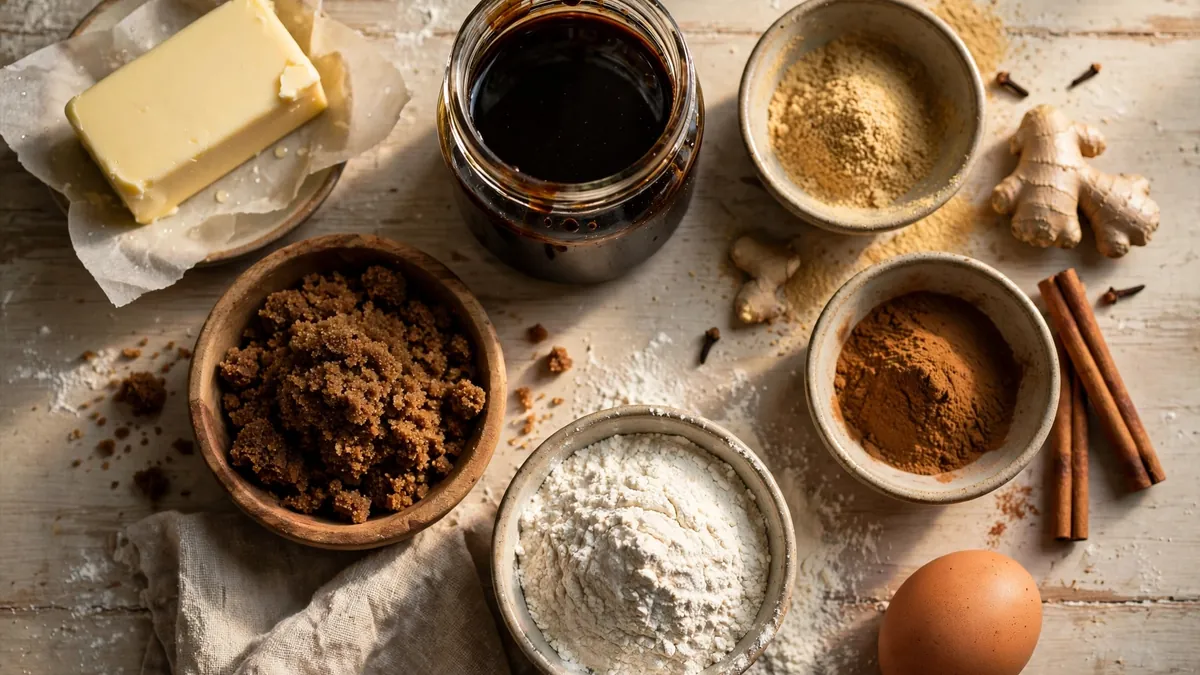
For the dough, you need 1 cup (227g) softened unsalted butter, 1 cup (200g) firmly packed dark brown sugar, 2/3 cup (160ml) molasses, 1 large egg at room temperature, 4 1/2 cups (540g) all-purpose flour plus more for rolling, 1 1/2 teaspoons baking soda, 4 teaspoons ground ginger, 2 teaspoons ground cinnamon, 1/2 teaspoon ground cloves, and 3/4 teaspoon fine salt. Do not swap in blackstrap molasses: it is bitter and dark enough to overpower the spice. For the royal icing, you need 2 large pasteurized egg whites — or 3 tablespoons meringue powder plus 5 tablespoons water, which is my preference when kids will be eating the tree — plus 3 cups (360g) sifted powdered sugar and 1/2 teaspoon lemon juice. Powdered sugar for dusting and silver sugar pearls finish it.
Gingerbread Christmas Tree
Ingredients
Method
- Cream the butter and brown sugar in a large bowl for 2–3 minutes until fluffy. Beat in the molasses and the egg until combined.
- Whisk the flour, baking soda, ginger, cinnamon, cloves, and salt in a separate bowl. Add the dry mixture to the wet mixture on low speed and mix just until a firm dough comes together. Do not overmix.
- Divide the dough in half, flatten each half into a disc, wrap tightly, and chill for 1 hour or overnight.
- Heat the oven to 350°F (175°C). Line two half-sheet pans with parchment paper.
- Roll one disc of dough to 1/4 inch thick on a floured surface. Cut stars: 3 each of 7.5-inch, 6-inch, 5-inch, 4-inch, 3-inch, and 2-inch stars, plus 1 extra 2-inch star for the topper — 19 stars in total. Chill the cut stars on their trays for 10 minutes.
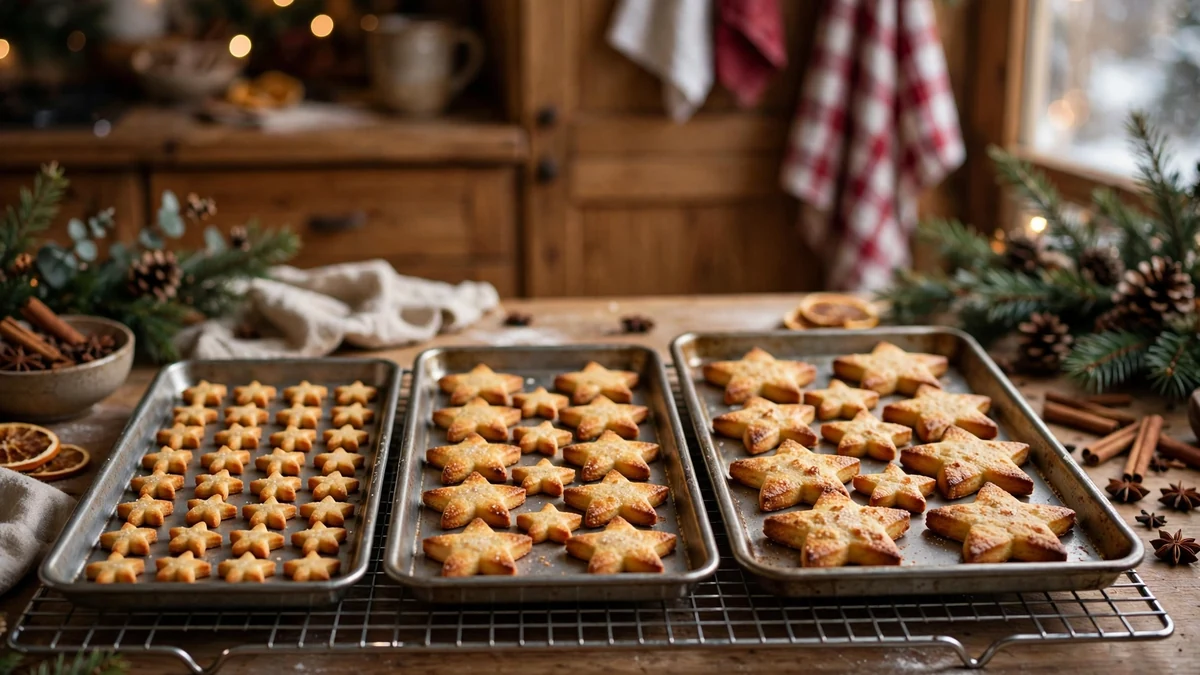
- Bake similar sizes together: small stars 8–10 minutes, large stars 11–13 minutes, until the edges are firm and lightly darkened and the centers look set.
- Cool the stars on the pan for 5 minutes, then move them to a wire rack and cool completely, about 30 minutes. Never stack warm cookies.
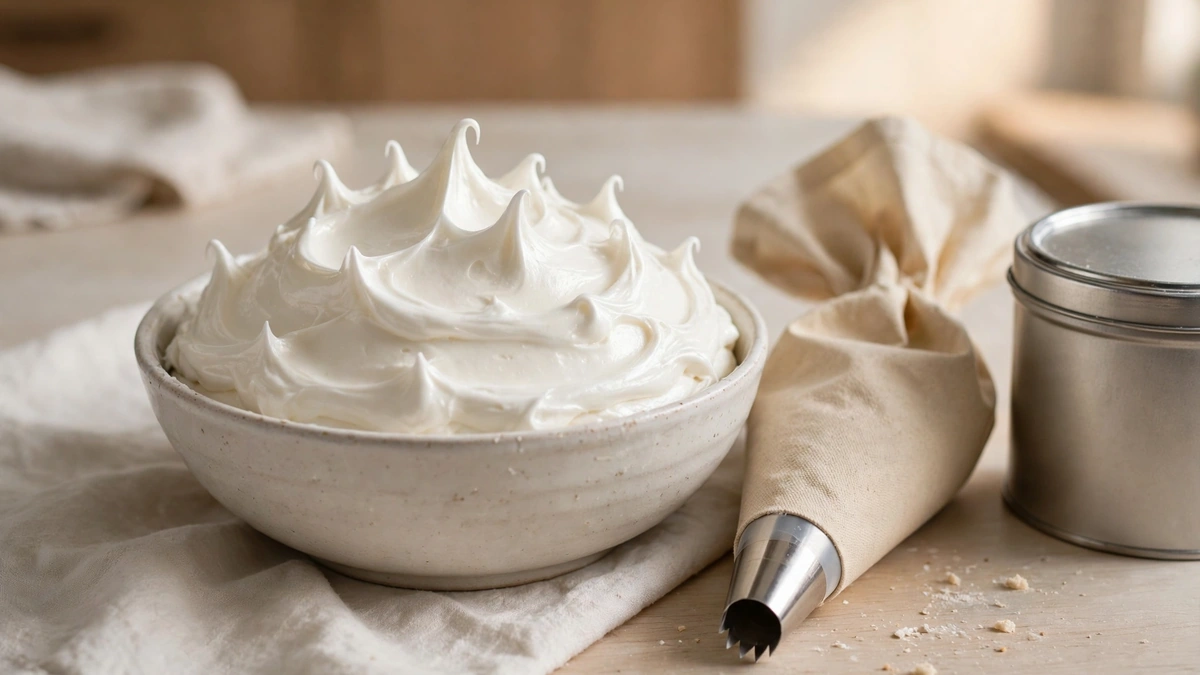
- Make the royal icing: beat the egg whites (or the meringue powder and water) with the lemon juice until foamy, then add the powdered sugar gradually and beat until the icing holds stiff peaks that stand straight when you lift the beater and do not droop back into the bowl. Keep the bowl covered with a damp cloth so it does not crust. Tint a portion green if you like.
- Assemble on a board or flat plate: put a dollop of icing in the center, press the largest star down, then stack the next star rotated so its points fall into the gaps of the layer below. Repeat with 3 stars of each size, largest to smallest.
- Set the extra small star upright on top with a generous dollop of icing and hold it for 30 seconds. Let the tree set undisturbed for 4–6 hours, or overnight, before moving it.
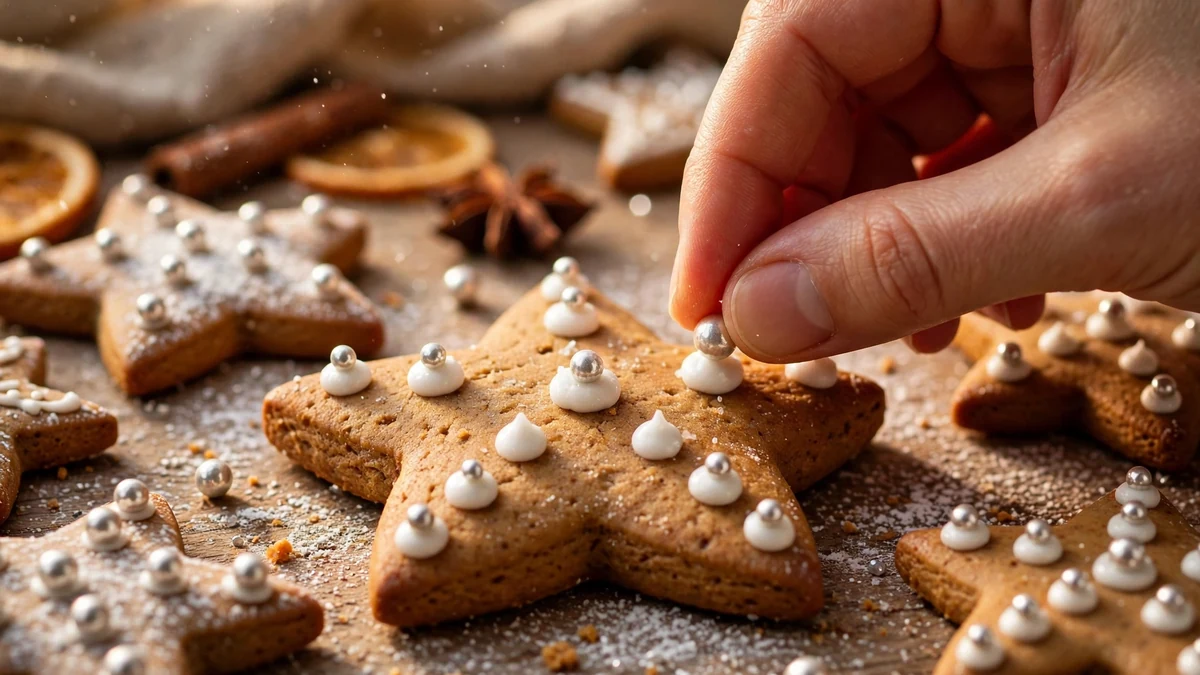
- Decorate: pipe small icing dots on the star tips, press on sugar pearls or sprinkles, and dust the whole tree with powdered sugar snow.
- To serve, lift stars off one by one from the top down and pass them around.
Notes
How to Make a Gingerbread Christmas Tree, Step by Step
First, cream the butter and brown sugar for 2 to 3 minutes until fluffy, then beat in the molasses and egg. Second, whisk the dry ingredients together and mix them in on low speed just until a firm dough forms; overmixing makes tough stars. Third, divide the dough in half, flatten each half into a disc, wrap tightly, and chill for 1 hour or overnight — overnight dough actually rolls more cleanly.
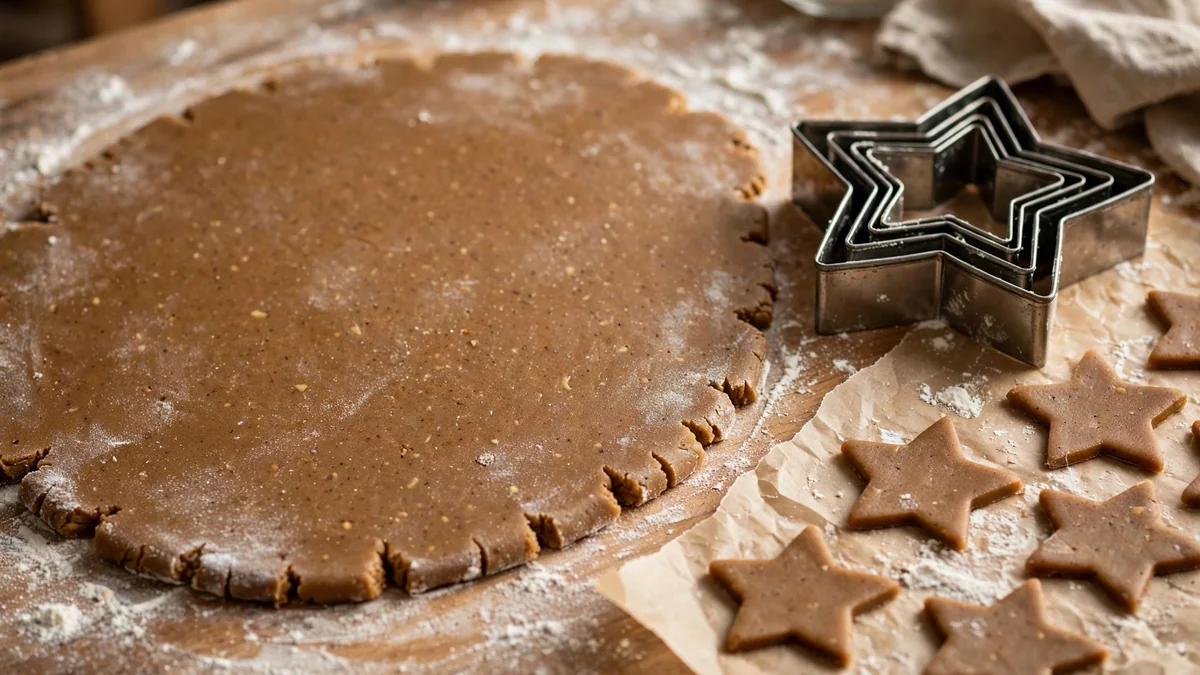
Fourth, heat the oven to 350°F (175°C) and line two half-sheet pans with parchment paper. Fifth, roll one disc to 1/4 inch thick and cut 3 stars of each size — 7.5, 6, 5, 4, 3, and 2 inches — plus one extra 2-inch star for the topper, 19 stars in total. Chill the cut stars on their trays for 10 minutes. Sixth, bake similar sizes together: small stars for 8 to 10 minutes, large stars for 11 to 13 minutes, until the edges are firm and lightly darkened. Seventh, cool the stars on the pan for 5 minutes, then on a wire rack for 30 minutes until completely cool.
Eighth, make the royal icing and beat it until it holds stiff peaks that stand straight when you lift the beater. Test it before you stack: draw a knife line through the icing in the bowl — if the line floods shut in seconds, beat in more sugar; if it stays open, the icing is ready. Keep the bowl covered with a damp cloth so it does not crust. Ninth, assemble on your board: a dollop of icing, the largest star pressed down, then the next star rotated so its points fall into the gaps of the layer below, three stars per size, largest to smallest, finishing with the small star set upright on top. Tenth, leave the tree completely alone for 4 to 6 hours, or overnight, before moving or decorating it. Icing that looks set after an hour is not set all the way through, and this is where most leaning trees happen.

Decorating Ideas and the Christmas Tree Aesthetic
This is where a plain stack of stars becomes the christmas tree aesthetic people photograph. For a snowy look, leave the icing white, pipe a dot on every star tip, and dust the whole tree with powdered sugar just before serving. For a green tree, tint the icing with gel food coloring and pipe it in dots and short lines along each layer, then press silver sugar pearls on as ornaments. If you are collecting gingerbread christmas tree ideas for a kids’ table, let children add their own sprinkles and mini candies to a small tree each — mini gingerbread christmas trees made from the same dough, with just two stars per size, are easier for small hands and make sweet gifts. And here is the difference from a classic gingerbread house: a gingerbread house is a building project with walls and a roof to engineer, while this tree is a stacking project — faster, sturdier, and far more forgiving if a piece breaks, because one cracked star just becomes an extra cookie.
5 Mistakes That Make a Tree Lean
The biggest mistake is stacking warm cookies, which soften the icing and slide — wait until the stars are fully cool, even if you are impatient. Second, icing that is too runny: if it drips off a spoon in a ribbon, beat in more powdered sugar a tablespoon at a time until it holds a peak. Third, skipping the chill: warm dough spreads, and spread stars lose their points and their size order. Fourth, moving the tree too soon: give it the full 4 to 6 hours, or overnight, before carrying it to the table. Fifth, pressing too hard while stacking, which cracks the star below — set each star down gently and let the icing do the holding, not your hand.
How to Rescue a Tree That Is Already Leaning
If the tree starts to lean while you are still stacking, do not push it straight and hope — take the top layers off and re-pipe with stiff icing before restacking. If it still will not stand, give it a hidden spine: push a clean wooden skewer down through the center of the stack, trim it below the top star, and hide it with icing. A cracked star is not a disaster either: glue it with icing and bury it mid-group, where the layers above and below hide the join. On a humid day, icing takes much longer to set, so assemble on the driest day you can and give the tree overnight, away from kettles and steam. If you re-roll your dough scraps, do it only once — second-roll dough spreads more in the oven, so bake those stars as spares and test one before trusting the batch. Carry the finished tree on its board with both hands, never by the top star; for a gift, nest a mini tree in a tissue-lined box under cellophane.

Make Ahead and Storage
This gingerbread christmas tree recipe is made for planning ahead, which is half its charm in a busy December. The dough keeps wrapped in the fridge for up to 3 days or in the freezer for up to 1 month; thaw frozen dough overnight in the fridge before rolling. Baked, undecorated stars keep in an airtight container at room temperature for up to 1 week, so you can bake on a weekend and assemble midweek. An assembled tree is best eaten within 3 to 4 days of assembly. After that, be honest about what it is: a beautiful decoration that has sat out in warm room air is not fresh food anymore, so if your tree has been on display for more than a few days, enjoy looking at it and bake a fresh batch for eating. Store any leftover stars in an airtight container, never in the fridge, where they go soft.
How to Serve It
Serving is the fun part, and it doubles as the party trick. Carry the tree to the table on its board, let everyone admire it, then lift the stars off one by one from the top down and pass them around with coffee or hot chocolate. One tree serves about 10 people, with the big base stars broken in half for a crowd. If you want the tree to last through dinner as a centerpiece, serve a plate of extra star cookies alongside it and keep the tree itself intact until dessert.


I love this project honestly, because it gives you the smell and spice of gingerbread baking and a centerpiece in the same afternoon, without the engineering stress of a house. Start with cold dough, cool stars, and stiff icing, and the tree practically builds itself.
As an Amazon Associate, I earn from qualifying purchases. Some links in this post are affiliate links, which means I may earn a small commission if you buy through them, at no extra cost to you.
Can I make a gingerbread christmas tree without a star cutter set?
Yes. Draw star templates on cardboard in six shrinking sizes, lay them on the rolled dough, and cut around them with a sharp knife. It takes longer, but the tree stacks exactly the same.
How far ahead can I make the tree?
Make the dough up to 3 days ahead, bake the stars up to 1 week ahead and keep them airtight, then assemble the day before serving and let the icing set overnight.
Can I eat the tree after it has been on display for a week?
I would not. An assembled tree is best eaten within 3 to 4 days. After a week on display, keep it as decoration and bake a fresh batch for eating.
Is there an egg-free way to make the royal icing?
Yes. Use 3 tablespoons meringue powder plus 5 tablespoons water instead of egg whites, then beat in the powdered sugar the same way. It sets just as hard and removes the raw-egg worry.
Why did my tree lean to one side?
Usually one of three things: the stars were still warm, the icing was too runny, or the tree was moved before the icing fully set. Cool stars, stiff-peak icing, and a full overnight set fix almost every lean.
Can I make mini gingerbread christmas trees instead of one big tree?
Absolutely. Use two stars per size instead of three, or use only the three smallest sizes, and you get charming little trees that work as place settings or gifts.