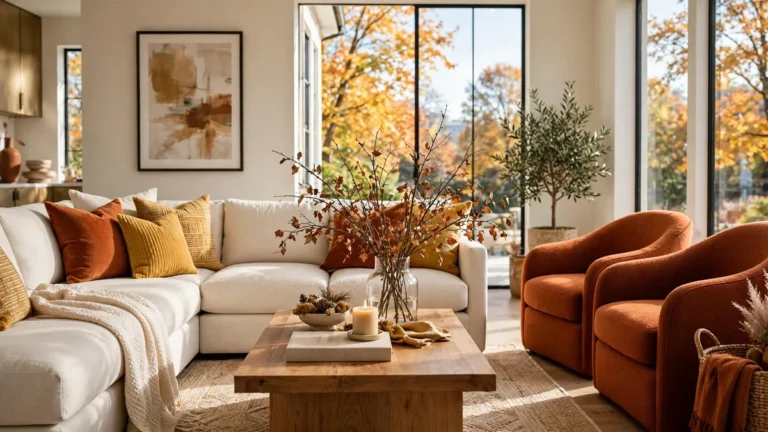
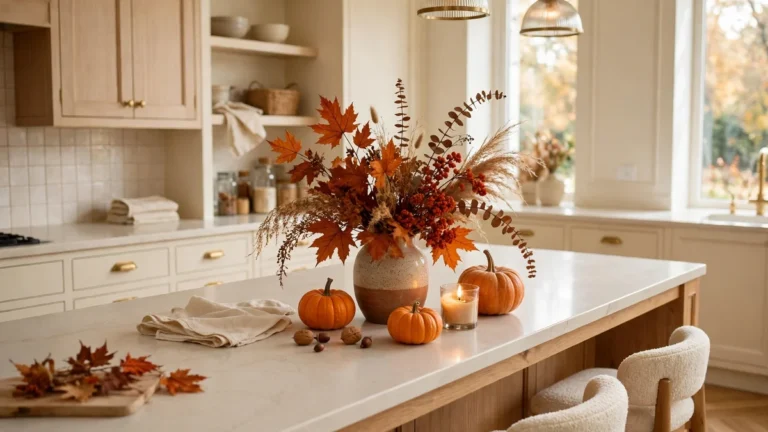
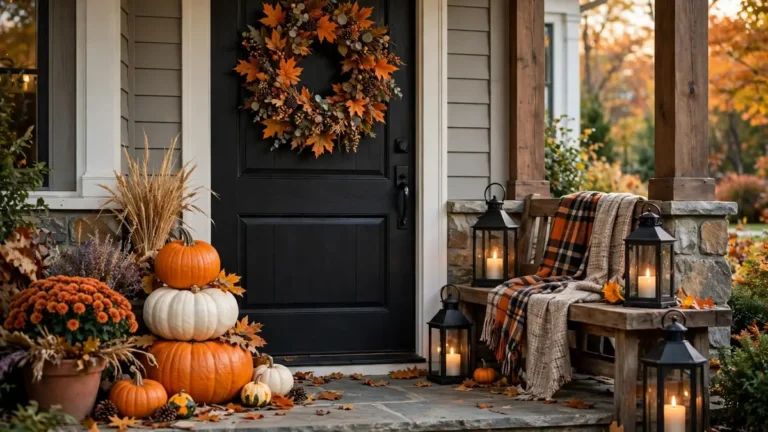
These Halloween inspiration ideas cover every style, and Halloween works best when it has a point of view. Spooky haunted house, nostalgic childhood Halloween, or soft and cute instead of creepy — pick one lane, and every decision after that gets easier. This is a one-page plan for the whole season: decorating, making, doing, and spending wisely, so Halloween feels like a celebration rather than a last-minute scramble.
Pick Your Lane First
Before buying a single pumpkin, choose the feeling you want:
- Classic spooky: orange, black, and white; carved pumpkins, eerie lighting, a haunted-house entrance.
- Vintage: cream, black, and muted orange; old-fashioned decorations, candlelight, nostalgic details.
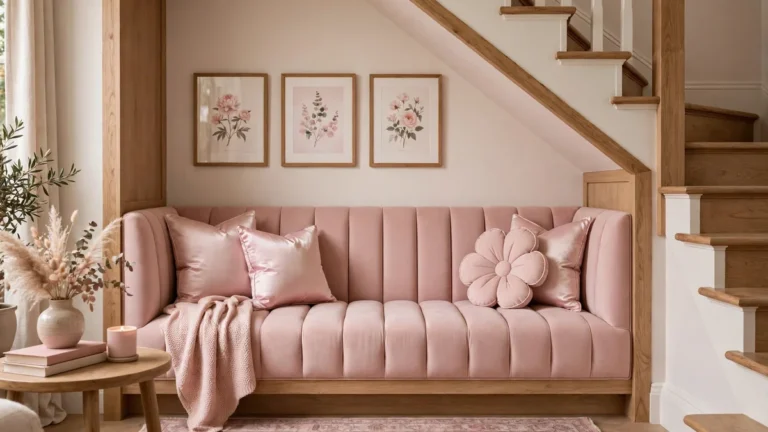
- Cute: pastel pink, lavender, cream, and soft orange; smiling ghosts, friendly faces, nothing scary at toddler height.
- Natural: brown, cream, orange, and green; pumpkins, dried leaves, wood, and handmade pieces.
One lane, two or three colors, and two or three focal areas (the porch, one room, the table) will make a whole house feel designed. Five lanes at once makes it feel like a clearance bin.
Lane 1: Decorate
1. Make a Pumpkin Display Worth Stopping For
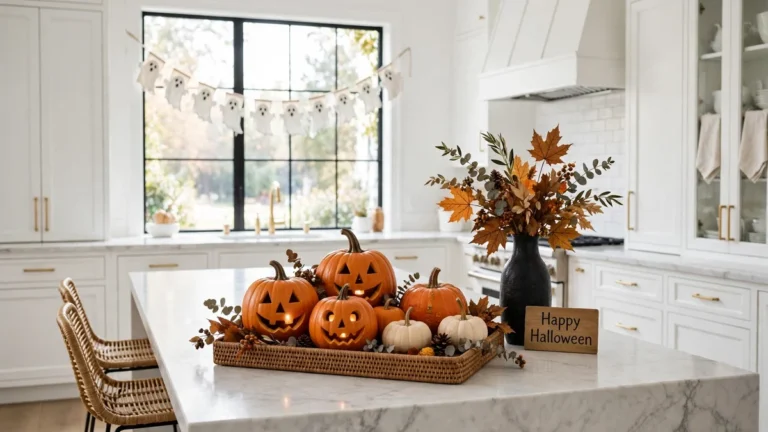
Pumpkins are the easiest Halloween statement, and they do not all have to be carved. Classic carving works — traditional faces, spooky silhouettes, or detailed patterns for patient carvers — but painted pumpkins last longer and suit households with small children: pastel pumpkins, metallic finishes, polka dots, or hand-painted faces. A group of pumpkins in mixed sizes and colors (orange, white, cream, muted green heirlooms) looks more collected than a row of identical orange ones. Cluster them at the entrance, on steps, or on a low table, and pair them with dried stems or a lantern so they read as a display rather than a pile.
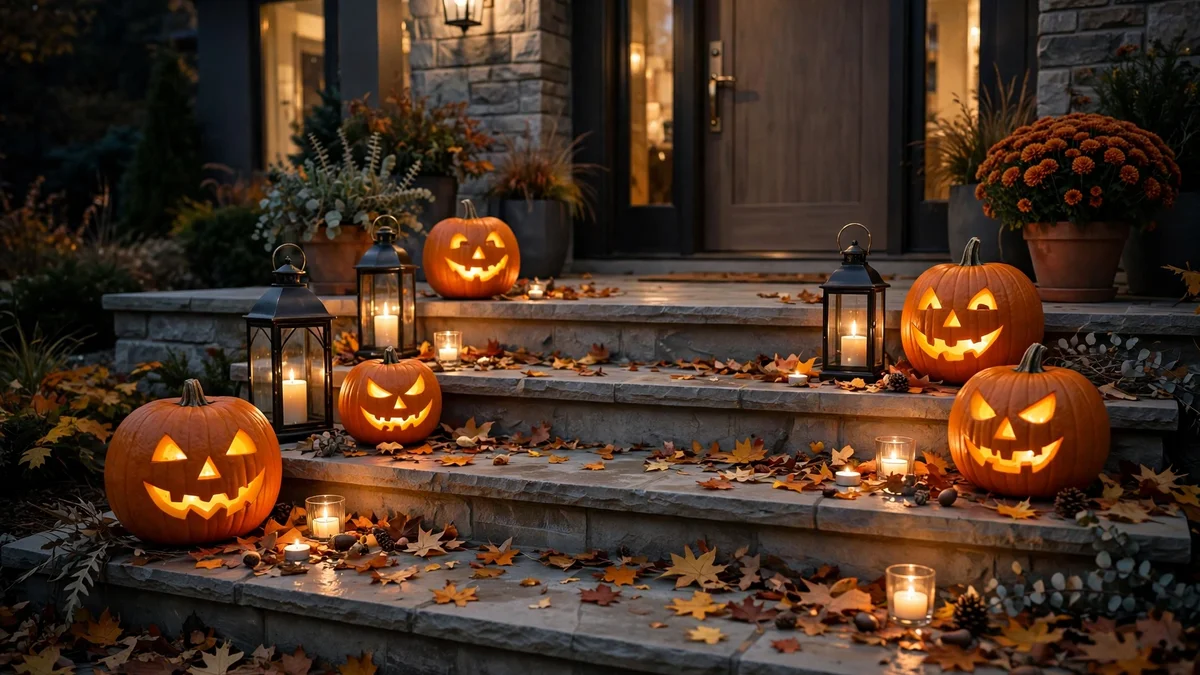
For the porch itself, the dedicated guide has the full treatment: Halloween porch decor ideas.
2. Turn the Whole Home Into a Halloween Wonderland
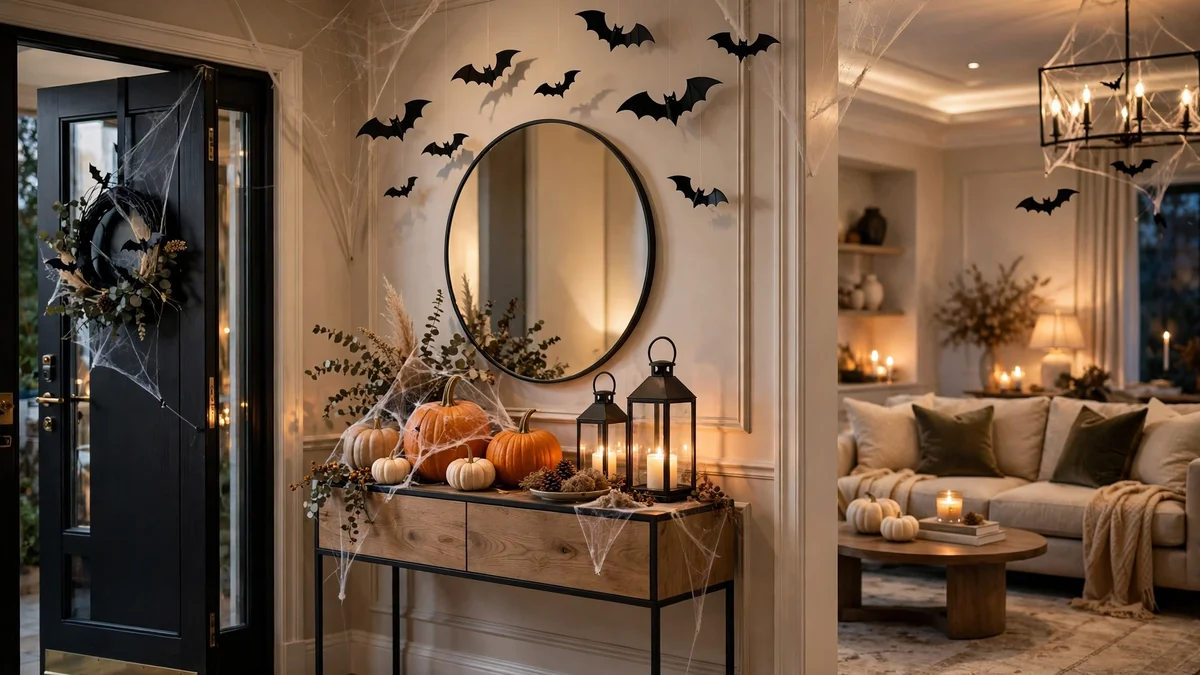
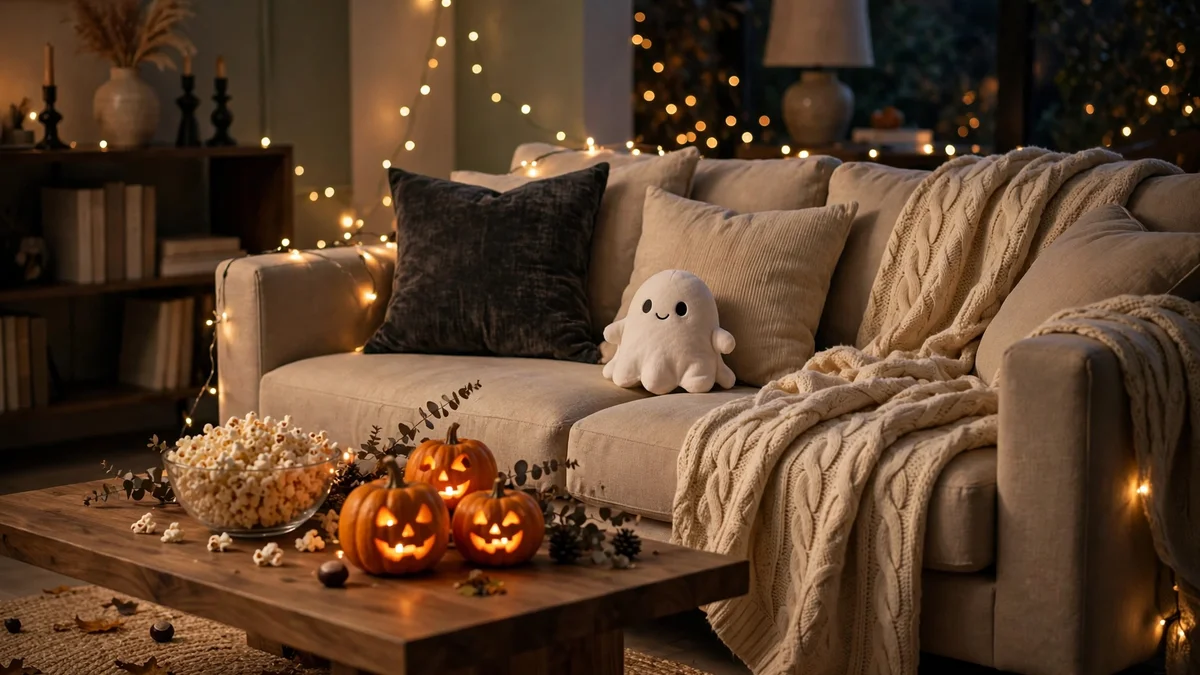
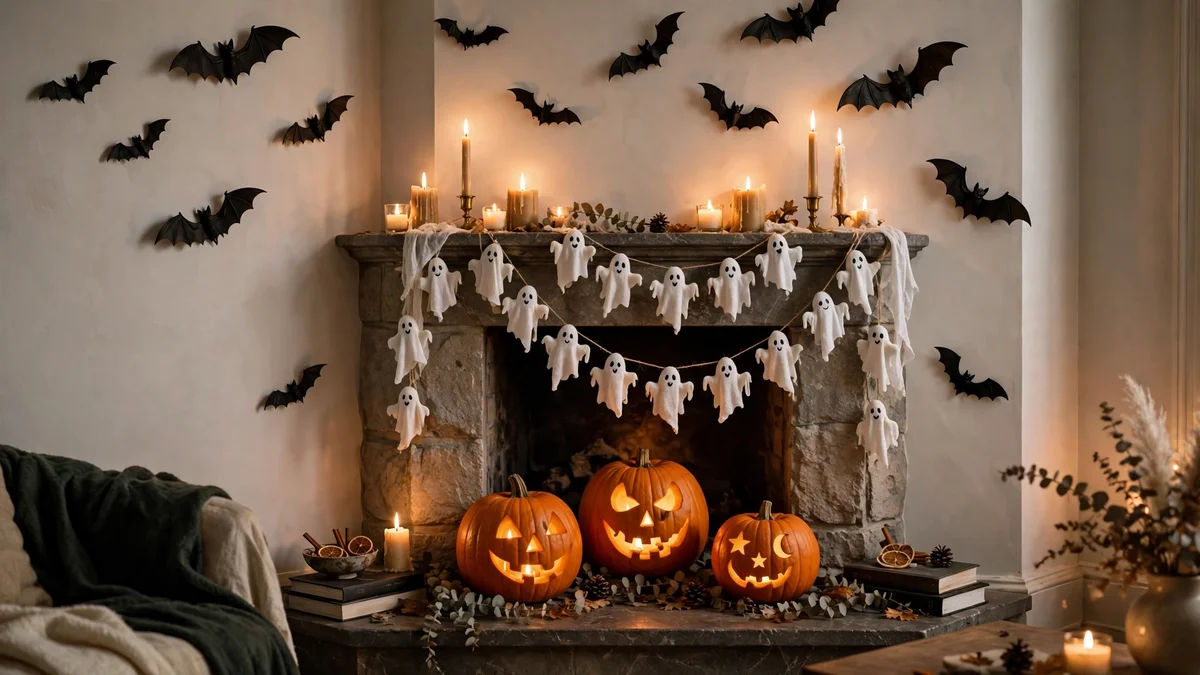
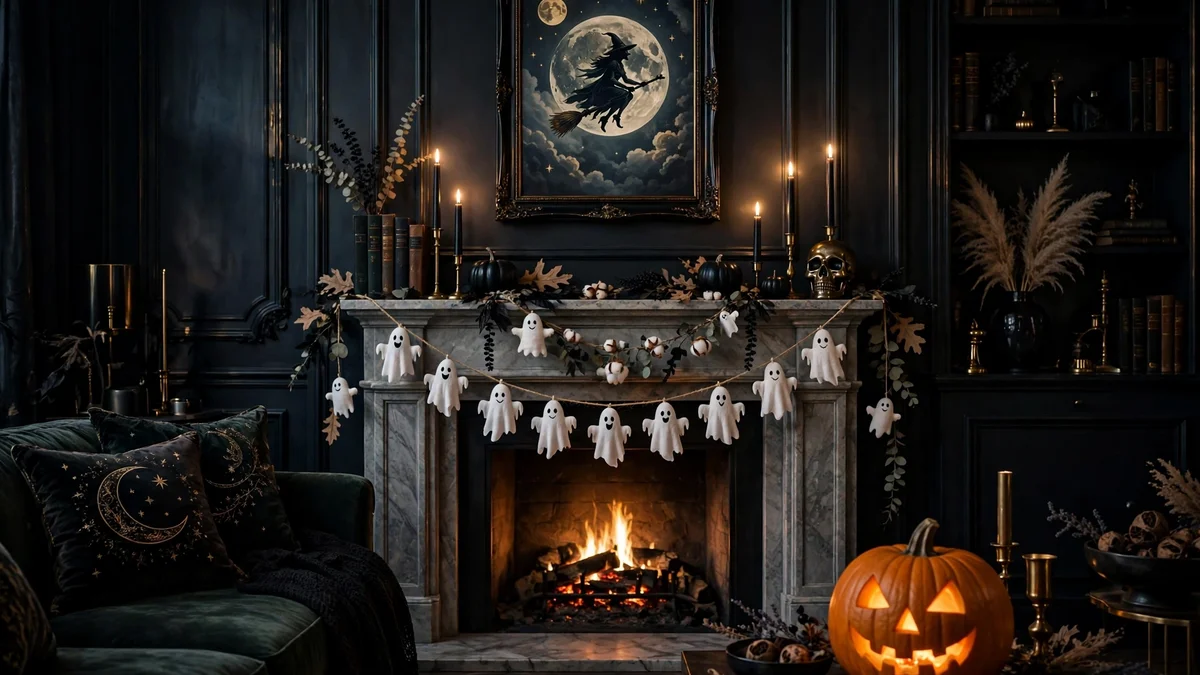
If one room gets the full treatment, let it be the entrance and the main gathering room. The formula is simple: a clear focal point (mantel, console, or entry table), one color palette, and lighting that does the heavy lifting. String lights, lanterns, and candles change a room more than a dozen small decorations. Add a few larger pieces — a ghost figure, a spooky wreath, a cluster of bats on one wall — and leave the rest of the room alone. Halloween looks better when the spooky parts have space around them.
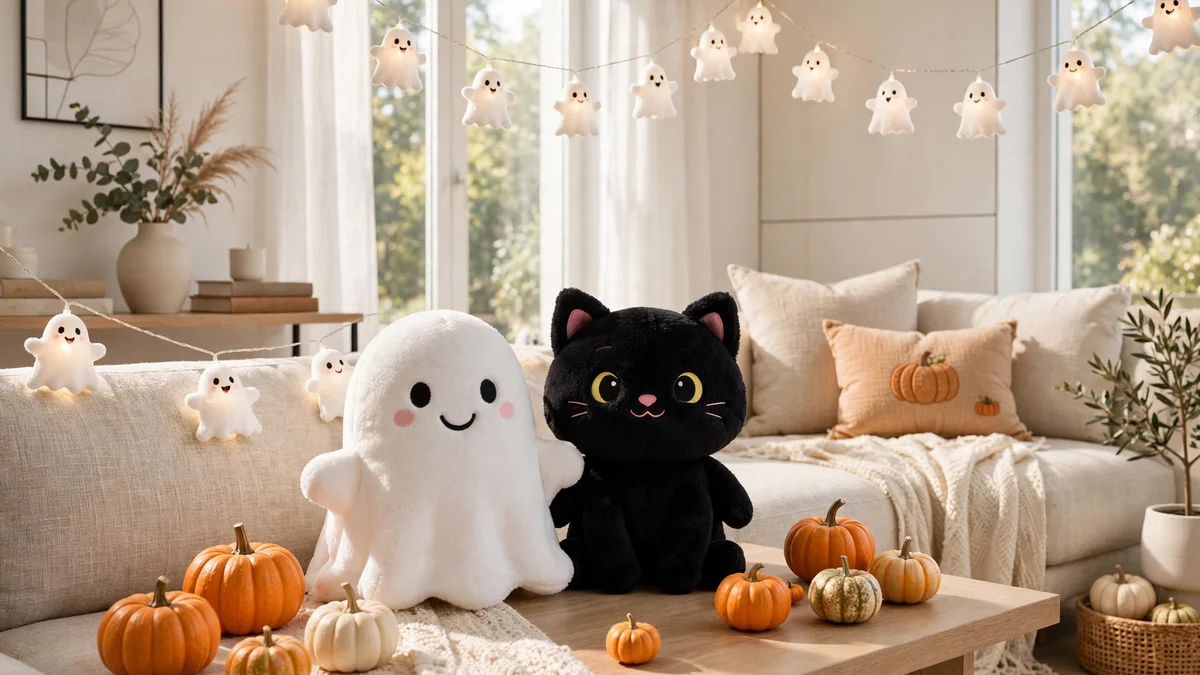
3. Go Cute Instead of Creepy
Not every Halloween has to be scary, and for households with young children, cute is the better lane. The palette does the work: cream, lavender, pastel pink, sage green, light blue, and soft orange. Smiling ghosts, friendly black cats, pastel pumpkins, and a cute table setting with pastel plates and a few small pumpkins make the season feel festive without a single jump scare. Keep anything genuinely creepy above toddler eye level if the house mixes ages.
4. Lean Into Nostalgic Halloween
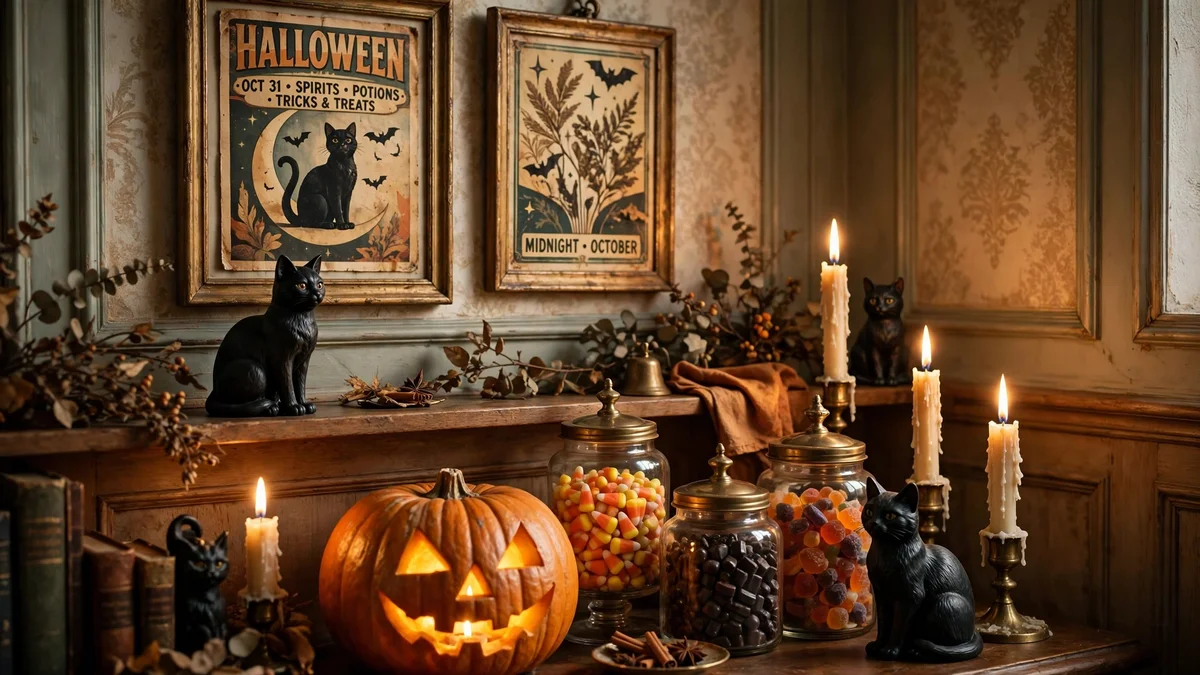
Vintage Halloween has a warmth the plastic aisle cannot copy: black cats, old-fashioned pumpkin faces, candlelight, paper decorations, and a display of older pieces — vintage-style posters, classic candy dishes, a few well-chosen antiques or thrifted finds. The trick is restraint. Three or four genuinely old-looking pieces, lit warmly, feel nostalgic. A shelf crowded with every vintage reproduction reads as a shop display. If you thrift for this lane, look for pieces with patina and wear; new items made to look old rarely fool anyone up close.
Lane 2: Make
5. DIY Decorations That Cost Almost Nothing
The best Halloween DIY starts with what the house already has, and the difference between charming and chaotic is doing one idea well, several times, instead of ten ideas once.
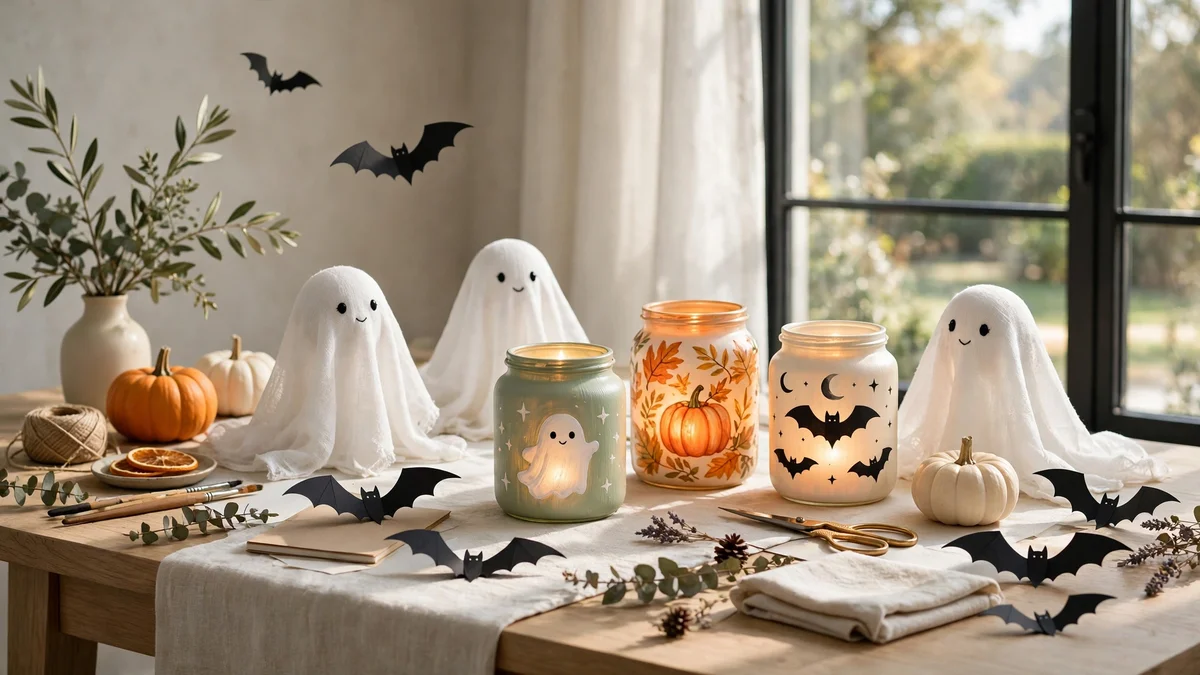
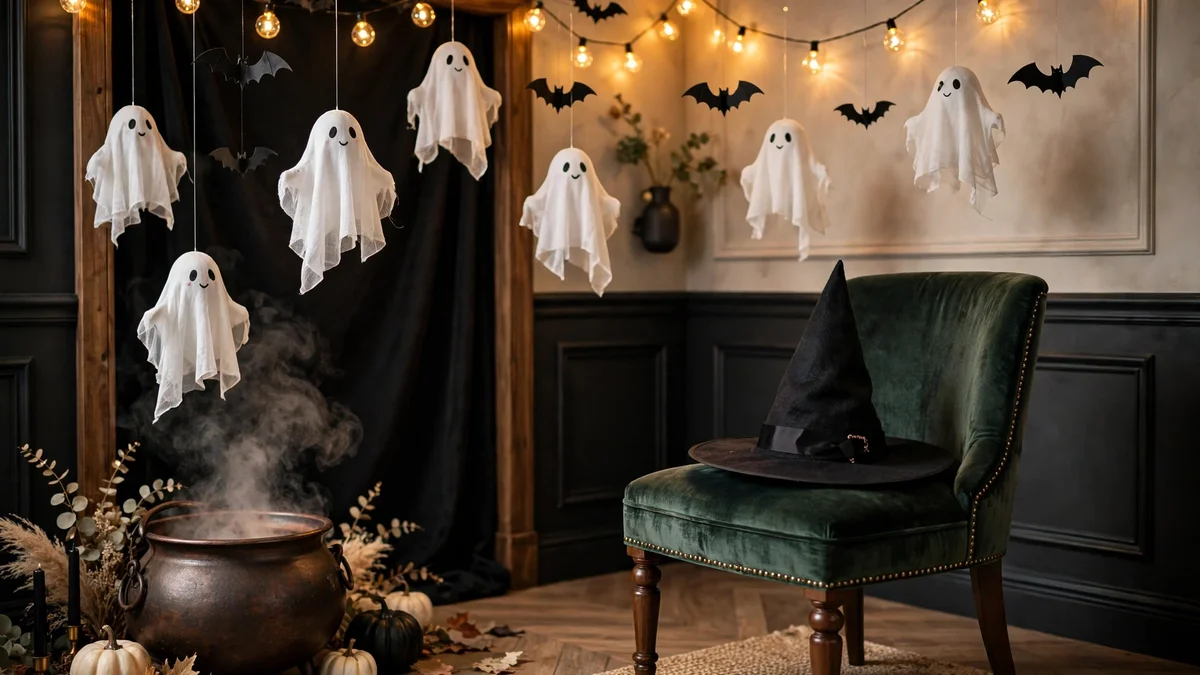
Hanging ghosts. You need an old white sheet or cheesecloth, a balloon or ball, string, and scissors. Drape the cloth diagonally over the balloon, tie it loosely underneath to make a head shape, and hang it from a porch ceiling, tree branch, or curtain rod with string. Make three to five at different heights — a group drifting at different levels looks like a proper haunting, while a single ghost looks lost. Adults handle the hanging; kids can draw the faces with a marker once the ghosts are down at table height.
Jar characters. You need clean glass jars, paint or colored tissue paper, glue, and LED tea lights. Paint a face directly on the jar — Frankenstein, mummy, cat, pumpkin, witch, ghost — or glue torn tissue paper around it and let it dry. Drop an LED tea light inside, never a real flame: jars trap heat, and a real candle near tissue or fabric is a risk. Line three jars along a windowsill or step and they read as a set.
Paper bats. You need black card, scissors, and tape. Fold the card in half, draw half a bat against the fold, cut it out, and unfold it for a symmetrical bat. Tape ten or so in a sweeping line across one wall, rising toward a corner. One material, repeated well, is what makes this look designed rather than scattered.
The rule for all three: adults handle scissors, cutting, and anything hot or high up. Kids handle painting, faces, and placement at their own height. Each of these is an afternoon project, not a weekend one — and if you only have time for one, pick the ghosts. They give the most Halloween per hour.
6. Crafts for Kids and Grown-Ups
Crafts are where Halloween gets personal, and they double as decorations once finished. Split the jobs by age: adults cut and glue anything hot or sharp, kids paint and decorate.
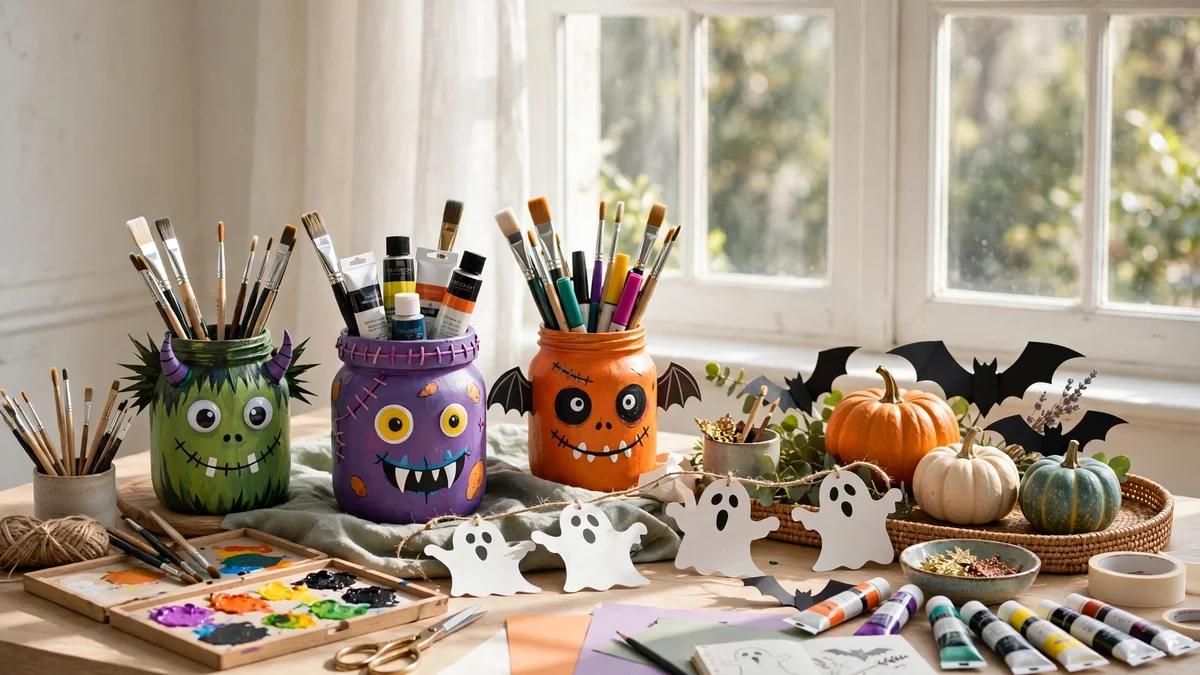
Toilet-roll monsters. You need empty toilet rolls, paint, paper, and glue. Paint the roll, let it dry, then add paper eyes, teeth, and arms. Googly eyes work if you have them; paper eyes work just as well. Stand a row of them on a shelf and they become a monster family.
Monster jars. You need a jar, paint or tissue, and paper eyes. Cover the jar, add one big eye or several small ones, and put an LED light inside. These work as table decorations after the crafting is done.
Handmade Halloween cards. You need folded card, colored paper, glue, and markers. Cut simple shapes — bats, pumpkins, ghosts — glue them on, and write the message inside. A card a child made beats a bought one on a mantel every time.
Painted mini pumpkins. You need small pumpkins, paint, and brushes. Paint faces, dots, or one solid color each. Mini pumpkins are the safest pumpkin craft for younger children because there is no cutting at all, and they last far longer than carved ones.
Keep one finished piece per child on display rather than every attempt. A shelf with the best three crafts looks proud, not cluttered, and the kids notice the difference.
Lane 3: Do
7. Plan Activities, Not Just Decorations
Decorations are seen. Activities are remembered. A Halloween that people talk about afterward usually has one or two of these:
- Pumpkin carving or painting competition
- Costume contest with silly prizes
- Halloween movie marathon
- Scavenger hunt (indoor or outdoor)
- Cookie decorating station
- Ghost-story night (keep it age-appropriate)
- Halloween trivia
- Craft afternoon
- Candy taste-testing (blindfolded, for laughs)
- Pumpkin painting party
Pick two, not ten. A carving competition plus a movie night is a full evening. A schedule packed with everything is how hosts end up exhausted and guests end up rushed.
8. Host a Halloween Movie Night
Movie night is the lowest-effort Halloween event that still feels like an event. Set up a snack station (popcorn, candy, one themed drink), send simple invitations with the theme and start time, and let guests vote on the film from a short list. The vote itself is part of the fun — put three options in a hat or a group chat poll and let the room decide. Keep the lighting low, the blankets out, and the snacks within reach. That is the whole production, and it works.
9. Build a Photo Corner
A photo corner turns guests into the entertainment. Pick one wall or corner, one backdrop (a dark sheet, a garland, a few hanging bats), and a small table of props: witch hats, vampire teeth, ghost glasses, mini pumpkins, and DIY cardboard props. For the cardboard props, cut simple shapes — a bat, a pumpkin, a speech bubble — from a cardboard box, paint them, and tape each one to a stick or dowel so guests can hold them up for photos. Good lighting matters more than a fancy backdrop — one warm lamp or a string of lights facing the corner, not behind it, so faces are lit. The photos become the party favor, and they cost nothing.
Lane 4: Spend Smart
10. Halloween on a Budget
The best budget rule for Halloween is reuse before you buy. Paper decorations, natural materials (branches, leaves, pumpkins you will cook or compost), and repurposed jars cover most of a display. Repaint last year’s pieces instead of replacing them, and buy one statement piece per year — a good wreath, a lantern set, a ghost figure — rather than a bag of small items that break by November. Reusable pieces (faux pumpkins, quality lights, sturdy props) pay for themselves in the second year. The single most expensive Halloween mistake is buying everything new, every year, in the last week of October.
For the table, the food side of the season has its own guide: Halloween party food ideas.
How to Combine These Halloween Inspiration Ideas
These Halloween inspiration ideas fit in three decisions. First, one theme and one palette from the lanes above. Second, two or three focal areas — the porch, the main room, the table — decorated well, with the rest of the house left calm. Third, one or two activities, not a schedule. Theme plus palette plus focal areas is why some Halloween houses look designed and others look like a storage unit exploded. It is never about spending more. It is about choosing less, on purpose.
Halloween Safety, Especially With Kids Around
These are not just tips — each point below comes from a published safety authority, listed at the end of the section.
Flames and candles. Use battery candles inside jack-o’-lanterns and anywhere costumes, curtains, or dried decorations pass nearby. The National Fire Protection Association (NFPA) recommends battery-operated flameless candles as the safer alternative, and if you do use real candles, keep them at least one foot away from anything flammable, in sturdy holders on uncluttered surfaces, never unattended, and blown out before bed. Keep hair, loose clothing, and flowing costume fabric away from any flame.
Costumes and walking. The American Academy of Pediatrics (AAP) advises bright, reflective costumes, reflective tape on costumes and treat bags, and a flashlight or glow stick for every child. Costumes should be short enough not to trip or catch on objects or flames, shoes should fit well, and costume labels should say “flame resistant.” Masks can block vision, so non-toxic makeup and properly fitting hats are safer alternatives, and sharp or long accessories like swords should be skipped. Where possible, trick-or-treat before dark, cross streets as a group in crosswalks, and keep young children accompanied by an adult, visiting only homes with a lit porch light.
Pumpkin carving. Small children should never carve. Children draw the face with markers, and adults do the cutting. Light finished pumpkins with a flashlight or glow stick; if you use a candle, a votive is the safest choice, placed on a sturdy table away from curtains and paths where visitors pass close by, and never left unattended.
Candy, allergies, and choking. Check candy at home before anyone eats it, and do not let children eat while out trick-or-treating. For allergies, check every label, keep an epinephrine auto-injector on hand where relevant, and carry a charged phone. For babies and toddlers, keep hard candies, popcorn, pumpkin seeds, whole nuts, and small toys out of reach. For a more inclusive porch, follow FARE’s Teal Pumpkin Project: a teal pumpkin on display means non-food treats are available, kept in a separate bowl from candy, so children with food allergies can join in too.
Porch and walkway. Clear anything a child could trip over — hoses, toys, bikes, loose decorations — tape down cords, and keep the path from sidewalk to door well lit. A lit, clear path is the simplest safety upgrade a Halloween house can make.
Sources for the safety advice above:
- National Fire Protection Association (NFPA), candle safety guidance: nfpa.org
- American Academy of Pediatrics (AAP), Halloween safety tips: aap.org
- Food Allergy Research & Education (FARE), Teal Pumpkin Project: foodallergy.org
A Season That Feels Like Yours
Halloween does not need to be the biggest, spookiest, or most expensive version of itself. It needs one lane, a few focal points, one or two things to do together, and decorations that survive the night. Pick the lane that fits your household, start with the pumpkins, and let the rest follow.
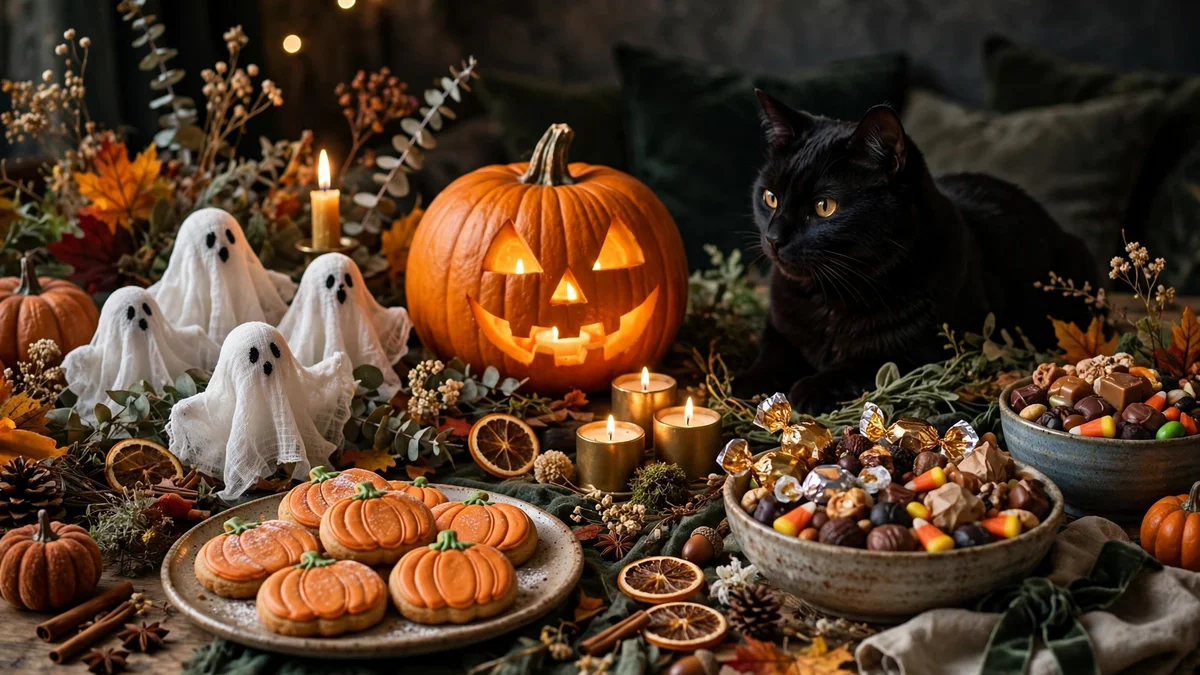
The best Halloween houses are not the ones with the most decorations. They are the ones where it is obvious someone enjoyed making them. Use these Halloween inspiration ideas to make the season feel like yours.