This article may contain affiliate links. As an Amazon Associate, Decor & Dish earns from qualifying purchases.
If you grew up around a Southern table, you know the smell of a pot of collard greens before you ever see it — smoky, savoury, a little tangy, the kind of smell that pulls everyone into the kitchen. For a long time, that flavour felt off-limits if you didn’t eat meat, because the classic pot starts with a ham hock or a pile of bacon. But here is the honest truth: the smoke was never really about the meat. It was about the method. And once you know how to rebuild that smoky, savoury depth from spices and broth, you can make collard greens that taste like Sunday dinner — with nothing in the pot that ever had a face.
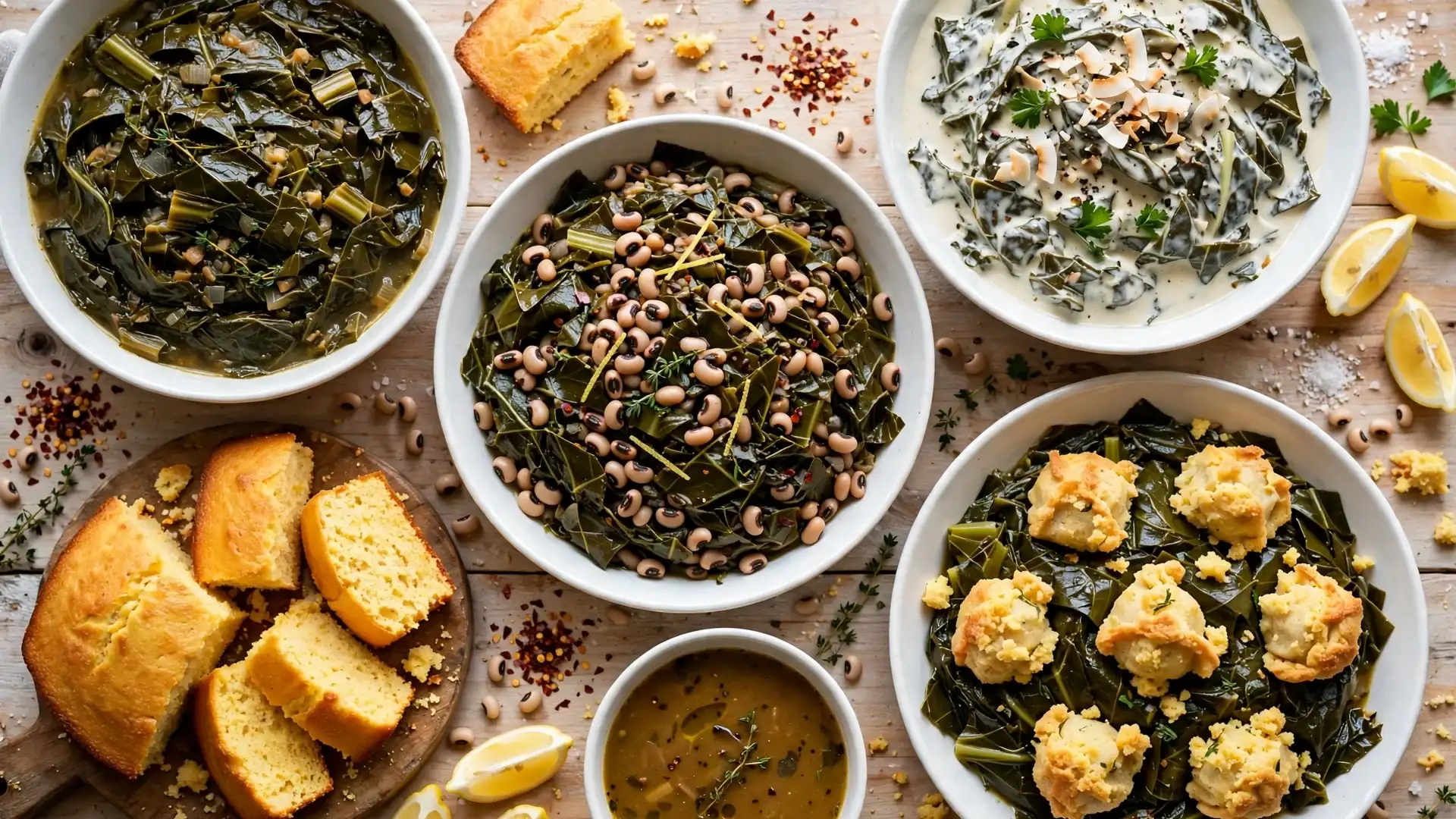
That is what this collection is — fifteen collard greens recipes southern style for vegetarians, from the low-and-slow stovetop classic to a 5-minute Instant Pot version, a set-it-and-forget-it slow cooker pot, and a few quick sautés for busy weeknights. Every single one is meatless, every one is halal-friendly, and every one finishes with that bright splash of vinegar that makes the whole pot sing.
The short answer: yes, Southern collard greens can be completely vegetarian. The trick is layering the flavour yourself — smoked paprika bloomed in hot oil, a few drops of liquid smoke, tamari for savouriness, and apple cider vinegar at the end — then simmering the greens low and slow until they turn silky. This article shows you the system once, then gives you 15 ways to use it.
What Makes Collard Greens Southern-Style?
Collard greens are loose-leafed greens from the same family as cabbage, kale and broccoli, with tough, dark leaves that start out bitter and turn silky and sweet with slow cooking. Southern cooks tame them with three things: time, smoke and acid.
First, time. The leaves simmer low and slow — usually 45 minutes to an hour, sometimes two — until they go from bright green to deep olive and a leaf mashes easily against the side of the pot. Second, smoke. Traditionally that came from a ham hock or bacon simmered in the pot first, so the broth picked up the flavour before the greens ever went in. Third, acid. A splash of apple cider vinegar at the end, sometimes with a pinch of sugar, cuts the bitterness and wakes the whole pot up.
And then there is the liquid gold left behind: pot likker. That rich, seasoned broth is the whole point of the pot for a lot of Southern cooks — spooned over the greens, sopped up with cornbread, or saved for soup. Every recipe in this collection makes a pot likker worth keeping, and the first recipe shows you how to use it twice.
Collards are at their peak from January through April, which is one reason they show up on New Year’s Day tables across the South — greens for luck, black-eyed peas for coins. If you are planning a New Year’s spread, they sit beautifully next to the dishes in our New Year party appetizers collection.
How to Get Smoky Flavor Without Meat
This is the one section to read before you cook any of the 15 recipes, because the same four builders show up in all of them. Smoked meat gives collards three things: smoke, salt-and-savouriness, and a little fat. Here is how you replace all three.
Smoke: smoked paprika is the workhorse — bloom 1 to 1½ teaspoons in hot oil with the garlic before anything else goes in, so the spice wakes up instead of tasting dusty. A few drops of liquid smoke (¼ to ½ teaspoon, no more) adds the campfire note. A little goes a very long way.
Savouriness: tamari or soy sauce brings the salty, umami depth. Use tamari if you need the dish gluten-free. Mushrooms do the same job in a different way, which is why Dish 14 leans on them.
Fat: olive oil or butter carries the flavour and gives the broth body. And acid — apple cider vinegar, stirred in at the very end — is what keeps the pot from tasting flat.
Two traps worth naming, because I found them in other people’s “vegetarian” recipes while researching this article. Traditional Worcestershire sauce contains anchovy, so it is not vegetarian — if a recipe calls for it, use a vegetarian Worcestershire or leave it out and add an extra splash of tamari. And honey is not vegan, so the vegan dishes in this collection use agave or maple syrup instead. Small details, but they are the difference between a recipe that says vegetarian and one that actually is.
How to Clean and Cut Collard Greens
Collards grow close to the ground, so they carry grit. Skip this step and dinner crunches.
Fill a clean sink or a very large bowl with cool water and swish the leaves through it. Lift them out — don’t pour the water off over them, or the grit just settles back on. Repeat with fresh water until the water runs clear, usually two or three washes. Then fold each leaf in half along the thick centre rib and slice the rib away, or just pull the leaf off it with your hand. Stack six or eight leaves, roll them up like a cigar, and slice across into ribbons about an inch wide. That roll-and-slice cut is called chiffonade, and it is the fastest way to prep two pounds of greens.
A few practical notes from Clemson Cooperative Extension: wash greens thoroughly, cut off the woody stems, and never cook greens in an aluminum pot — a heavy pot, Dutch oven or ceramic pot does the job better. If you are freezing a batch, blanch the cut greens in boiling water for 3 minutes first, then cool, drain and pack them. Their full guide is here: Clemson Extension’s guide to canning collards.
Two pounds of fresh collards — about two large bunches — looks like a ridiculous amount raw. It cooks down to about a third, which is why most of these recipes serve six as a side.
15 Collard Greens Recipes Southern Style for Vegetarians
1. Classic Smoky Vegetarian Collard Greens
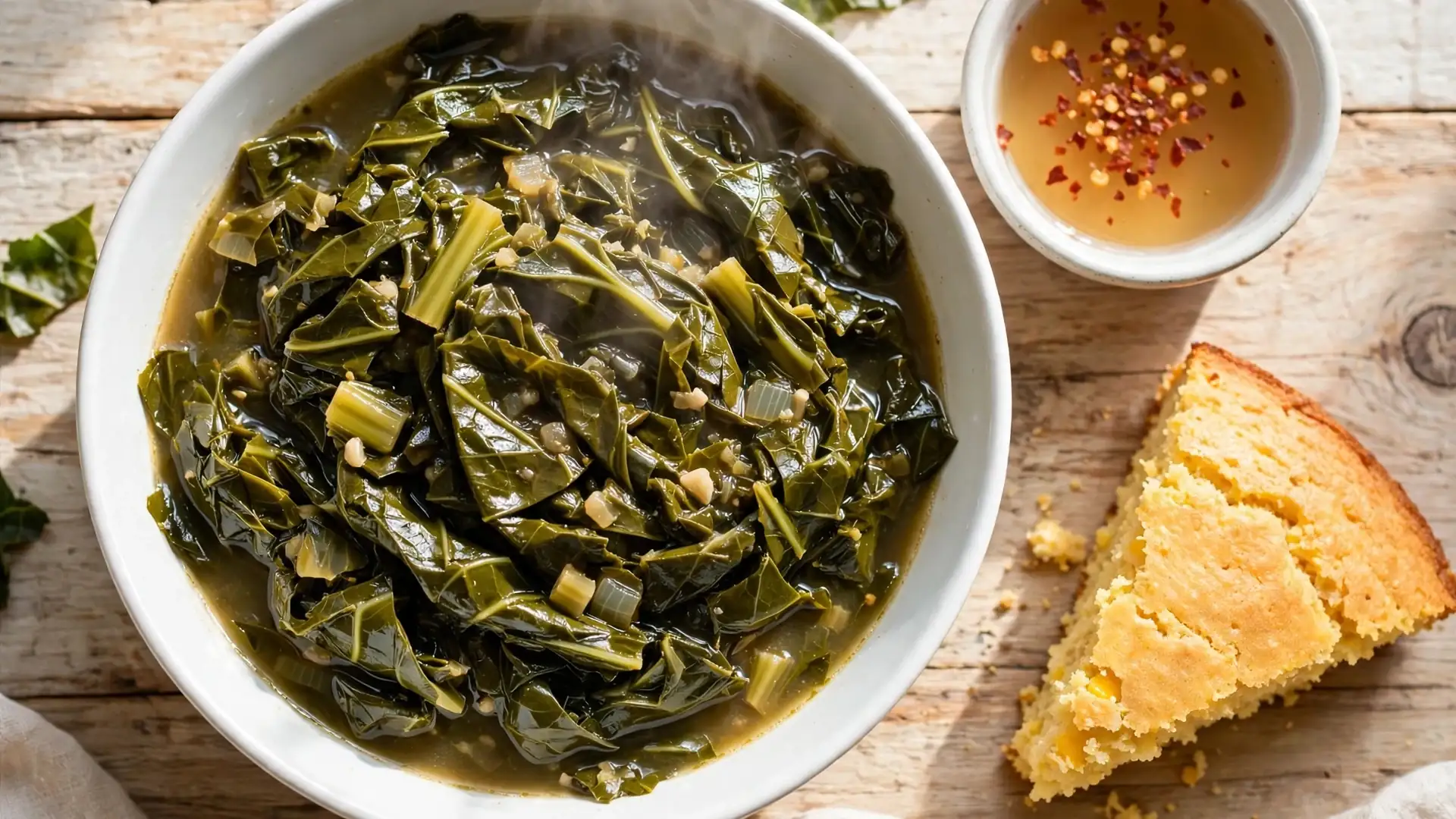
This is the flagship pot — the one everything else is a variation of. Two pounds of greens simmered in a broth built from onion, garlic, smoked paprika and tamari, then finished with vinegar. Save the pot likker: it is soup base for tomorrow.
Shop Now – Lodge Essential Enamel Cast Iron Dutch Oven, 6-Quart on Amazon
Classic Smoky Vegetarian Collard Greens
Ingredients
Method
- Wash the greens in 2 to 3 changes of cool water, lifting them out so the grit stays behind. Strip the centre ribs, stack the leaves, roll and slice into ribbons.
- Heat the olive oil in a large Dutch oven over medium heat. Cook the onion for 5 minutes until soft. Add the garlic, smoked paprika and red pepper flakes and cook for 1 minute, until the kitchen smells smoky and sweet.
- Pour in the vegetable broth, tamari, liquid smoke, brown sugar, salt and pepper. Bring to a boil.
- Add the greens a few handfuls at a time, stirring each addition until it wilts and makes room for more.
- Cover, reduce the heat to low, and simmer for 45 to 50 minutes, stirring every 10 minutes, until the greens are dark, silky and tender all the way through.
- Stir in the apple cider vinegar. Taste the pot likker and adjust the salt. Serve hot with some of the broth spooned over.
2. Instant Pot Vegetarian Collard Greens
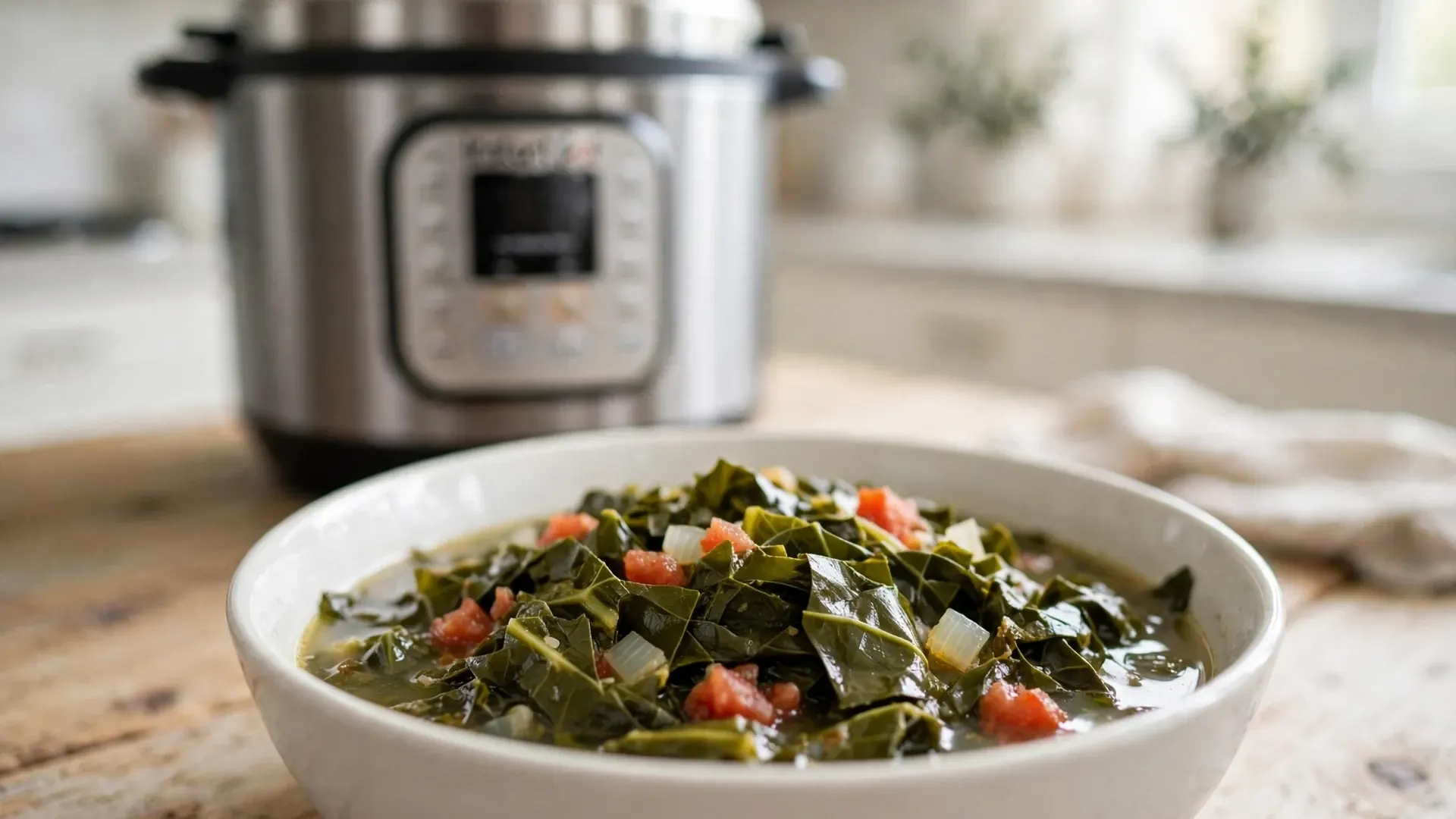
The same smoky pot, done in about 40 minutes start to finish. The pressure cooker does the slow-simmering work for you, and the natural release is what keeps the leaves silky instead of stringy.
Shop Now – Instant Pot Duo 7-in-1 Electric Pressure Cooker, 6-Quart on Amazon
Instant Pot Vegetarian Collard Greens
Ingredients
Method
- Set the Instant Pot to sauté. Add the olive oil and cook the onion for 2 minutes until soft, then the garlic for 1 minute more.
- Stir in the tomato and smoked paprika and cook for 1 minute.
- Pour in the vegetable broth and scrape up any browned bits from the bottom. Stir in the garlic powder, liquid smoke, salt and pepper.
- Add the greens a few handfuls at a time, stirring each addition until it wilts enough to fit.
- Seal the lid and cook on high pressure for 5 minutes. Let the steam release naturally for 20 minutes, then open the valve and release the rest.
- Stir in the apple cider vinegar, taste, and adjust the salt before serving.
3. Slow Cooker Meatless Southern Collard Greens
The set-it-and-forget-it pot. Everything goes in at once, and five hours later the house smells like Sunday dinner. This is the one to make when the oven is busy with the rest of the holiday table.
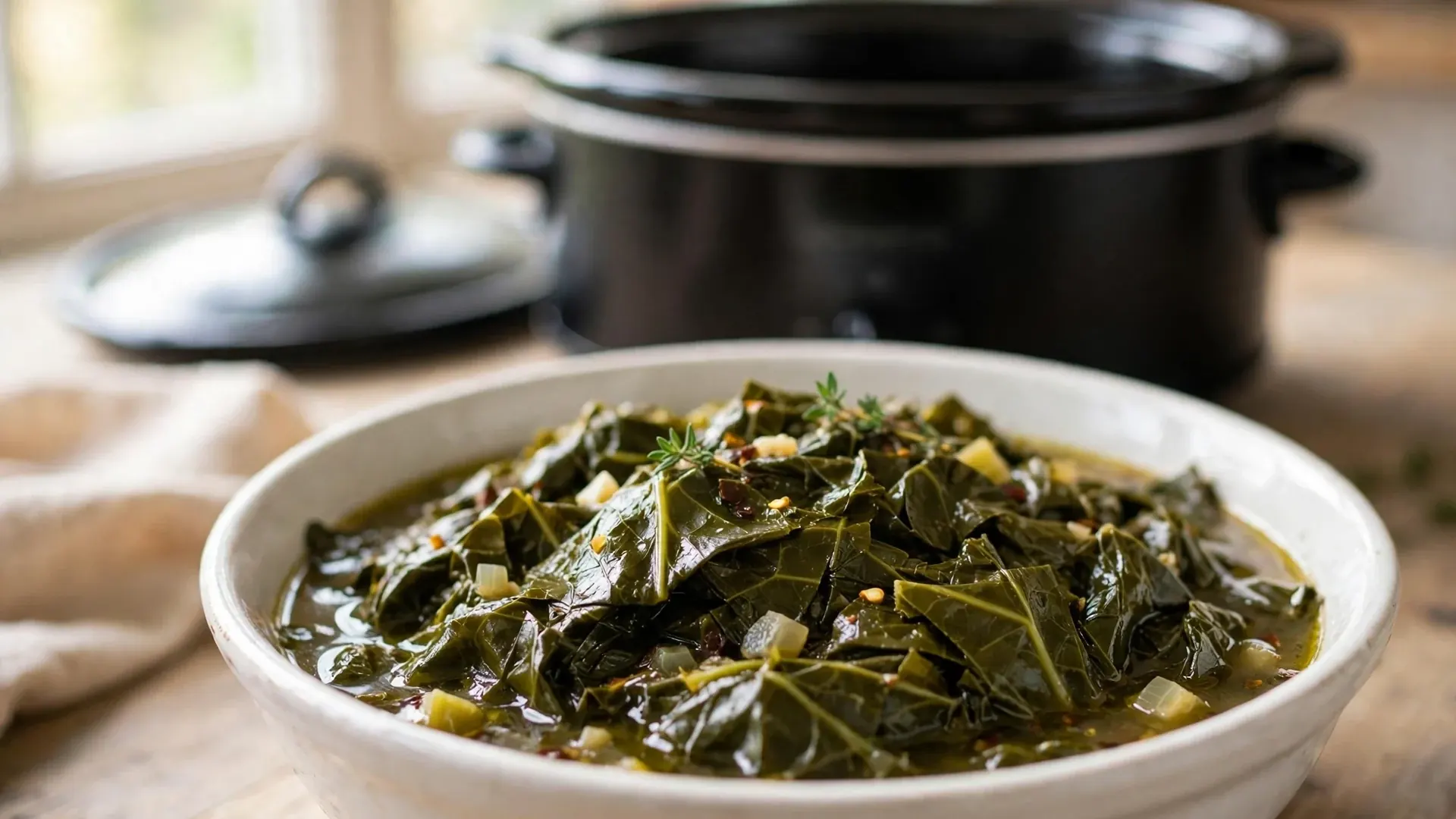
Shop Now – Crock-Pot 7-Quart Oval Manual Slow Cooker on Amazon
Slow Cooker Meatless Southern Collard Greens
Ingredients
Method
- Add the chopped greens to the slow cooker. They will look like far too much — they cook down beautifully.
- Add the onion, smoked paprika, garlic powder, onion powder, apple cider vinegar, brown sugar, liquid smoke, red pepper flakes, salt and pepper. Pour in the vegetable broth and mix well.
- Cover and cook on LOW for 4 to 6 hours, or on HIGH for 2 to 3 hours, until the greens are completely tender.
- Taste and adjust with more vinegar, salt, or a pinch of sugar. Serve hot with cornbread.
4. Vegan Coconut Milk Collard Greens
Creamy without a drop of dairy. The coconut milk turns the pot likker into something silky and rich, and a squeeze of lime at the end keeps it from feeling heavy. Fully vegan — the sweetness comes from the coconut, not honey.
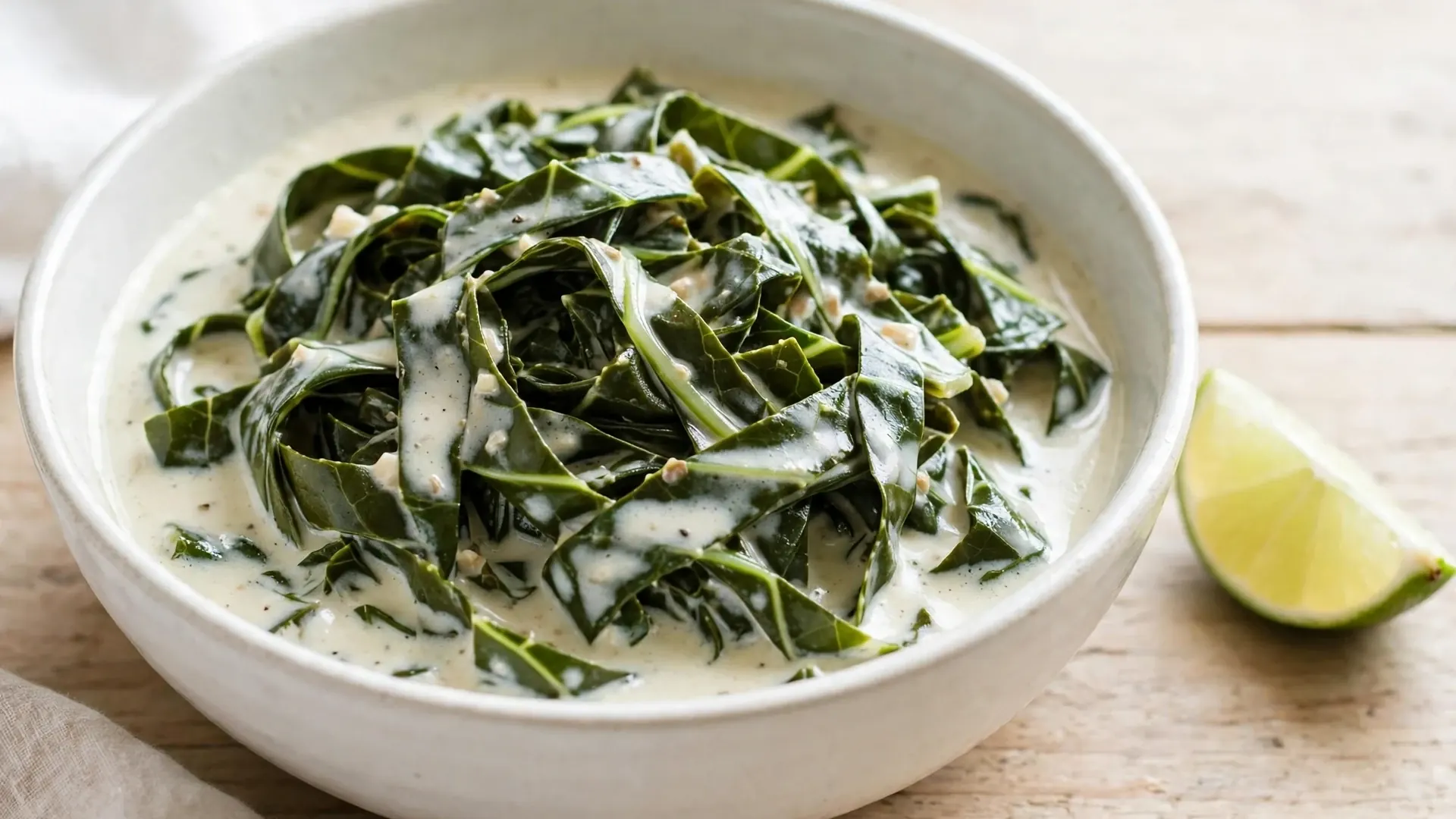
Vegan Coconut Milk Collard Greens
Ingredients
Method
- Heat the coconut oil in a large pot over medium heat. Cook the onion for 5 minutes, then the garlic, smoked paprika and ginger for 1 minute.
- Pour in the coconut milk and vegetable broth and bring to a gentle simmer.
- Add the greens a few handfuls at a time, stirring each addition until it wilts.
- Cover and simmer on low for 35 to 40 minutes, stirring now and then, until the greens are tender.
- Stir in the lime juice, taste, and adjust the salt. Serve hot.
5. Garlic Butter Collard Greens
The weeknight one. Thin ribbons, a hot pan, butter and garlic — dinner in 25 minutes. It is the fastest dish in this collection, and the one I make when the greens were an afterthought at the market.
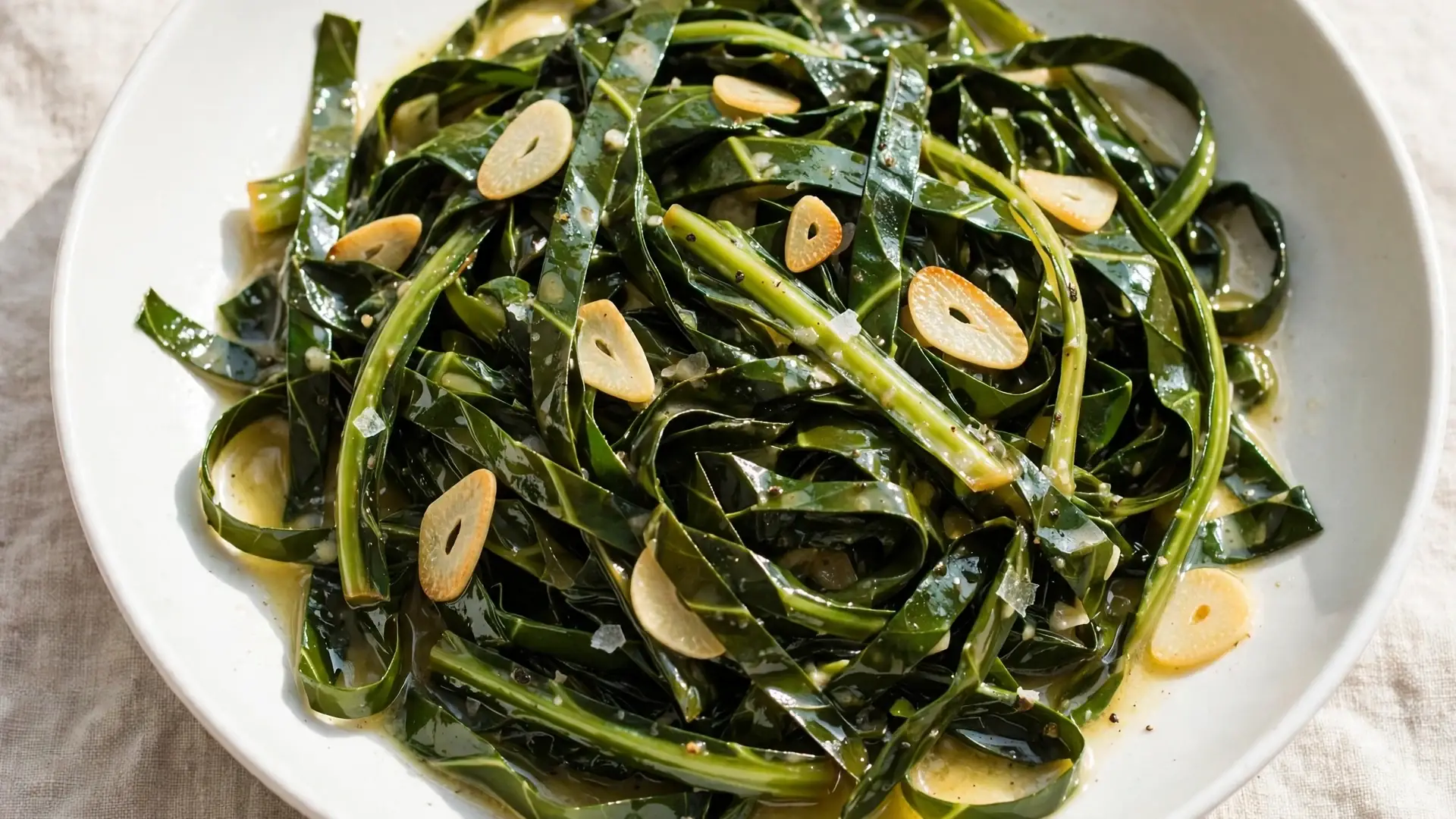
Garlic Butter Collard Greens
Ingredients
Method
- Melt the butter in a large deep skillet over medium-high heat. Add the garlic and red pepper flakes and cook for 1 minute until the garlic turns golden.
- Add the greens and cook, stirring, until they begin to wilt, about 5 minutes.
- Pour in the vegetable broth, season with salt and pepper, and bring to a simmer. Cover and cook for 10 to 12 minutes, until the greens are tender but not soft.
- Stir in the apple cider vinegar and serve hot.
6. Spicy Jalapeño and Hot Sauce Collard Greens
For the table that likes a little heat. Fresh jalapeños go in with the onions so their flavour cooks into the broth, and hot sauce at the end lets everyone adjust their own bowl. Take the seeds out if you want warmth without the burn.
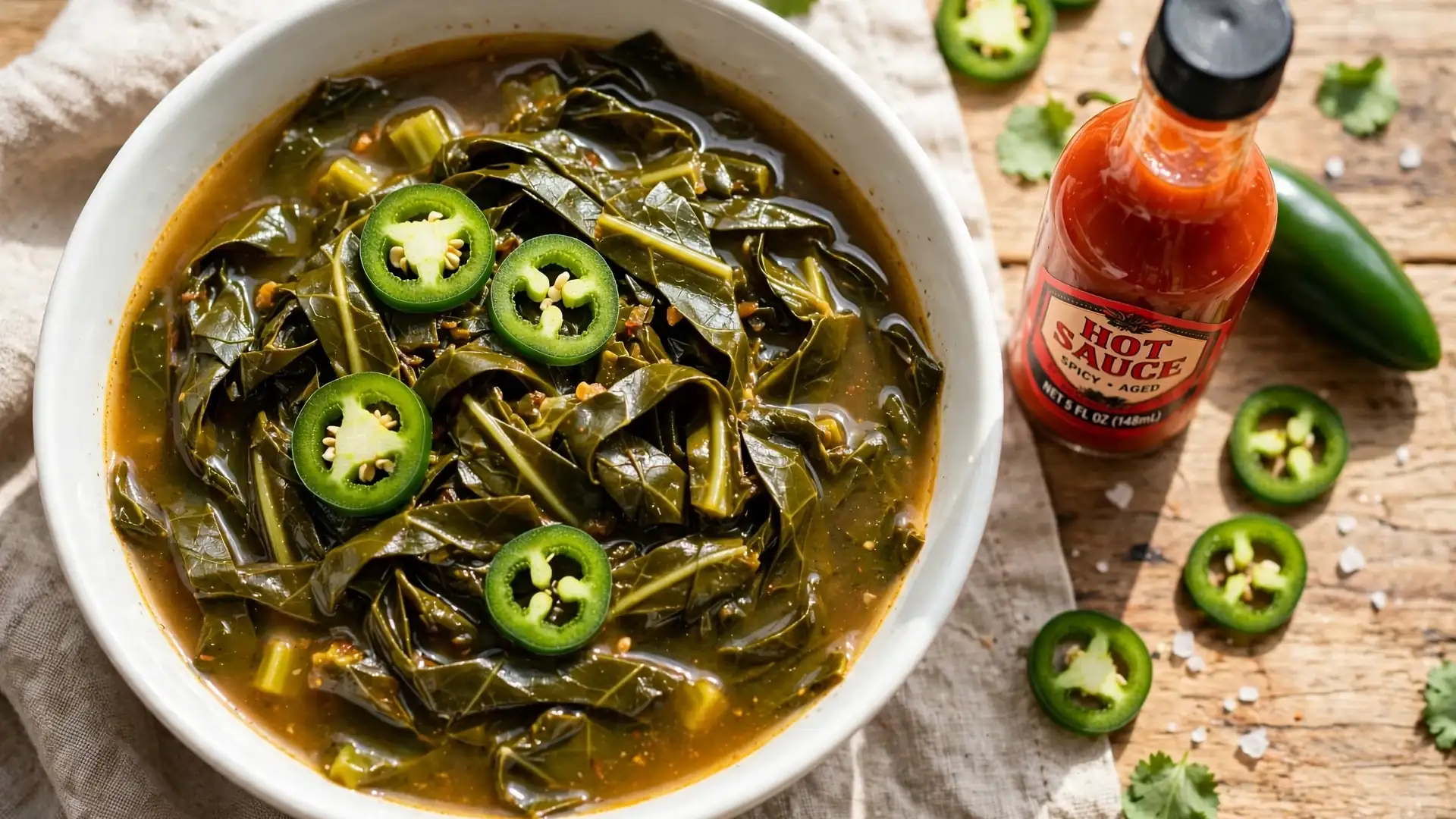
Spicy Jalapeño and Hot Sauce Collard Greens
Ingredients
Method
- Heat the olive oil in a large Dutch oven over medium heat. Cook the onion and jalapeños for 5 minutes, then the garlic and smoked paprika for 1 minute.
- Pour in the vegetable broth and brown sugar and bring to a boil.
- Add the greens a few handfuls at a time, stirring each addition until it wilts.
- Cover, reduce the heat to low, and simmer for 45 to 50 minutes, stirring now and then, until the greens are tender.
- Stir in the hot sauce and apple cider vinegar. Taste and adjust the salt. Serve hot, with more hot sauce on the table.
7. Quick Lemon Garlic Collard Greens
Twenty minutes, one pan, and the brightest dish in this collection. Lemon zest goes in at the end so the citrus stays fresh, and the short cook keeps the leaves a vivid green instead of deep olive.
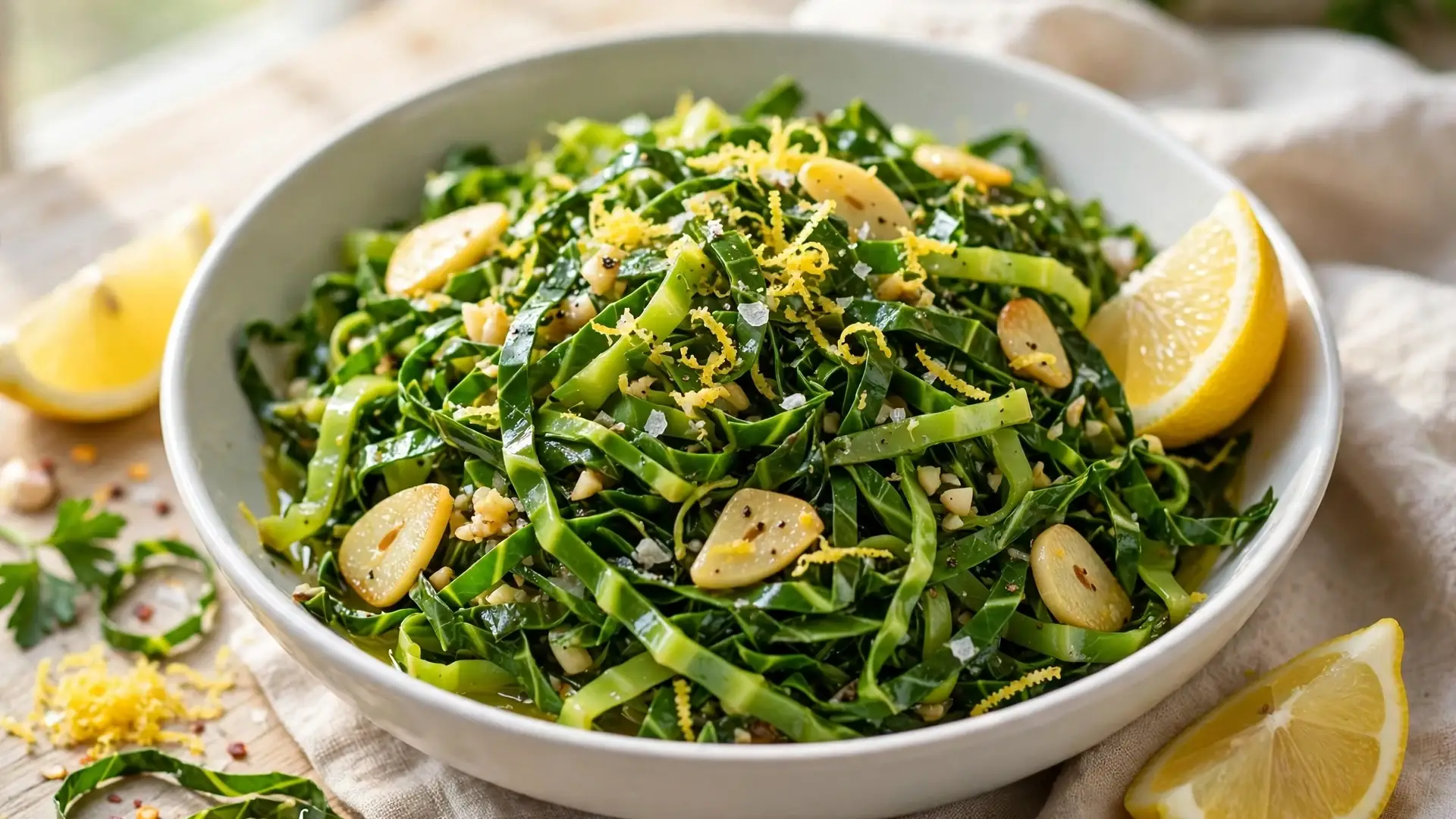
Quick Lemon Garlic Collard Greens
Ingredients
Method
- Heat the olive oil in a large deep skillet over medium-high heat. Cook the onion for 3 minutes until it starts to turn golden, then the garlic for 2 minutes more.
- Add the greens and cook, stirring, until they begin to wilt, about 5 minutes.
- Pour in the vegetable broth and red pepper flakes, season with salt and pepper, and bring to a simmer. Cover and cook for 15 to 20 minutes, lifting the lid to stir now and then, until the greens are fairly tender but not soft.
- Stir in the lemon zest and lemon juice and serve hot.
8. Collard Greens with Black-Eyed Peas
Two New Year’s Day lucky foods in one pot. The peas go in near the end so they stay whole and creamy, and their starch thickens the pot likker just enough to coat every ribbon.
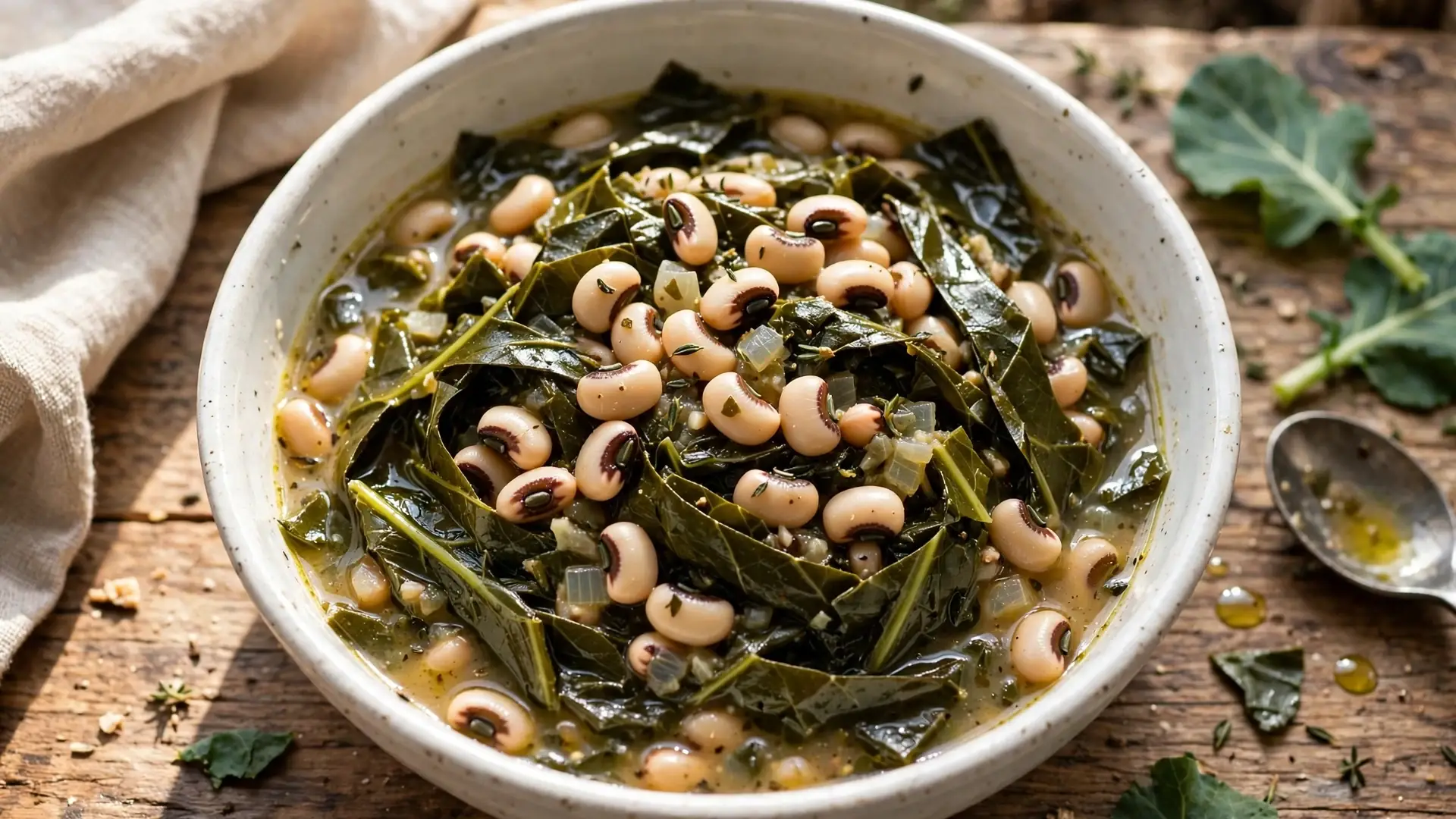
Collard Greens with Black-Eyed Peas
Ingredients
Method
- Heat the olive oil in a large Dutch oven over medium heat. Cook the onion for 5 minutes, then the garlic and smoked paprika for 1 minute.
- Pour in the vegetable broth and liquid smoke and bring to a boil.
- Add the greens a few handfuls at a time, stirring each addition until it wilts. Cover, reduce the heat to low, and simmer for 40 minutes.
- Stir in the black-eyed peas and simmer for 15 minutes more, until the greens are tender and the peas are heated through.
- Stir in the apple cider vinegar, taste, and adjust the salt. Serve hot with some of the broth.
9. Collard Greens with Cornbread Dumplings
The coziest dish in this collection. While the greens simmer, you drop spoonfuls of cornbread batter right onto the pot, put the lid on, and let the steam cook them into fluffy golden dumplings that soak up the pot likker from underneath.
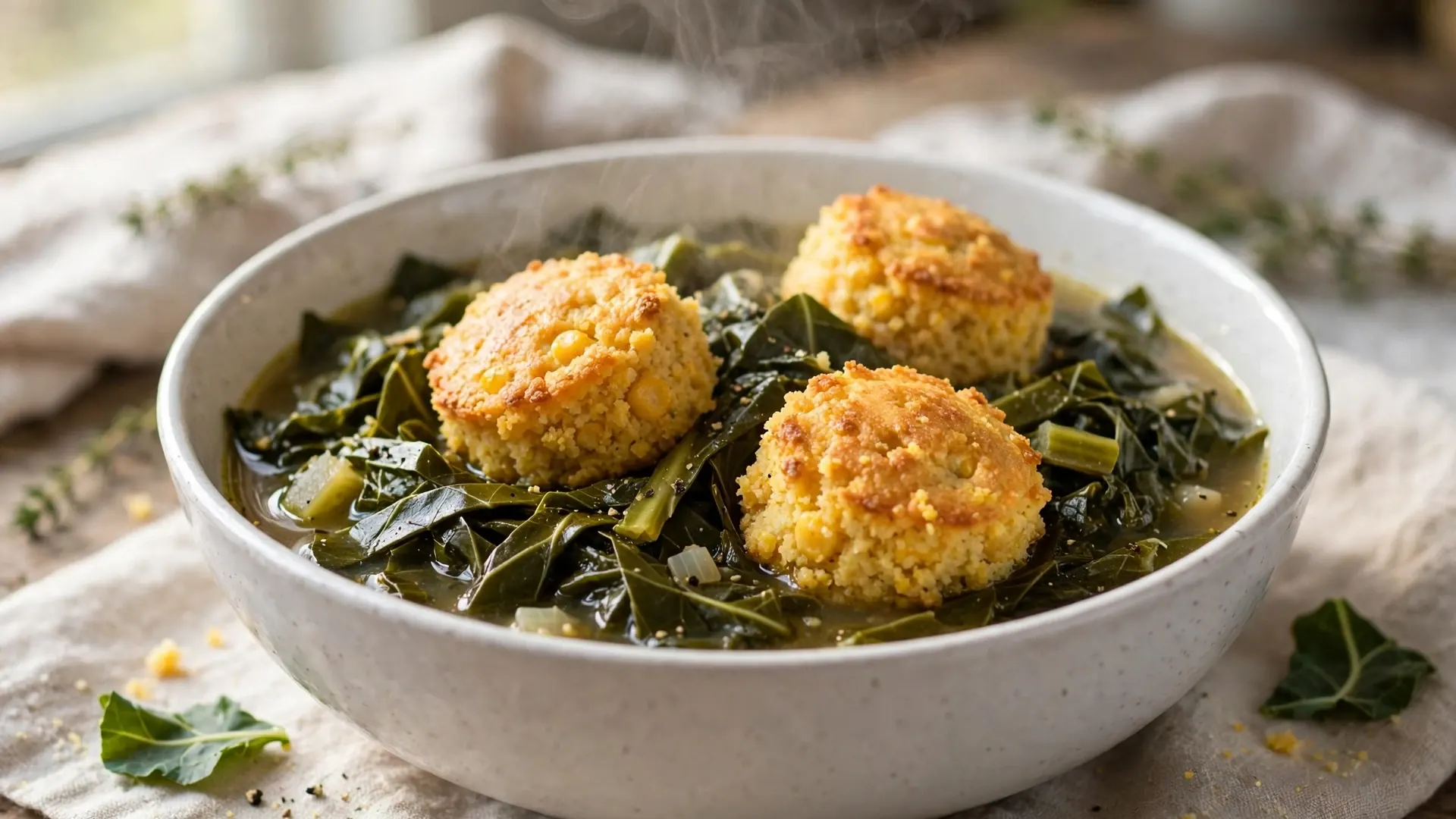
Collard Greens with Cornbread Dumplings
Ingredients
Method
- Cook the greens: heat the olive oil in a large Dutch oven, cook the onion for 5 minutes, then the garlic and smoked paprika for 1 minute. Pour in the broth, add the greens a few handfuls at a time, and simmer covered on low for 45 minutes.
- While the greens cook, make the batter: whisk the cornmeal, flour, baking powder and salt in a bowl. In a second bowl, whisk the egg, milk and melted butter. Stir the wet into the dry just until combined — a few lumps are fine.
- Uncover the greens and stir in the apple cider vinegar, salt and pepper. Drop the batter by heaped tablespoonfuls onto the simmering greens, spacing them out.
- Cover and cook for 15 to 18 minutes without lifting the lid, until the dumplings are puffed and cooked through. Serve hot, one or two dumplings per bowl with plenty of greens and broth.
10. Collard Greens with Roasted Sweet Potatoes
Sweet against smoky, soft against silky. The sweet potatoes roast separately so their edges caramelise, then fold into the greens at the end with a spoonful of maple syrup. It is the prettiest bowl in this collection, and a natural fit for the Thanksgiving table.
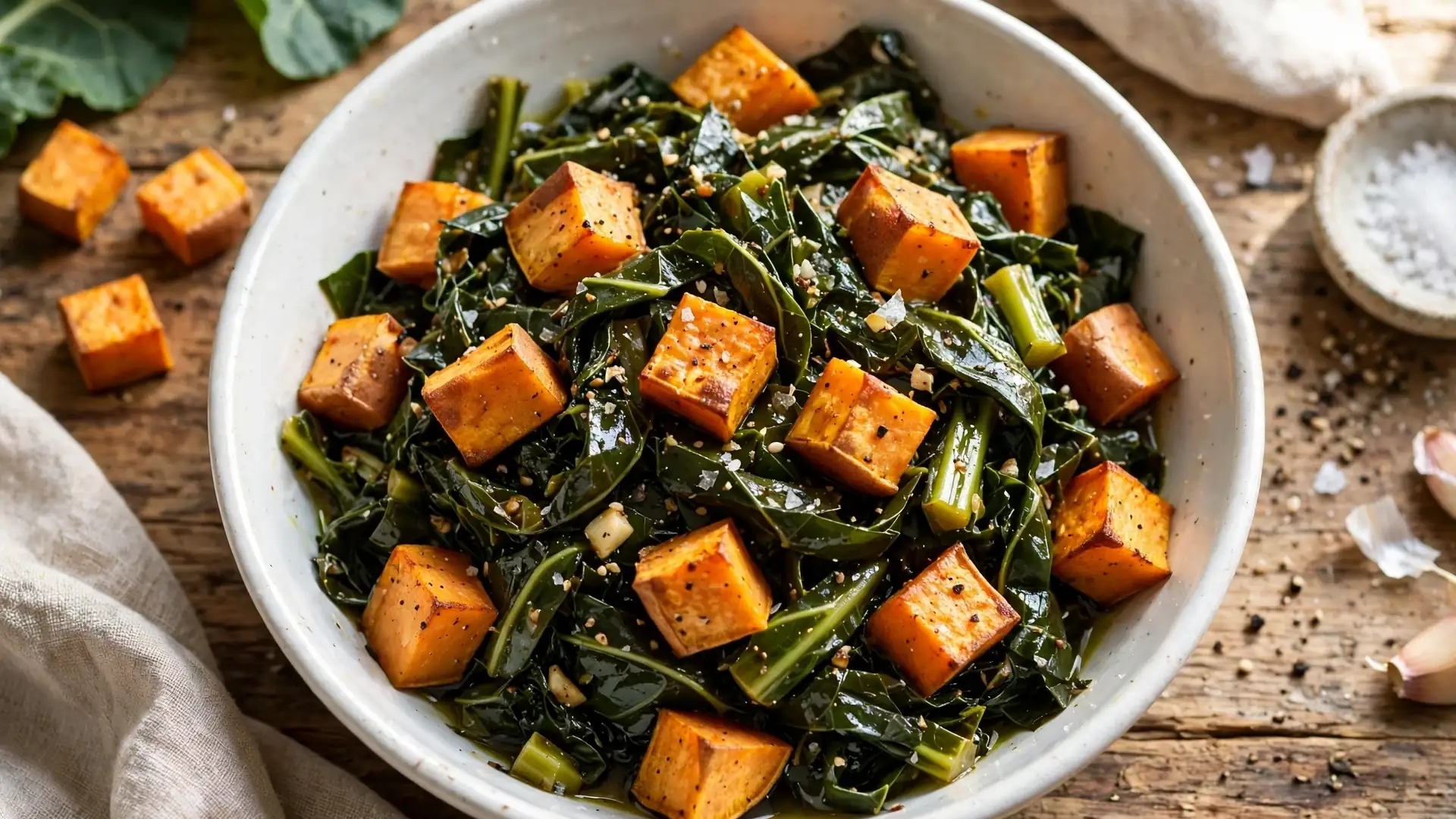
Collard Greens with Roasted Sweet Potatoes
Ingredients
Method
- Heat the oven to 400°F. Toss the sweet potato cubes with 1 tablespoon of the olive oil, salt and pepper, spread on a baking sheet, and roast for 25 minutes until golden at the edges.
- While they roast, heat the remaining olive oil in a large Dutch oven. Cook the onion for 5 minutes, then the garlic, smoked paprika and cinnamon for 1 minute.
- Pour in the vegetable broth and bring to a boil. Add the greens a few handfuls at a time, then cover and simmer on low for 40 minutes until tender.
- Fold in the roasted sweet potatoes, apple cider vinegar and maple syrup. Simmer for 5 minutes more, taste, and adjust the salt.
11. Creamy Garlic Collard Greens
Cream cheese and cream melt into the pot likker and turn it into a silky sauce that clings to every ribbon. A pinch of nutmeg is the quiet background note — you won’t taste it directly, but you’d miss it if it weren’t there.
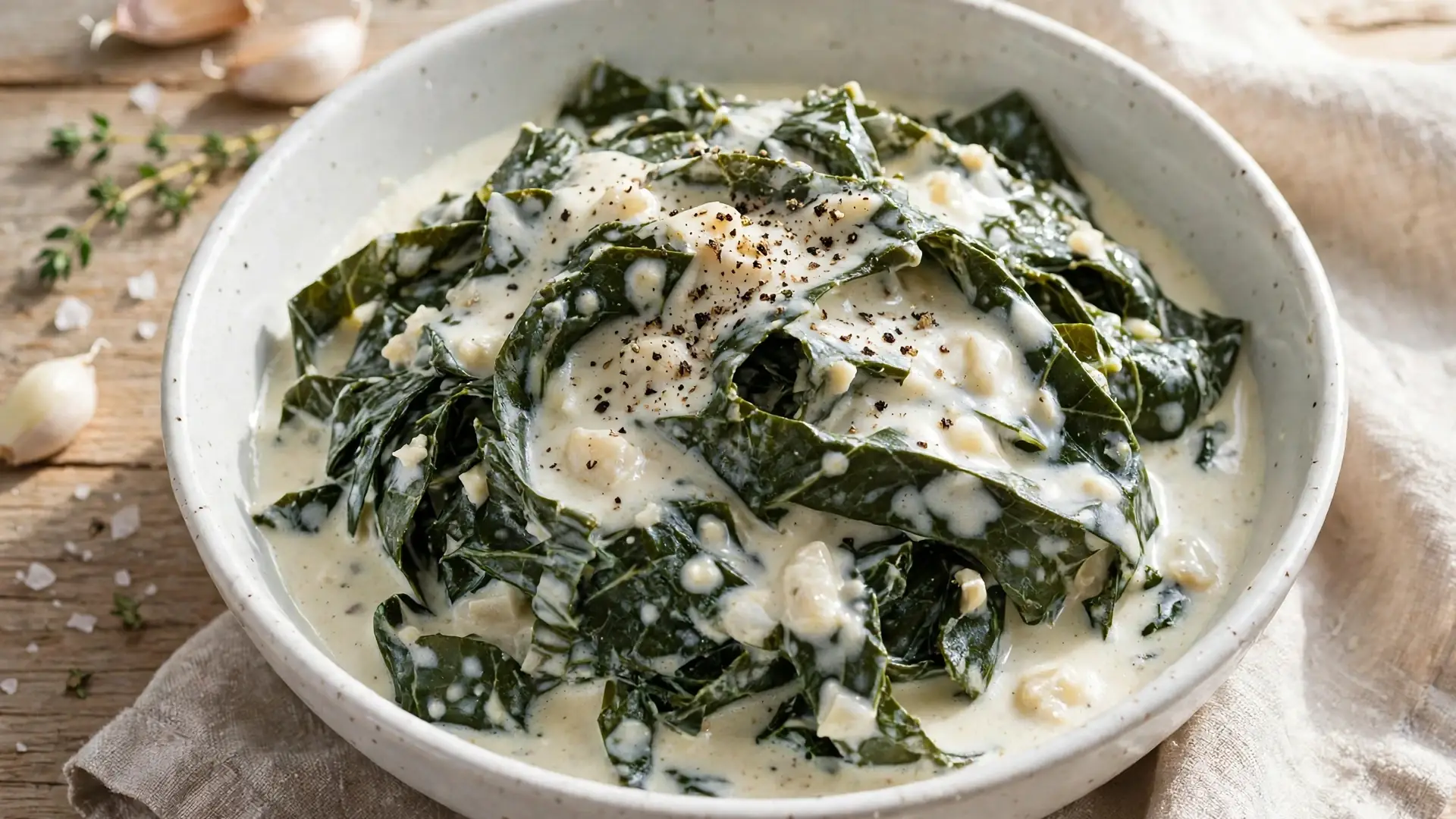
Creamy Garlic Collard Greens
Ingredients
Method
- Melt the butter in a large Dutch oven over medium heat. Cook the onion for 5 minutes, then the garlic for 1 minute.
- Pour in the vegetable broth and bring to a simmer. Add the greens a few handfuls at a time, stirring each addition until it wilts.
- Cover and simmer on low for 30 minutes, stirring now and then, until the greens are tender.
- Stir in the cream cheese and heavy cream and simmer uncovered for 10 minutes, stirring, until the sauce is creamy and coats the greens.
- Season with the nutmeg, salt, pepper and red pepper flakes. Serve hot.
12. Collard Greens with White Beans and Tomatoes
A one-pot dinner, not just a side. Cannellini beans make it hearty enough for a main, and the tomatoes cook down into the broth so the pot likker turns rosy and rich. Crusty bread is not optional here.
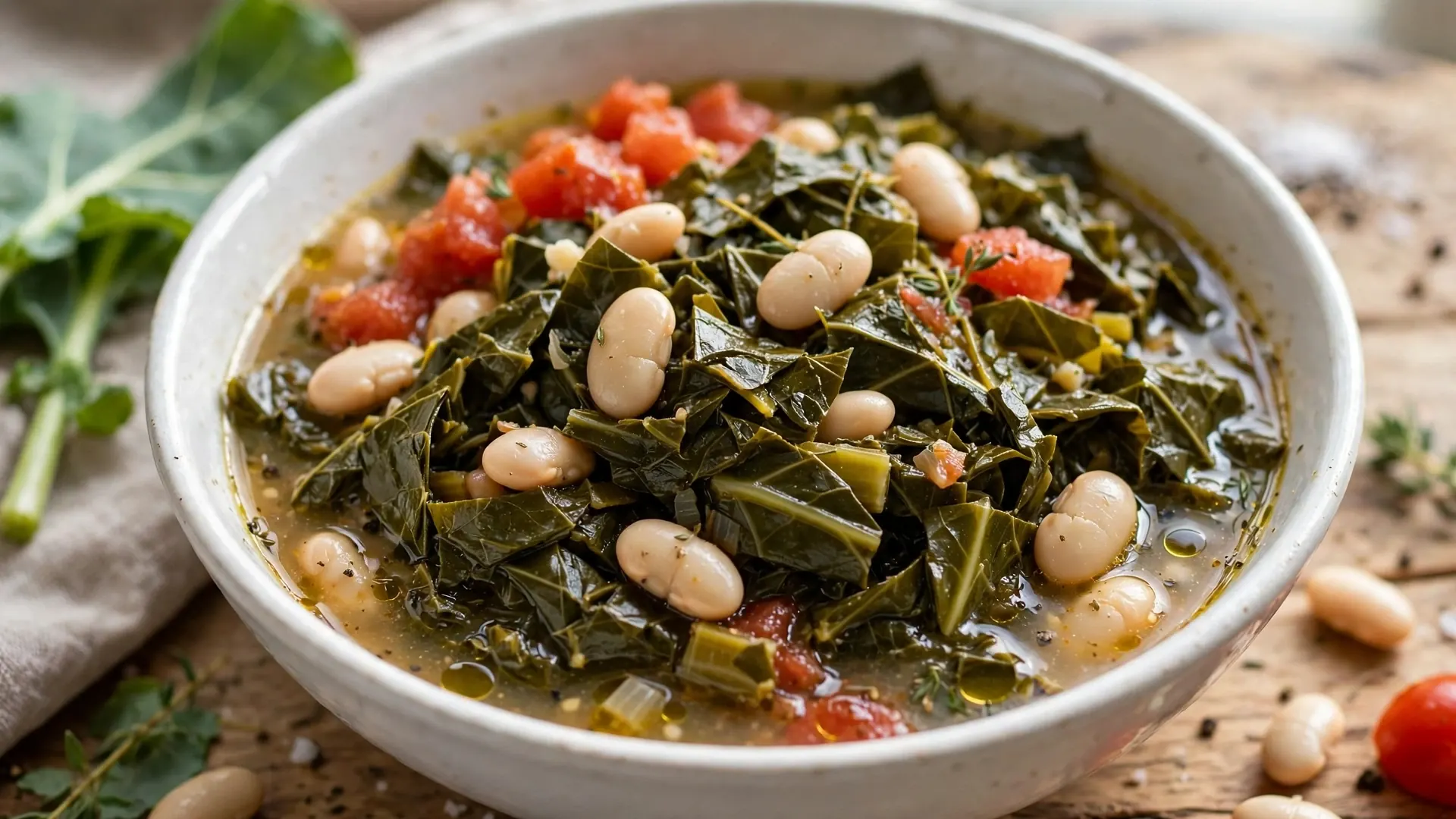
Collard Greens with White Beans and Tomatoes
Ingredients
Method
- Heat the olive oil in a large Dutch oven over medium heat. Cook the onion for 5 minutes, then the garlic for 1 minute.
- Add the diced tomatoes and smoked paprika and cook for 2 minutes, stirring.
- Pour in the vegetable broth and bring to a boil. Add the greens a few handfuls at a time, then cover and simmer on low for 35 minutes.
- Stir in the cannellini beans and simmer for 10 minutes more, until the greens are tender and the beans are heated through.
- Stir in the apple cider vinegar, taste, and adjust the salt. Serve hot with crusty bread.
13. Italian-Style Collard Greens with Garlic, Chili and Lemon
Not Southern in the strict sense, but the technique is the same — garlic, oil, chili, lemon — and it belongs here because a lot of people searching for collard greens recipes are looking for exactly this lighter, quicker style. Thirty minutes, one pan, very little broth.
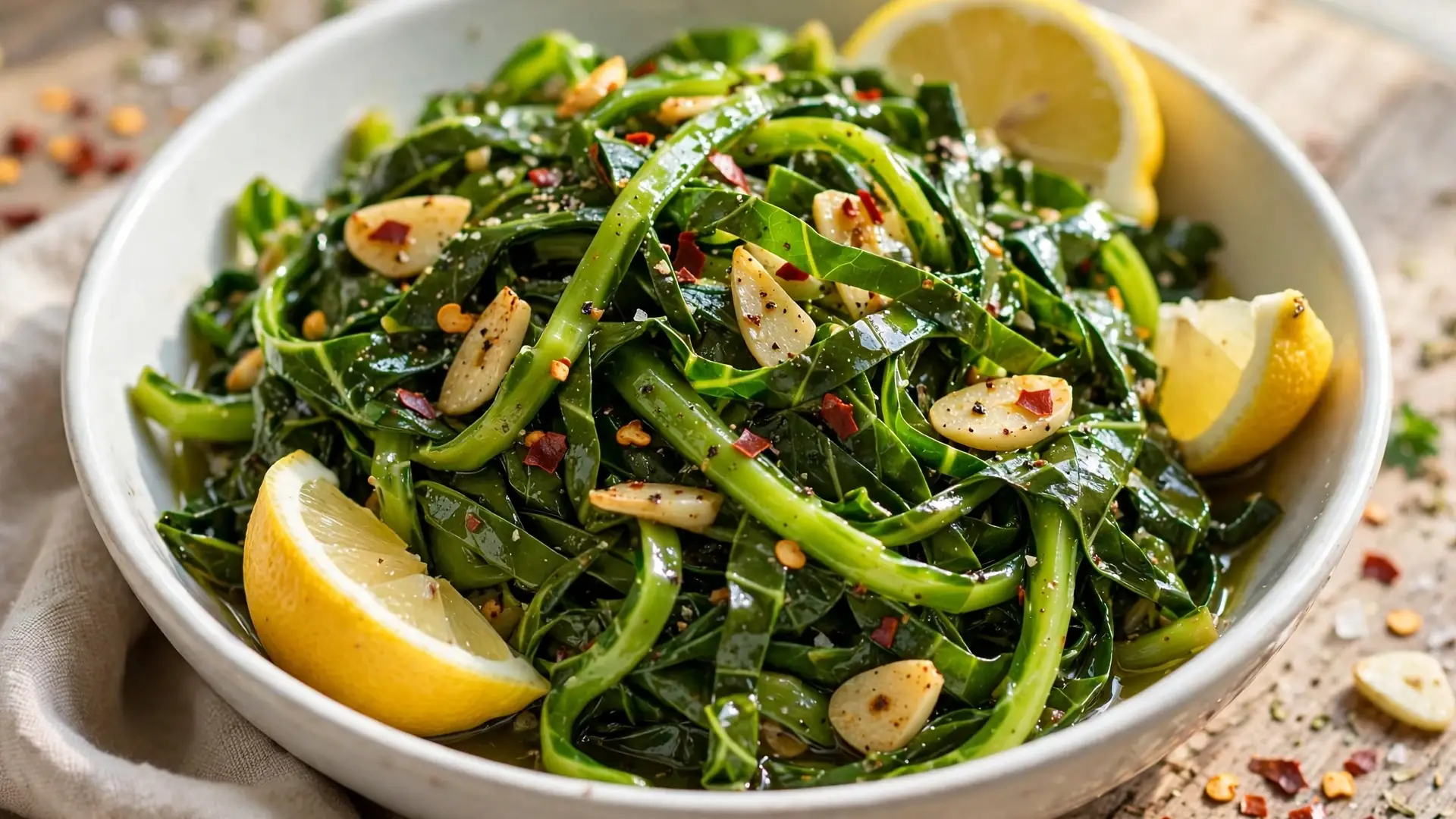
Italian-Style Collard Greens with Garlic, Chili and Lemon
Ingredients
Method
- Heat the olive oil in a large deep skillet over medium heat. Add the garlic and red pepper flakes and cook for 1 minute until the garlic turns pale gold.
- Add the greens and cook, stirring, until they begin to wilt, about 5 minutes.
- Pour in the vegetable broth, season with salt and pepper, and bring to a simmer. Cover and cook for 25 to 30 minutes, stirring now and then, until the greens are tender.
- Stir in the lemon juice and lemon zest. Serve hot, with vegetarian hard cheese over the top if you like.
14. Mushroom and Collard Greens Sauté
Mushrooms are the umami trick in this collection. Browned hard in a hot pan, they bring the meaty, savoury depth that smoked meat usually provides — no liquid smoke needed in this one, though a few drops wouldn’t hurt.
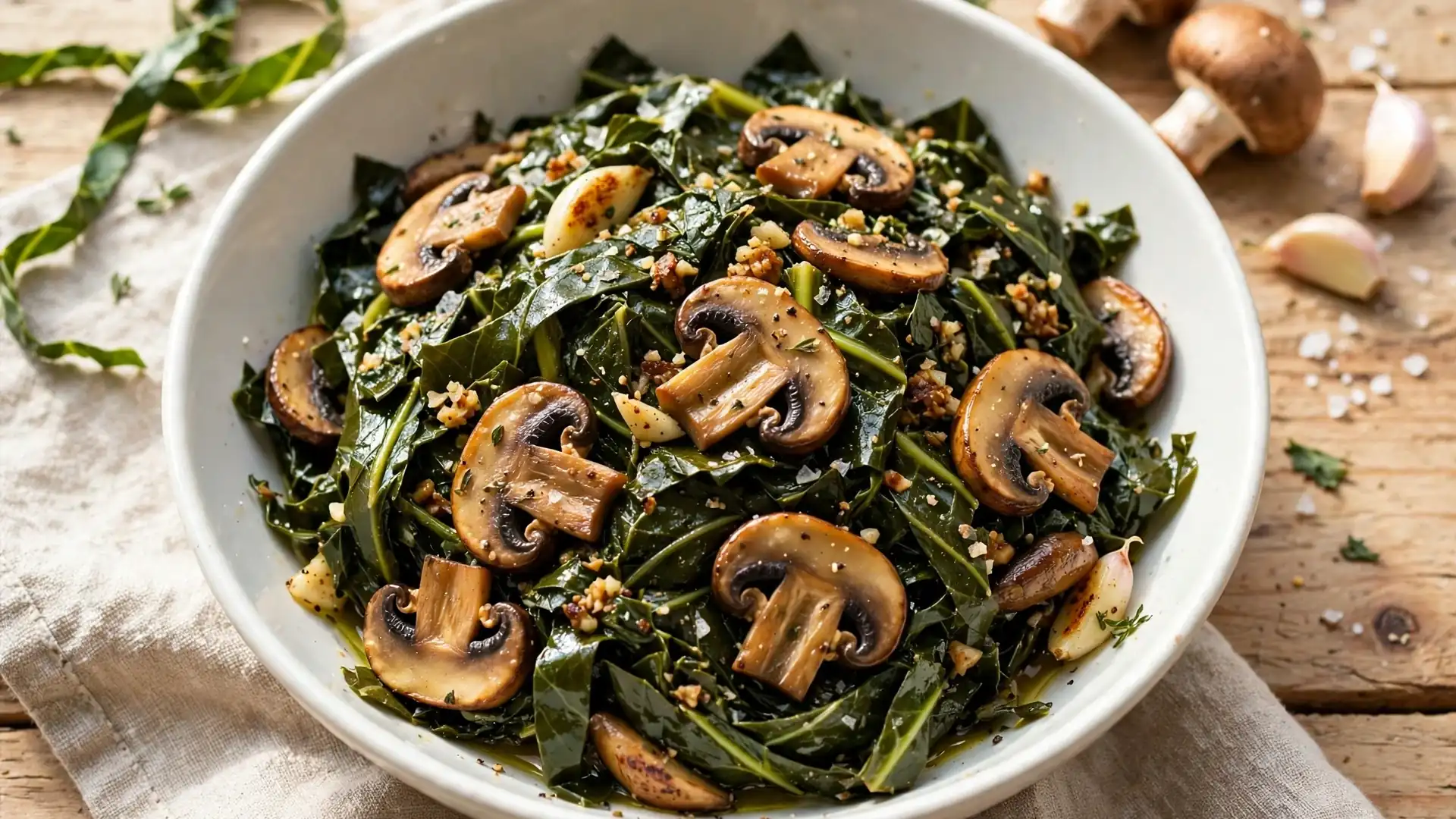
Mushroom and Collard Greens Sauté
Ingredients
Method
- Heat 1 tablespoon of the olive oil in a large deep skillet over medium-high heat. Add the mushrooms in a single layer and cook without moving them for 5 to 6 minutes, until deeply browned on one side. Flip once, cook 2 minutes more, then remove to a plate.
- Add the remaining olive oil and the butter to the same pan. Cook the onion for 4 minutes, then the garlic and smoked paprika for 1 minute.
- Add the greens and cook, stirring, until they begin to wilt, about 5 minutes. Pour in the vegetable broth and tamari, cover, and simmer for 15 minutes until tender.
- Return the mushrooms to the pan, stir in the apple cider vinegar, and cook for 2 minutes more. Taste and adjust the salt.
15. Southern Mixed Greens
Collards, mustard greens and turnip greens in one pot, the way a lot of Southern kitchens have always done it. The mustard and turnip leaves are a little sharper than collards, so the mix has more bite — and the same smoky broth ties it all together.
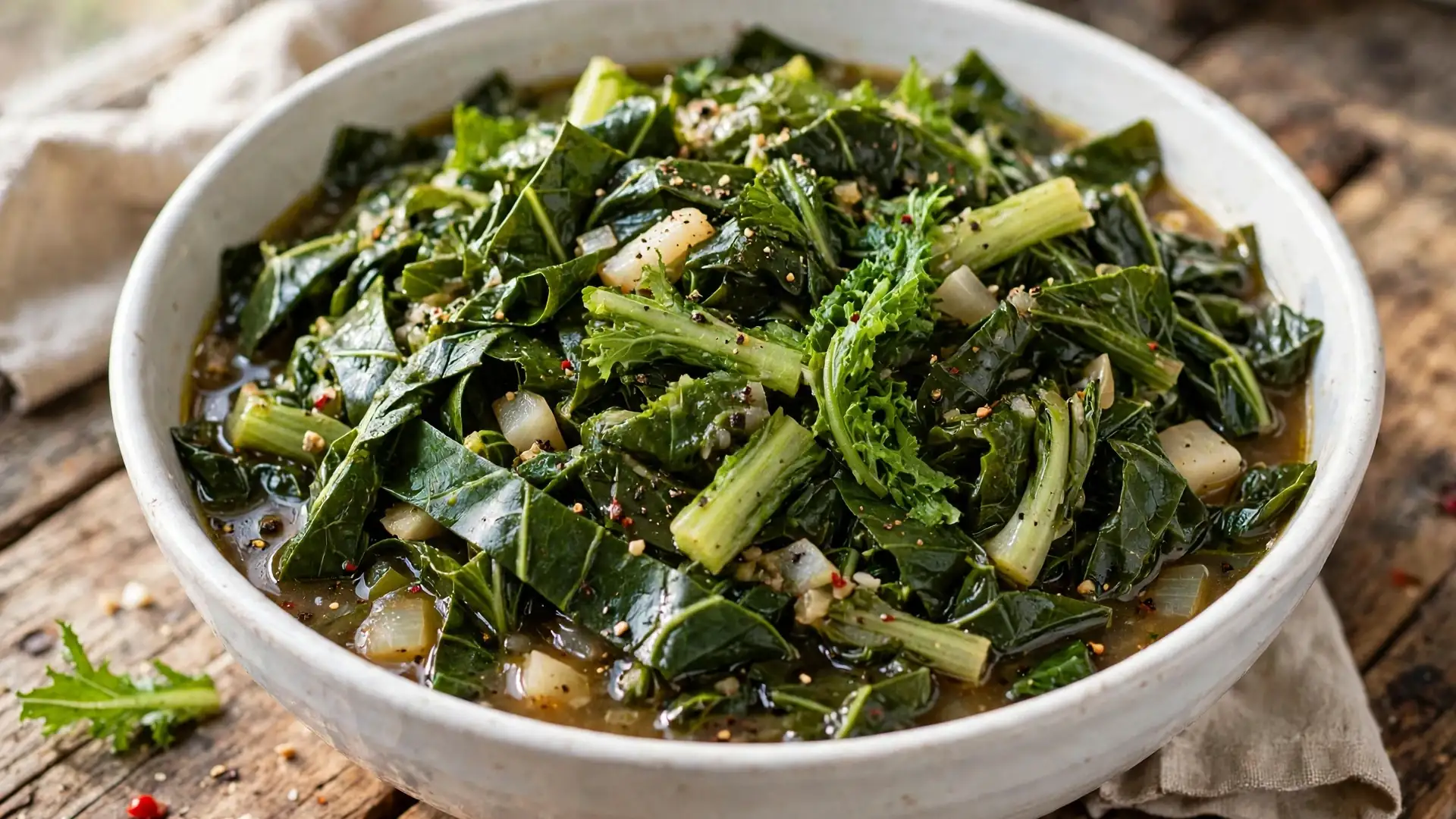
Southern Mixed Greens
Ingredients
Method
- Wash all three greens in 2 to 3 changes of cool water, lifting them out so the grit stays behind. Strip the ribs and chop the leaves.
- Heat the olive oil in a large Dutch oven over medium heat. Cook the onion for 5 minutes, then the garlic and smoked paprika for 1 minute.
- Pour in the vegetable broth, tamari and liquid smoke and bring to a boil.
- Add the mixed greens a few handfuls at a time, stirring each addition until it wilts. Cover, reduce the heat to low, and simmer for 45 to 60 minutes, stirring every 10 minutes, until all the greens are tender.
- Stir in the apple cider vinegar, taste, and adjust the salt. Serve hot with some of the pot likker.
What to Serve with Vegetarian Collard Greens
Collards are a side dish at heart, and they love company. The classic plate is cornbread for sopping up the pot likker, black-eyed peas, and something starchy — sweet potatoes, grits, or macaroni and cheese. For a holiday table, they sit beautifully in a bigger spread: our New Year party food ideas and gluten free dairy free appetizers for Christmas party both have vegetarian-friendly dishes that share the table well with a pot of greens.
And if you are building the whole Southern plate, remember the New Year’s Day tradition: greens for luck, black-eyed peas for coins. Dish 8 puts both on the same plate on purpose.
How to Store and Reheat Collard Greens
Cool the greens within two hours of cooking, then store them in an airtight container in the fridge for 3 to 4 days, or freeze them for up to 3 months. Those timings follow the FoodSafety.gov cold food storage charts: Cold Food Storage Charts. Store the pot likker with the greens — it keeps them from drying out, and it is the part you will want most when you reheat.
To reheat, warm the greens gently in a pot over medium-low heat with a splash of vegetable broth or water, stirring now and then. A fresh splash of vinegar at the end wakes the flavour back up. If you froze a batch, thaw it in the fridge overnight first — and if you are freezing raw greens for later, blanch the cut leaves in boiling water for 3 minutes, cool, drain and pack them, as Clemson Extension recommends: Clemson Extension’s guide to canning collards.
The greens genuinely taste better the next day, once the flavours have had a night to settle. Make a double batch on purpose.
Frequently Asked Questions
What is pot likker?
Pot likker (sometimes spelled pot liquor or potlikker) is the rich, seasoned broth left in the pot after the greens have simmered. It is the liquid the greens cooked in — vegetable broth, onion, garlic, smoked paprika, tamari and vinegar, concentrated by the long simmer. Serve it spooned over the greens, sop it up with cornbread, or save it as a soup base. In this collection, Dish 1 shows you how to use it twice.
How do you make collard greens taste good without meat?
Replace the three things meat brings: smoke, savouriness and fat. Bloom smoked paprika in hot oil, add a few drops of liquid smoke, use tamari for salty umami depth, and cook in vegetable broth with onion and garlic. Finish with apple cider vinegar at the end. The greens simmer for 40 to 50 minutes, and the whole pot takes around an hour — mostly hands-off — and the flavour builds the same way a meat pot does, just from spices instead.
Can collard greens be vegetarian or vegan?
Yes. Every recipe in this collection is vegetarian, and most are vegan as written — Dishes 1, 2, 3, 4, 6, 7, 8, 10, 12 and 15 are vegan, and Dishes 5, 13 and 14 become vegan by swapping butter for olive oil or vegan butter. The only non-vegan dishes are Dish 9 (egg, milk and butter in the dumplings) and Dish 11 (cream cheese and cream). Watch for two traps in other recipes: traditional Worcestershire sauce contains anchovy and is not vegetarian, and honey is not vegan.
How long do cooked collard greens last in the fridge?
Cooked collard greens last 3 to 4 days in an airtight container in the fridge, and up to 3 months in the freezer, following the FoodSafety.gov cold food storage charts. Cool them within two hours of cooking, store them with their pot likker so they don’t dry out, and reheat gently with a splash of broth. (You may see 5 days claimed elsewhere — that figure is uncited; the 3 to 4 day guidance is the food-safety source.)
How do you clean collard greens and get the grit out?
Swish the leaves in a clean sink or large bowl of cool water, lift them out so the grit stays behind, and repeat with fresh water until the water runs clear — usually two or three washes. Don’t pour the water off over the leaves, or the grit settles right back on. Then strip the tough centre ribs, roll the leaves up, and slice them into ribbons.
Do you have to remove the stems?
Yes, for the thick centre ribs — they stay tough and stringy even after an hour of simmering, while the leaves turn silky. Fold each leaf in half and slice the rib away, or pull the leaf off it with your hand. The thinner stems near the top of the leaf are fine to keep.
Why are my collard greens bitter?
Collards are naturally bitter, and the bitterness fades with a long, gentle simmer — a hard boil makes them stringy instead of silky, so keep the heat low. The other fix is balance: a splash of apple cider vinegar and a pinch of sugar (or a spoonful of maple syrup, as in Dish 10) round off the bitter edge. Stir the vinegar in at the very end so its brightness stays fresh.
What do you serve with vegetarian collard greens?
The classic plate is cornbread, black-eyed peas and something starchy — sweet potatoes, grits or macaroni and cheese. For holidays, they belong on the Thanksgiving table next to the dishes in our best Thanksgiving recipes collection, and on New Year’s Day next to black-eyed peas for luck. Dish 8 and Dish 10 build those pairings right into the pot.
A Final Word
The pot of greens on a Southern table was never really about the ham hock. It was about patience — a low simmer, a seasoned broth, and a splash of vinegar at the end. These fifteen recipes keep all of that and leave the meat out, so the same pot can sit on any table, for anyone. Start with the classic, save the pot likker, and make a double batch. Tomorrow’s greens will be even better.