These layered curtain ideas for winter start with the coldest window in my house. I used to hang a single pretty panel there and wonder why the room never felt warm. Now I layer, and the window keeps the cold out and makes the whole room look dressed, soft, and finished.
I am dressing the window for winter the way I would dress for it myself: in layers. Every section carries real numbers. If you want the full winter-bedroom look, my winter bedroom decor ideas carry the same soft palette through the rest of the room.
This article may contain affiliate links. As an Amazon Associate, Decor and Dish earns from qualifying purchases.
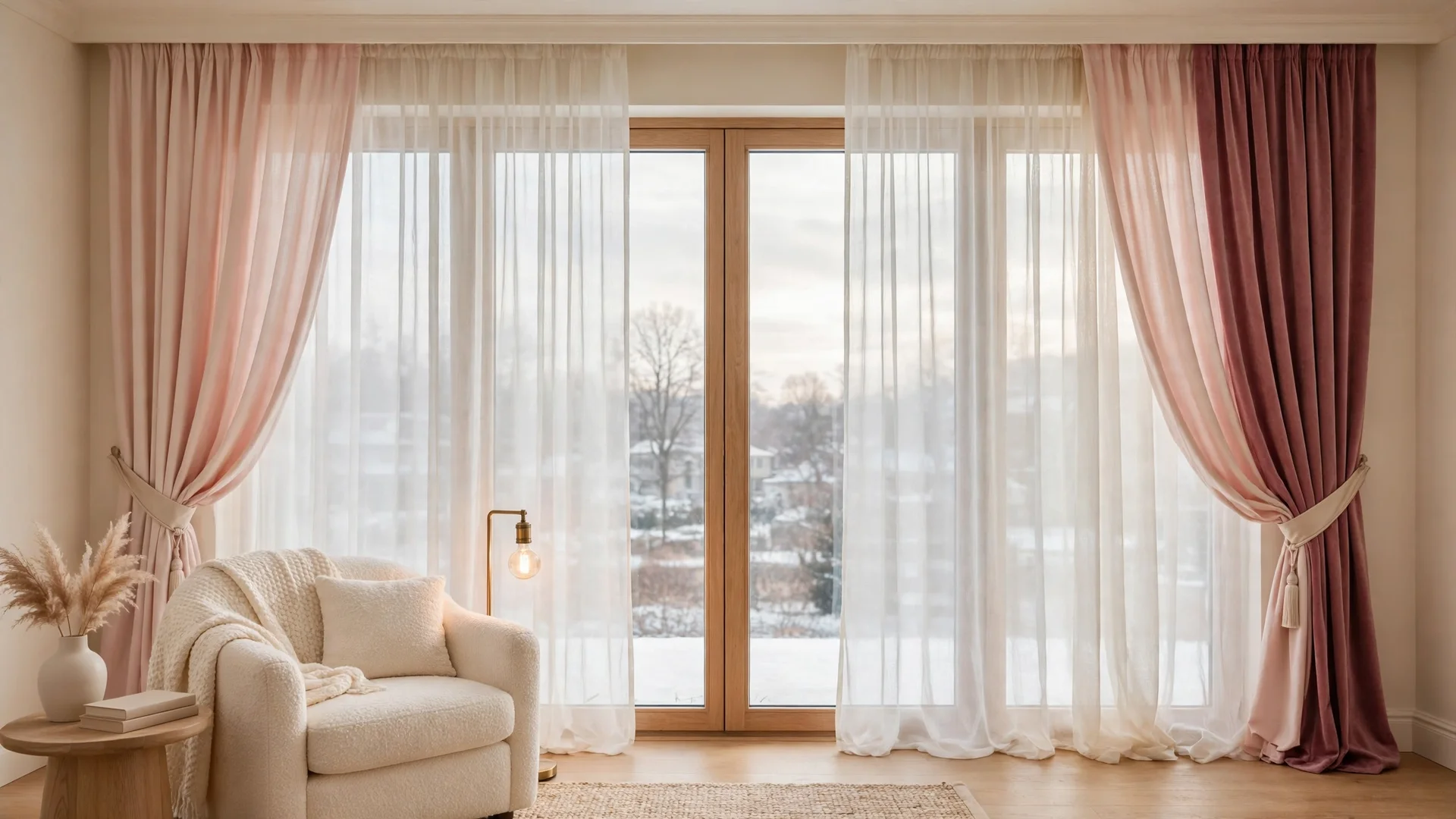
The Sheer and Blackout Base Pair
The pair I reach for first is the simplest: a pearl ivory sheer closest to the glass, and a soft blush pink blackout panel in front of it, on the room side. By day the sheer stays closed and the front panel opens for filtered, private light; at night the blush panel closes and the window goes dark.
Hang the rod 4 to 8 inches above the frame and 4 to 12 inches beyond each side. The Hues give exactly those ranges, and warn layering alone does not make a room blackout dark. Darkness depends on coverage, so mount high and wide. For width, check the header: grommet about 1.5 times the rod width, rod-pocket and back-tab about 2 times, pleated about 1.1 times.
Pearl ivory plus blush plus dusty rose, the first of my five pairings.
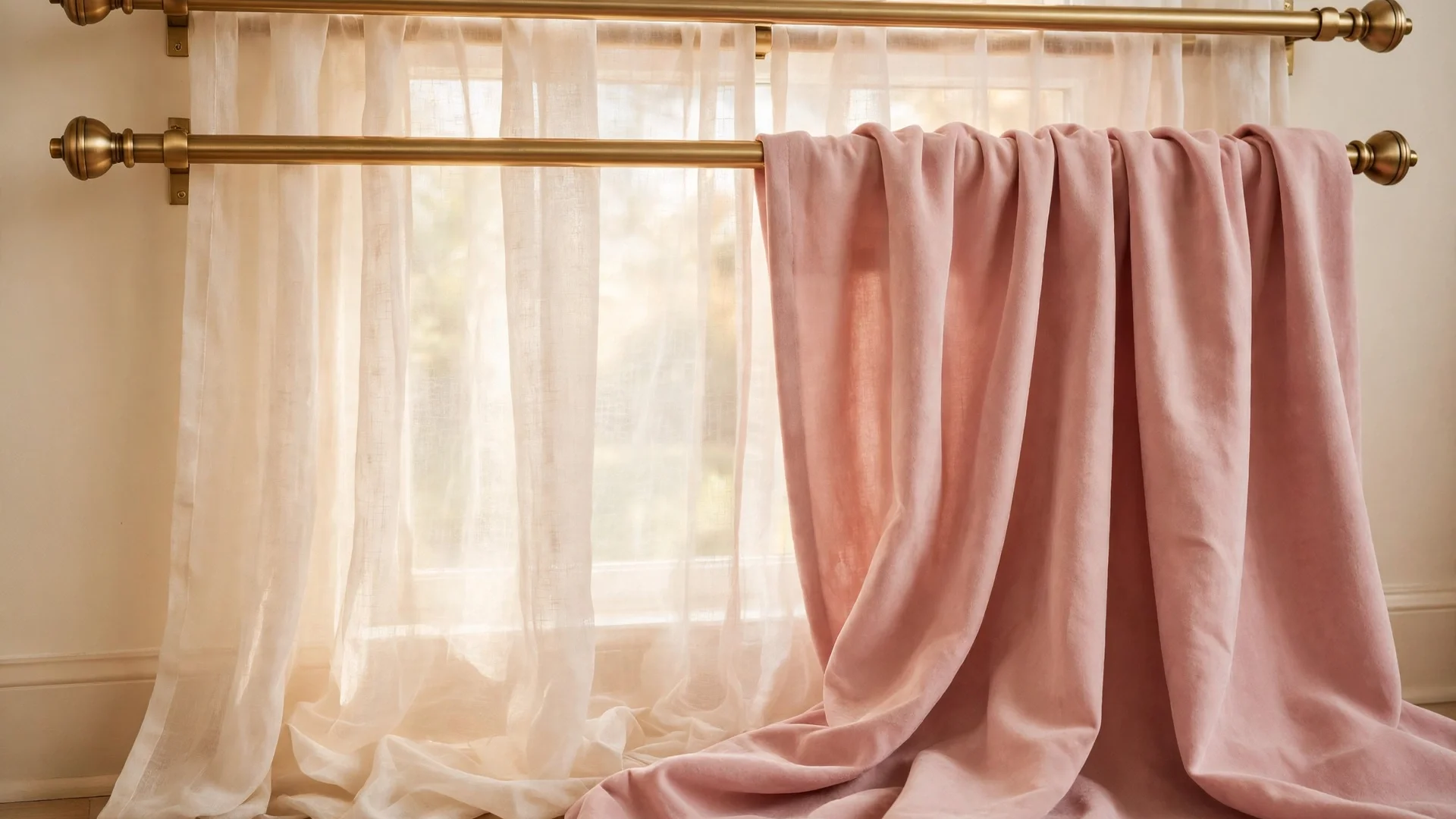
Shop Now – Umbra Cappa Double Curtain Rod in Brass on Amazon
Reverse Layering: Sheer Over Blockout
This is my signature look. Reverse layering puts the solid blockout against the glass and the sheer on the room side, so the sheer veils the solid layer. The result is a soft romantic glow, like the window is lit from inside.
Use a dusty rose or muted mauve blockout behind a blush sheer, or a soft lavender sheer over a pearl white solid. The glow comes from an electric lamp, a small LED table lamp with a linen shade beside the window, never a lit candle flame near fabric. Mount the sheer rod 2 to 3 inches in front of the blockout rod, sheer kissing the floor, blockout an inch above it.
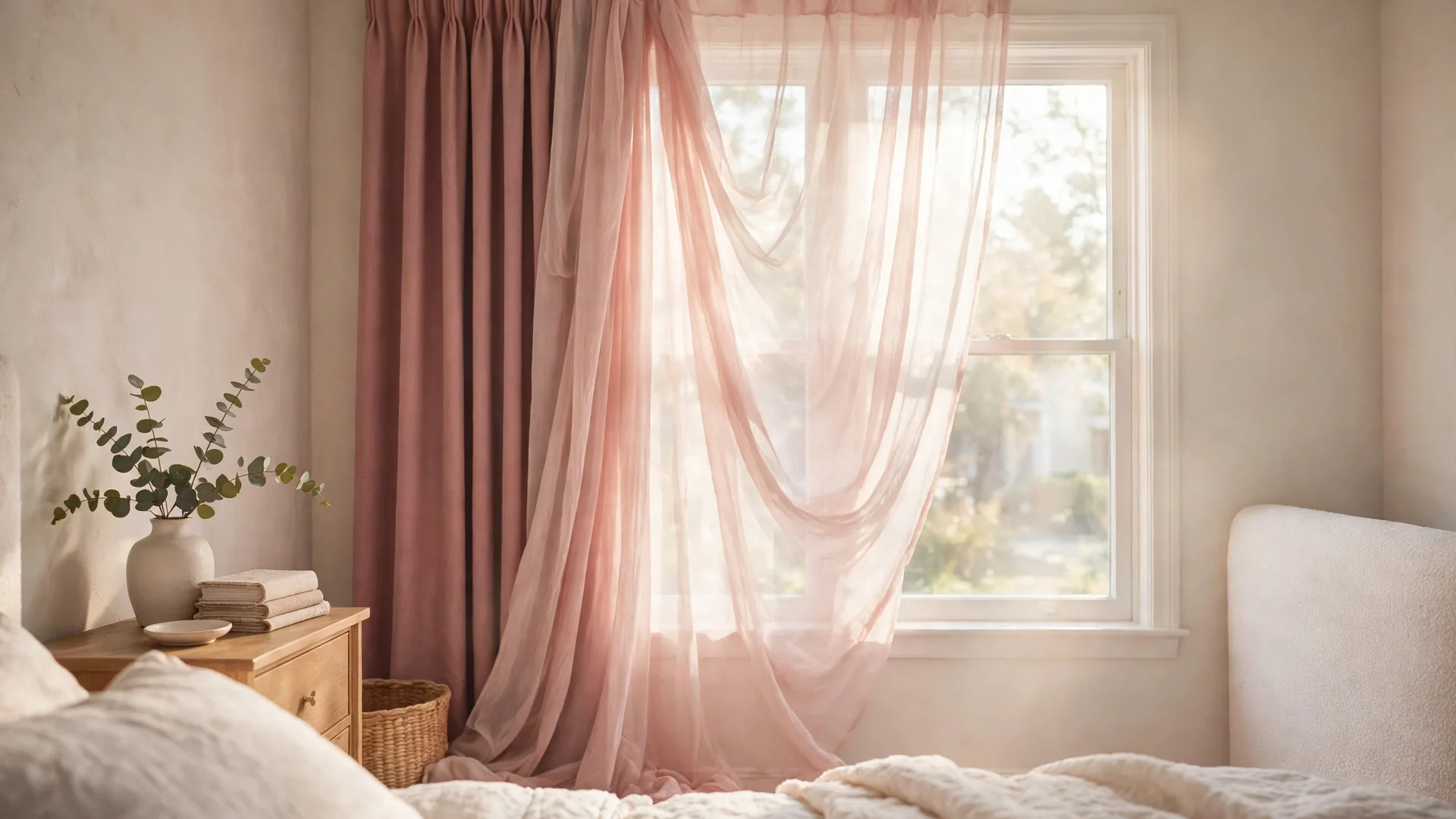
Shop Now – NICETOWN White Sheer Voile Curtain Panels on Amazon
Materials and Fabric Pairings
Velvet is the fabric I trust for the coldest window: a dusty rose velvet panel, floor-length and kissing the floor, with a pearl ivory sheer behind it, turns the draftiest wall into the coziest corner. Velvet hangs straight, seals the edges, and needs hardware rated for its weight. Behind it, add a removable thermal liner, soft bonded, not shiny plastic-backed. Osmoz layers a thermal curtain over a tension liner, rod 4 to 6 inches above the frame.
Habitatista’s winter-insulation guide puts the saving at up to 25 percent less heat loss, and multi-layer treatments can lift a single curtain from R-1 to R-3 or higher.
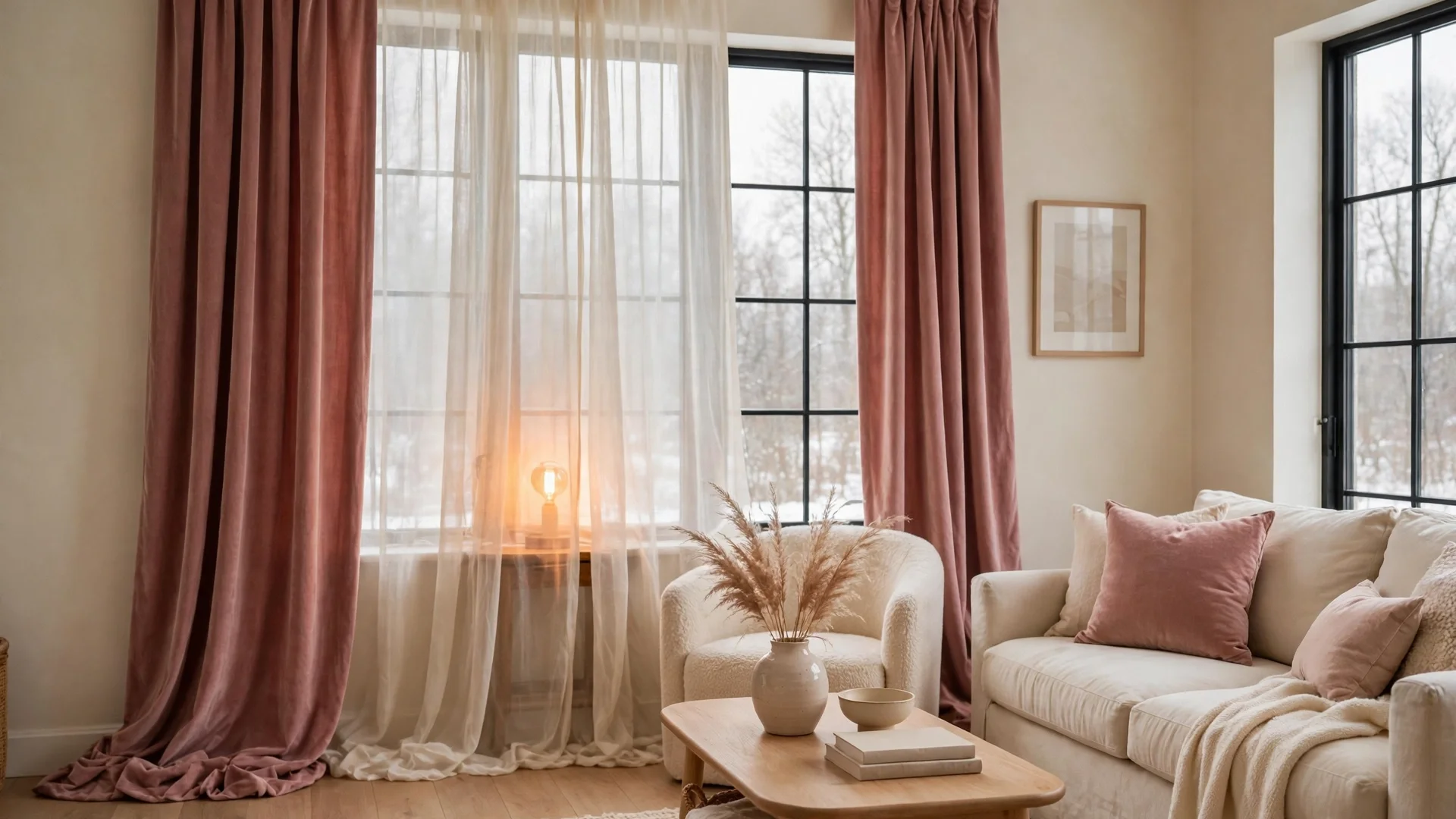
Shop Now – MIULEE Dusty Rose Velvet Blackout Curtain Panels on Amazon
For soft winter light, pair a white lace sheer with a pearl ivory linen drape: ruffled cottagecore romance, grounded by linen. Keep any pattern on one layer only.
A removable wool draft panel behind the main curtain is my favorite quiet fix: clip it on after dark, off in the morning. Overlap the center panels by at least 4 inches, where cold air sneaks through.
Woven Shades and Side Drapes
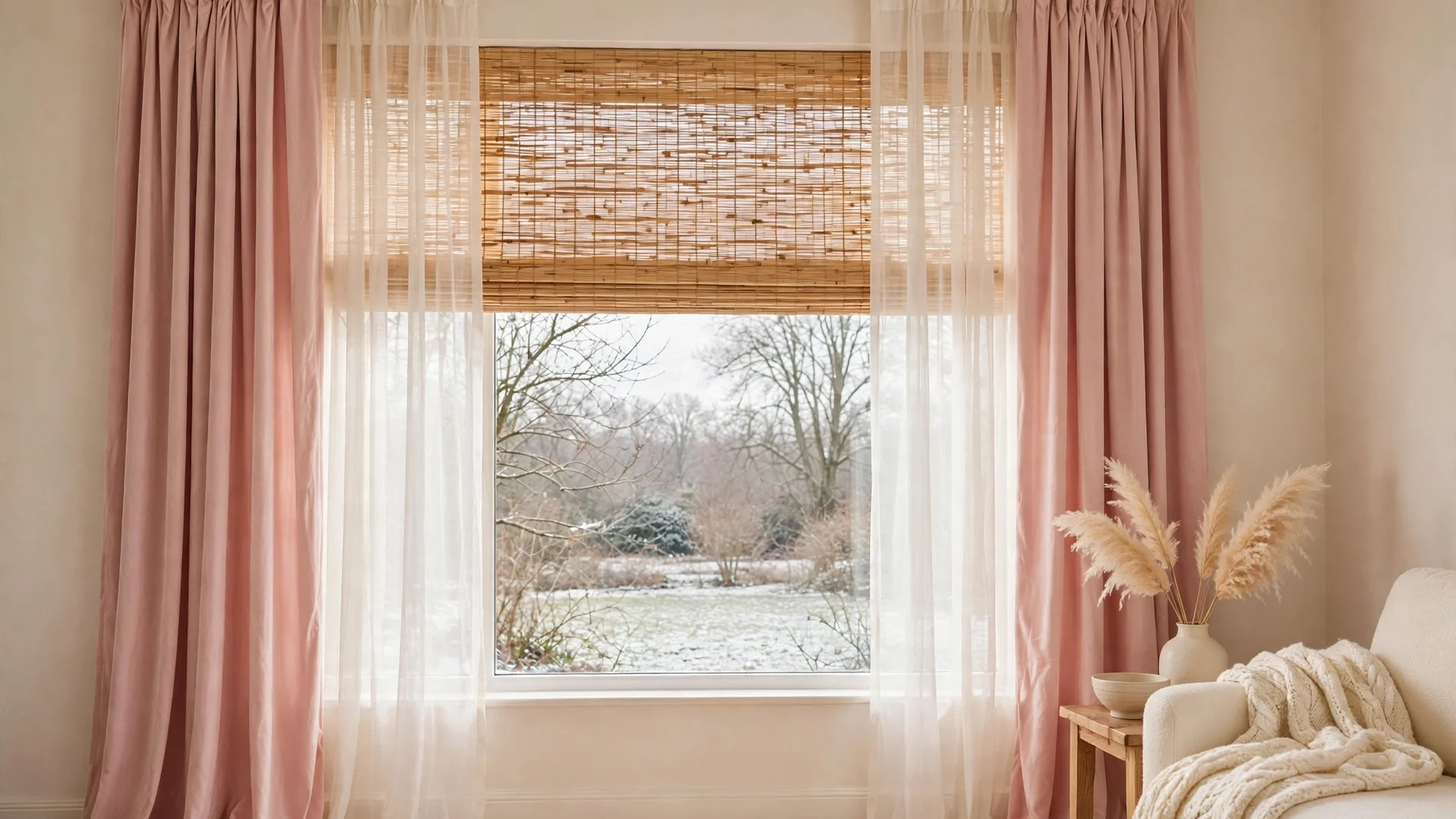
Some windows want a shade first and curtains second. An inside-mounted woven bamboo shade hugs the glass for precise vertical light control, while floor-to-ceiling blush panels on an outside rod frame the window and soften the edges.
Mount the shade inside the frame, the rod above and outside it, clearing the shade’s headrail. Leave 2 to 3 inches of clearance between the shade and the rod.
The Hanging Numbers
The rod goes 4 to 8 inches above the frame, or 2 to 5 inches below the ceiling, 4 to 12 inches beyond each side. Total width runs 1.5 to 2.5 times the window width by header: grommet 1.5 times, rod-pocket and back-tab 2 times, pleated 1.1 times.
Float means the hem hovers about 1 inch above the floor. Kiss means it just grazes the floor, the most tailored look. Puddle means about 3 inches pooling on the floor, and it gathers dust, so treat it as decorative. For winter I default to kiss.
Leave 2 to 3 inches between the two rods of a double rod so each layer slides freely. Overlap the center panels by at least 4 inches, then check the top, sides, and center.
For renters, hang sheer and blackout on one rod with clip rings, sheer on first, stationary while the panels draw over it. No new holes; a tension rod inside the frame holds the sheer layer.
Budget it in tiers: budget reuses the rod you own with ready-made panels plus a liner; mid buys a double rod in brushed brass and a velvet outer; splurge goes custom with measured panels, a ceiling track, and a Roman shade.
Layered Curtain Ideas for Winter, Room by Room
A bay window wants its layers to follow the curve: light sheers close to the glass on a flexible track or individual rods per section, then full linen panels on outer rods. Pearl ivory sheers with blush outers keep the nook bright.
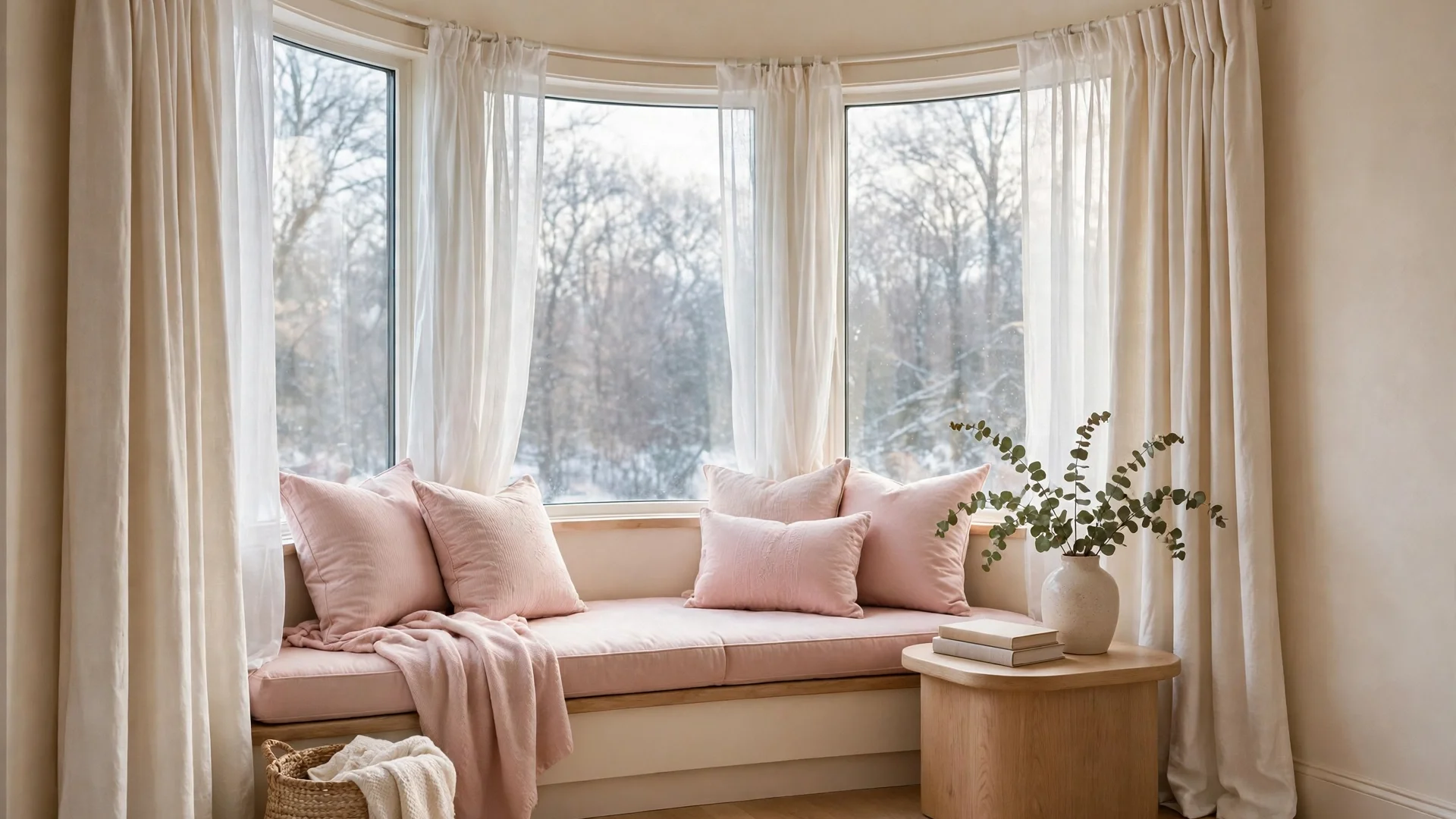
Three windows in a row stretch the same idea: one rod line across all three, a sheer base the whole width, blush outers at the ends and between the windows, so the wall reads as one wide window.
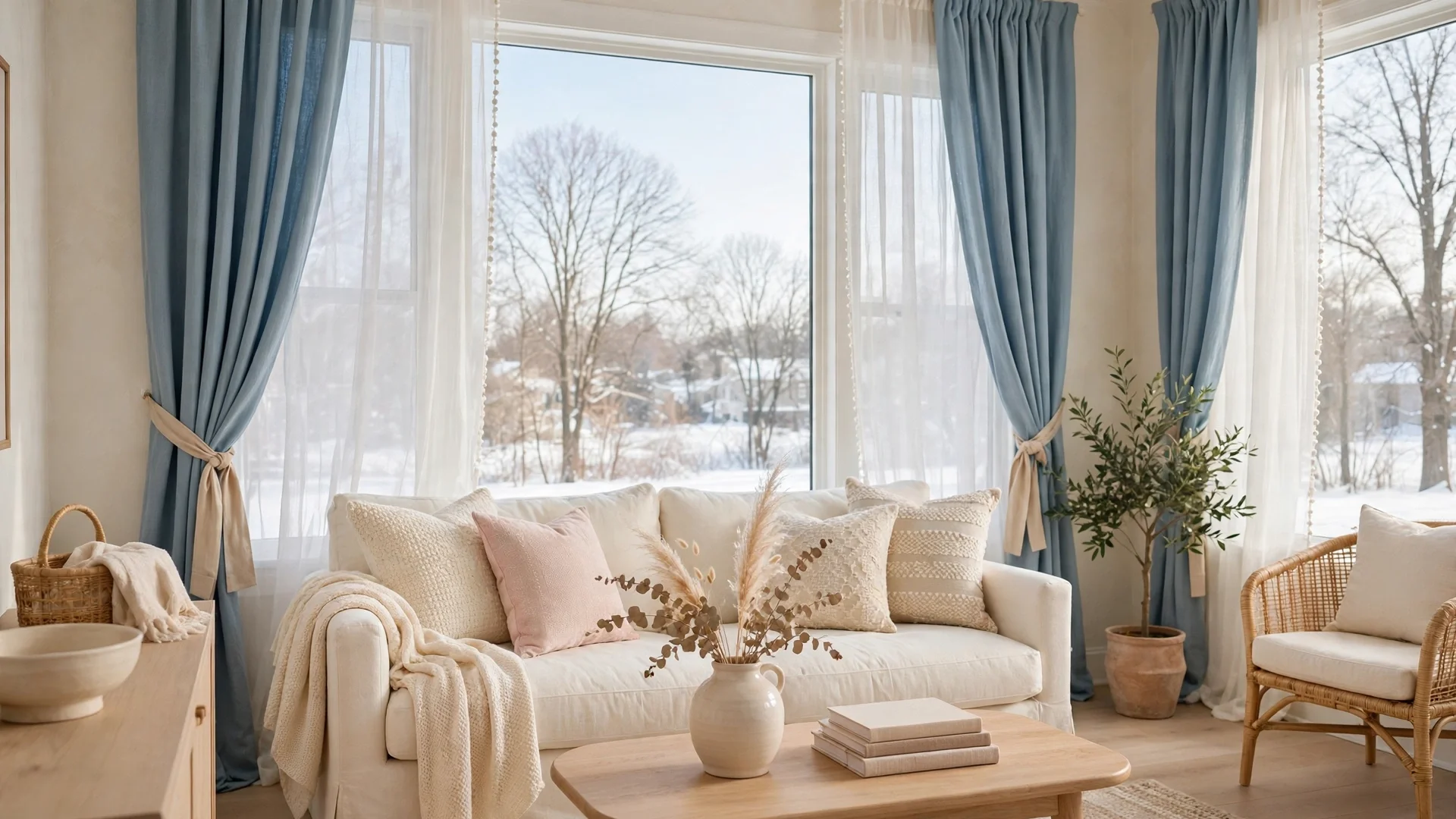
The living room gets the icy-blue version. Powder blue outer drapes with pearl white sheers, champagne tiebacks holding the front layer open. This is the fourth pairing, icy powder blue, the cool counterweight to the warm blush elsewhere. If your living room is small, my small winter living room ideas use the same January thinking for tight rooms. My modern organic living room ideas carry the same warm neutrals through the rest of the room.
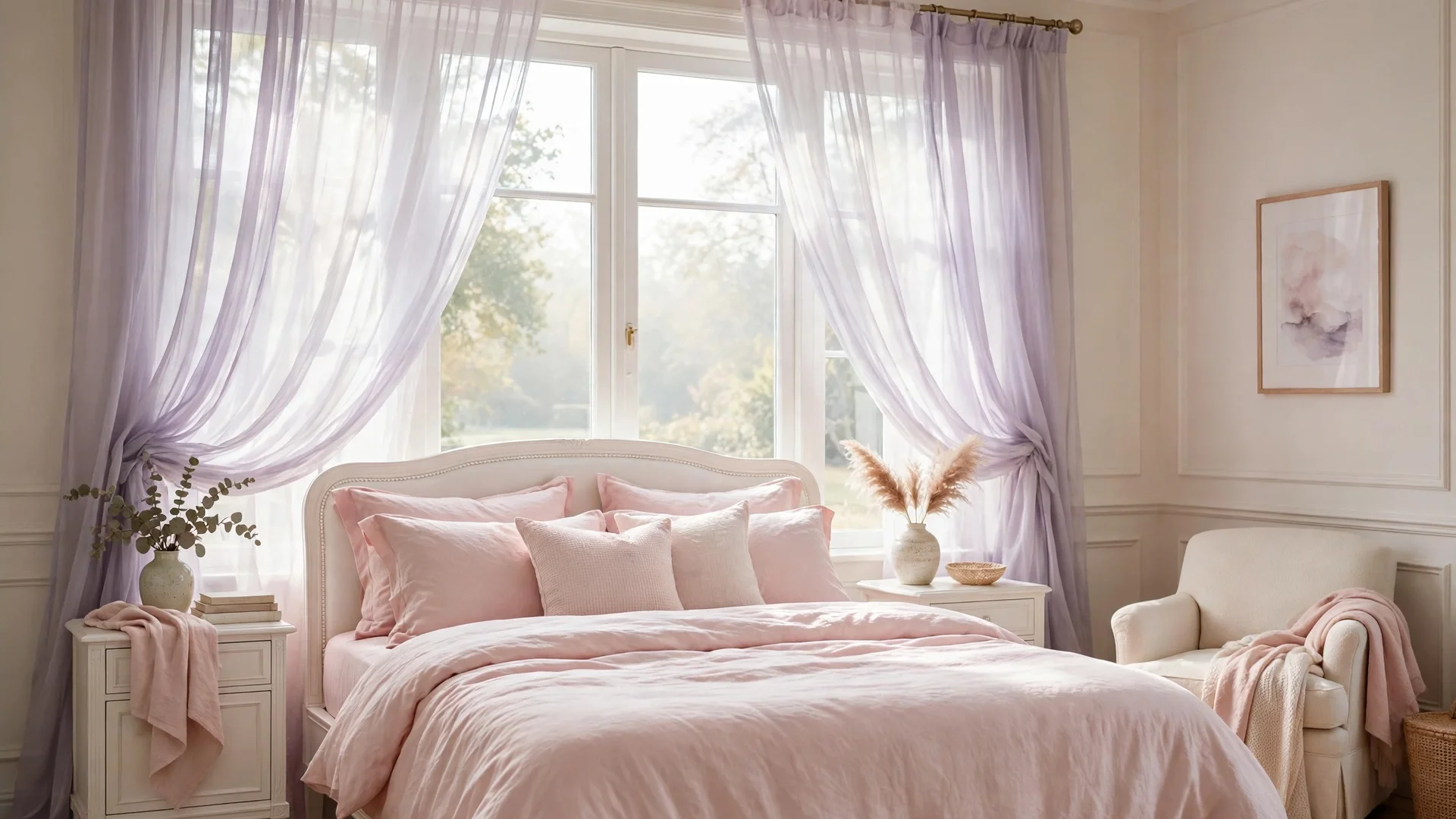
The bedroom gets the dreamy version: soft lavender sheer over sheer, pearl white details, a blackout panel behind for sleep, muted mauve as the romantic accent. Mount the blackout rod high and wide and overlap the center panels.
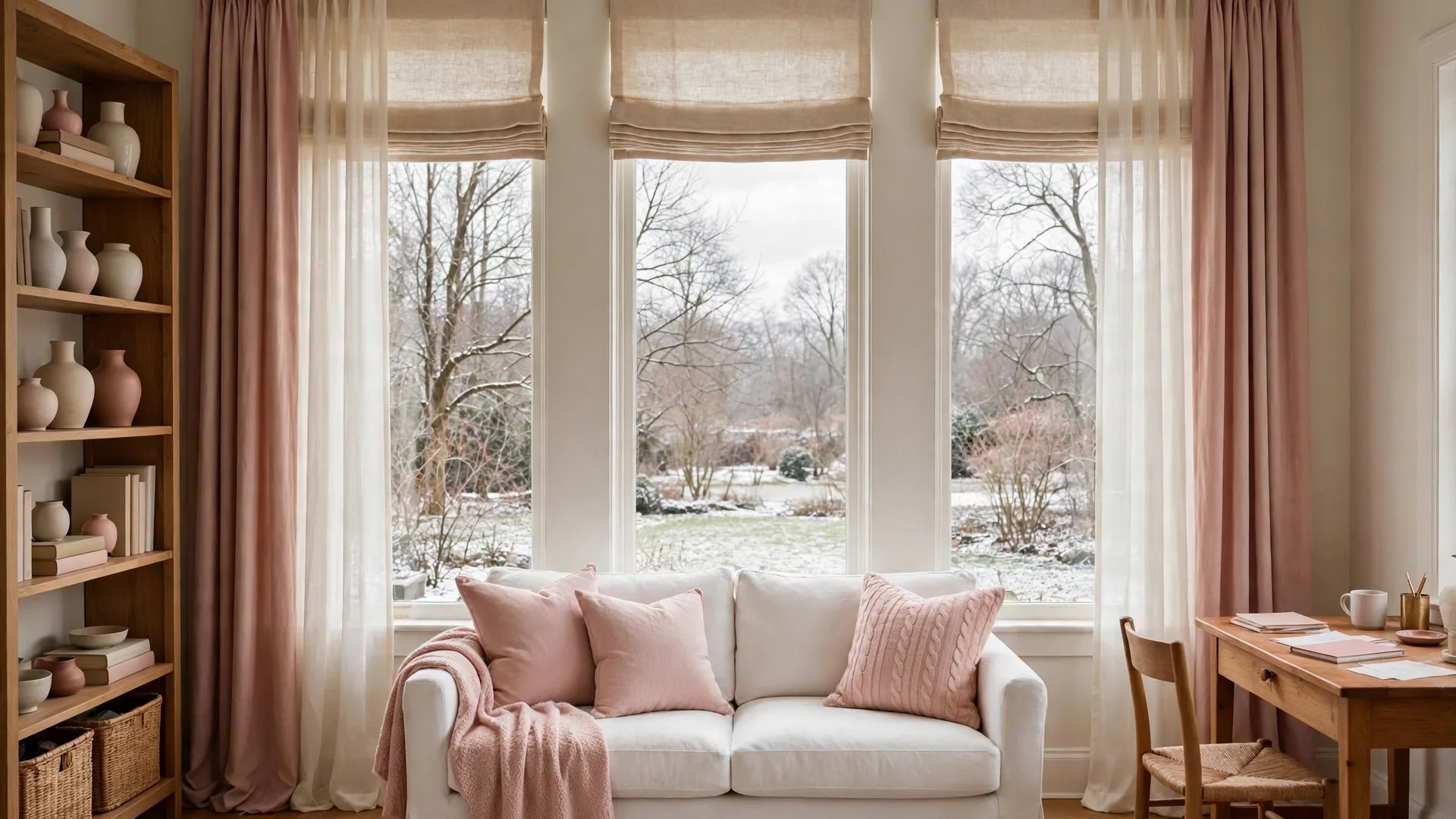
The triple-layer window is for the room that has to do everything: dual tracks carry an ivory sheer and a dusty rose solid, a Roman shade closest to the glass as the third layer. The shade handles glare by day, the sheer softens the light, the solid closes the room at night. Keep 2 to 3 inches between tracks so nothing binds.
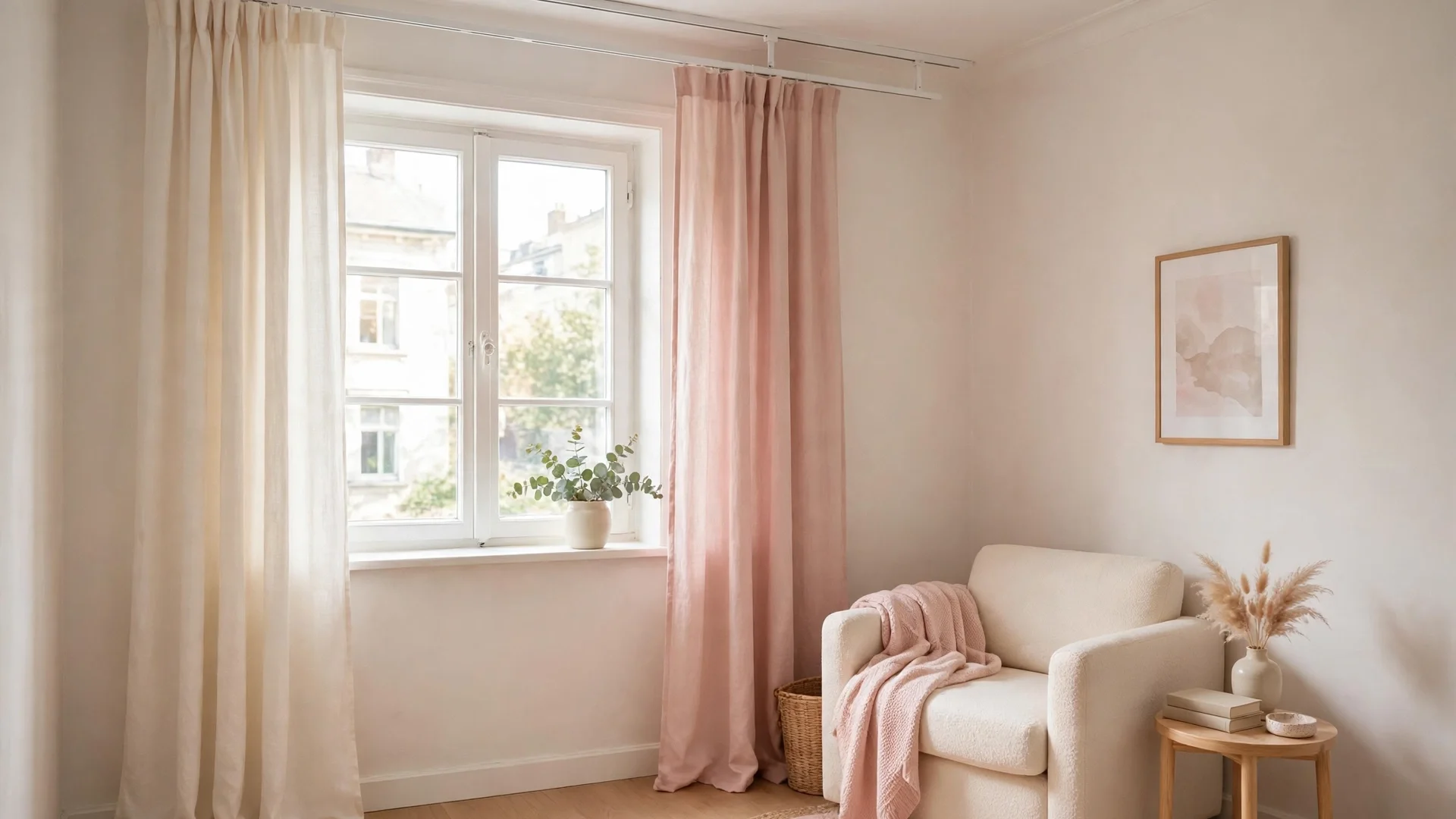
The small-room version is the same system, scaled down: a ceiling track, narrow panels in pearl ivory and blush, floating 1 inch above the floor. Hang the track 2 to 5 inches below the ceiling.
The Palette: Eight Colors, Five Pairings
The palette, as chosen: pearl ivory #F7F1E9 as the sheer base in every pairing, soft blush pink #EBCBD0 as the main outer drape, dusty rose #C98F9B as the secondary outer and velvet accent, champagne beige #E4D2B9 in tiebacks and hardware tones, muted mauve #B99BAF as the romantic accent, powder blue #C5D8E8 as the icy cool counterweight, soft lavender #D5C7E3 as the dreamy accent, and pearl white in the light, airy details and lace.
The five pairings are pearl ivory plus blush plus dusty rose; dreamy lavender; pearl white plus lavender plus mauve; icy powder blue; and ivory plus powder blue plus champagne. I keep it 60-30-10: sixty percent pearl ivory and pearl white, so the winter light stays; thirty percent blush and dusty rose, so the warmth stays; ten percent champagne, mauve, powder blue, and lavender, icy blue and lavender as the cool counterweight, champagne in the hardware, mauve in the bedroom. Hardware stays slim brushed brass, pearl white or champagne tiebacks, matte black only where a dark contrast is genuinely needed.
Layered Curtain FAQs
What is the best way to layer curtains?
Hang a sheer closest to the glass and a heavier blackout panel in front of it on a double rod, so each layer opens and closes on its own. Mount the rod 4 to 8 inches above the frame and 4 to 12 inches beyond each side, overlap the center panels by at least 4 inches, and choose width by header: grommet 1.5 times, rod-pocket 2 times, pleated 1.1 times.
Are layered curtains in style?
Yes. Layered curtains are all over Pinterest: sheer plus blackout for everyday rooms, reverse layering for a romantic glow, and woven shades with side drapes for a tailored finish. The winter version, soft pastels with a warm outer layer, feels freshest.
What are layered curtains called?
They are called layered curtains, double curtains, or layered drapes. The combinations have their own names: sheer plus blackout, reverse layering when the sheer goes over the solid, and triple-layer when a shade joins the two curtain layers.
What is the curtain trend for 2026?
The curtain trend for 2026 is layering with intention: soft sheers with a heavier outer layer, floor-length panels hung high and wide, color used as a system. In winter rooms that means warm pastels, blush, lavender, and icy blue, with velvet and thermal liners behind the pretty layer.
Final Thoughts
These layered curtain ideas for winter treat the window as a room, not a hole in the wall. One sheer for the light, one solid for the night, real numbers for the rod, width, and length, and a palette that stays soft even when the weather does not. Start with the sheer and blackout pair on the coldest window, add velvet where the draft is worst, let lavender or icy blue into one room.
The Hues’ guide to layering curtains beautifully is the source of the rod, width, and fullness numbers; Osmoz’s winter curtain fixes are the source of the thermal liner and night-seal habits.