A pink room can feel soft, cheerful, elegant, modern, or wonderfully playful — it all comes down to the shade you pick and what you put next to it. You do not have to cover every surface in bright pink. The rooms that work best start with one pink, repeat it in two or three places, and let neutrals, natural wood, and one contrasting color do the rest.
The nine ideas below run from the biggest commitment (paint) to the smallest (a gallery wall and a few dark accents), so you can stop at whatever level feels right for your room and your budget.
Start Here: Five Moves, in Order
- Choose the shade first. Use the shade guide below, and test a sample on the wall — light changes pink more than almost any other color.
- Decide how much pink. A whole room, one accent wall, or just the bed and textiles. This one decision sets the budget.
- Pick one neutral. White, cream, warm beige, or light wood — one, not all four.
- Add one contrast. Gold, sage green, or charcoal. One keeps pink from looking sweet; two starts to look busy.
- Repeat the pink three times. The wall or the bed counts as one. Two more small repeats — a cushion, a throw, a frame — make the room look intentional.
1. Create a Soft Blush Pink Room
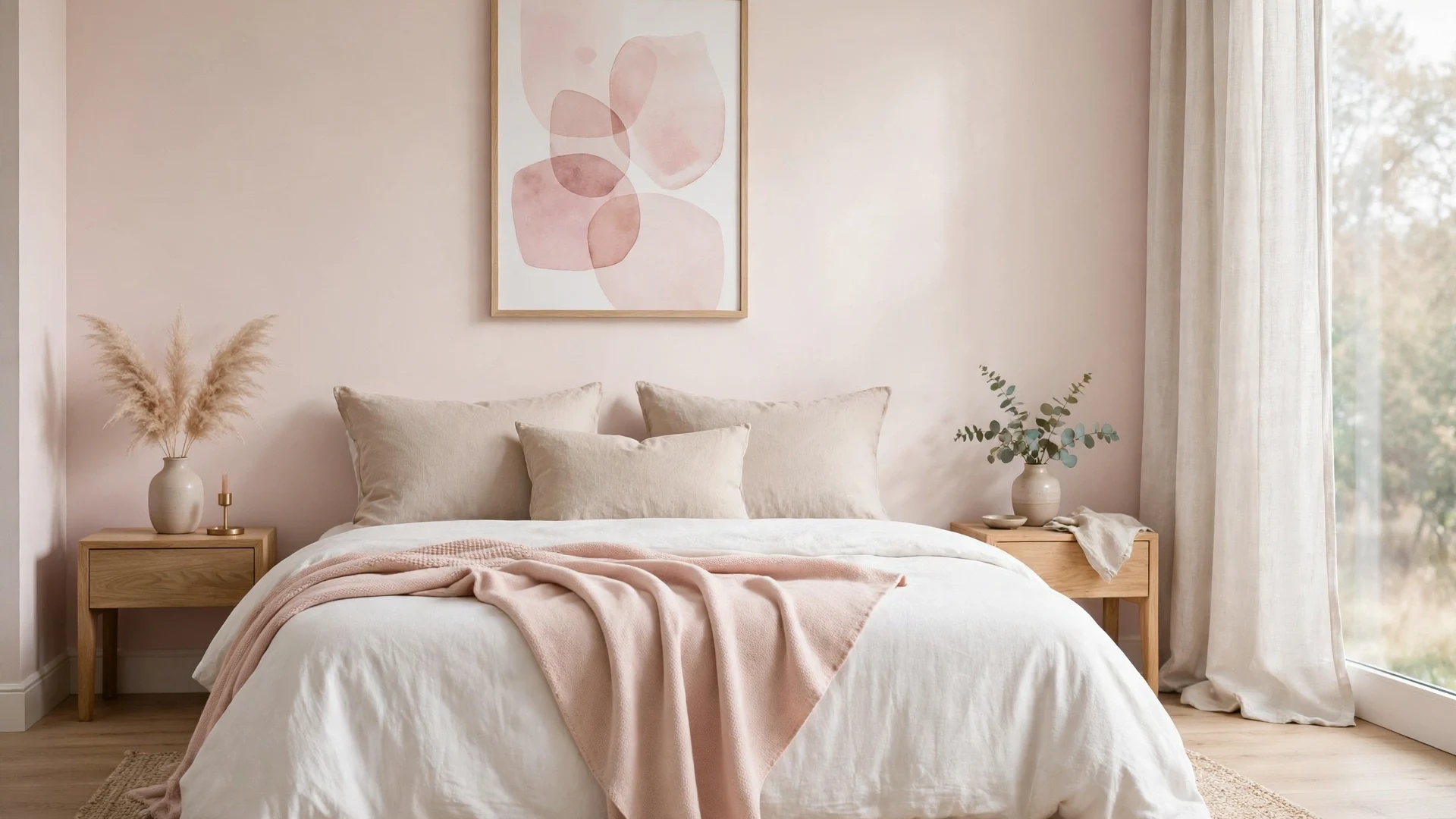
The easiest way into a pink room is blush. Blush pink walls create a gentle background that works with white, cream, beige, light wood, and warm metallic accents, and blush is the hardest pink to get wrong — in low light it reads almost like a warm white, which is why it suits bedrooms so well.
Choose one main blush tone and repeat it through smaller details: cushions, curtains, artwork, a throw blanket. What makes a blush room look messy is five different pinks bought on five different shopping trips, none of them quite matching. Test samples on the actual wall morning and evening first — a shade that looks soft in the shop can look much deeper on a north-facing wall. Benjamin Moore’s pink paint colors run from pale pinks to stronger shades, a useful starting point while you decide how bold to go.
2. Try a Pink and White Color Scheme
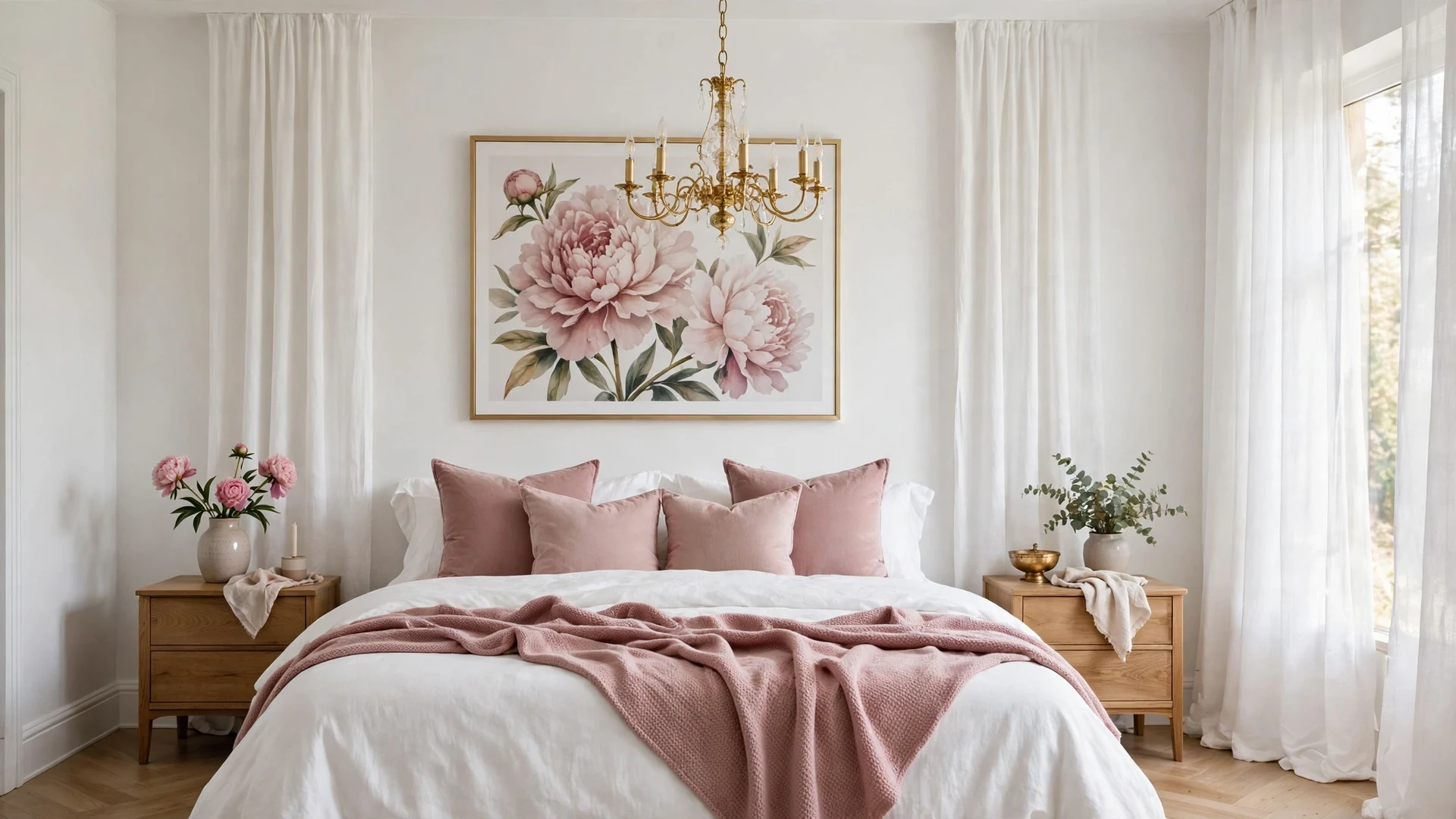
A pink-and-white room is timeless, fresh, and the easiest version of this look to decorate. White furniture and bedding let pink walls or pink accessories stand out while the room stays bright — and white is doing real work here, not just filling space. It is the color that stops pink from feeling heavy.
Use white as the main neutral and pink as the feature color. A blush wall with a white bed, a white nightstand, and white curtains is the classic version: add pink pillows or a textured blanket to connect the two colors, and the scheme is done. Use more than one white — warm white on the walls, bright white on the trim, soft cream in the bedding — so the room does not look flat. This is also the best version for a small bedroom, since lighter colors help a space feel more open, and Sherwin-Williams’ bedroom color guide makes the same point about room size and light.
3. Add a Pink Accent Wall
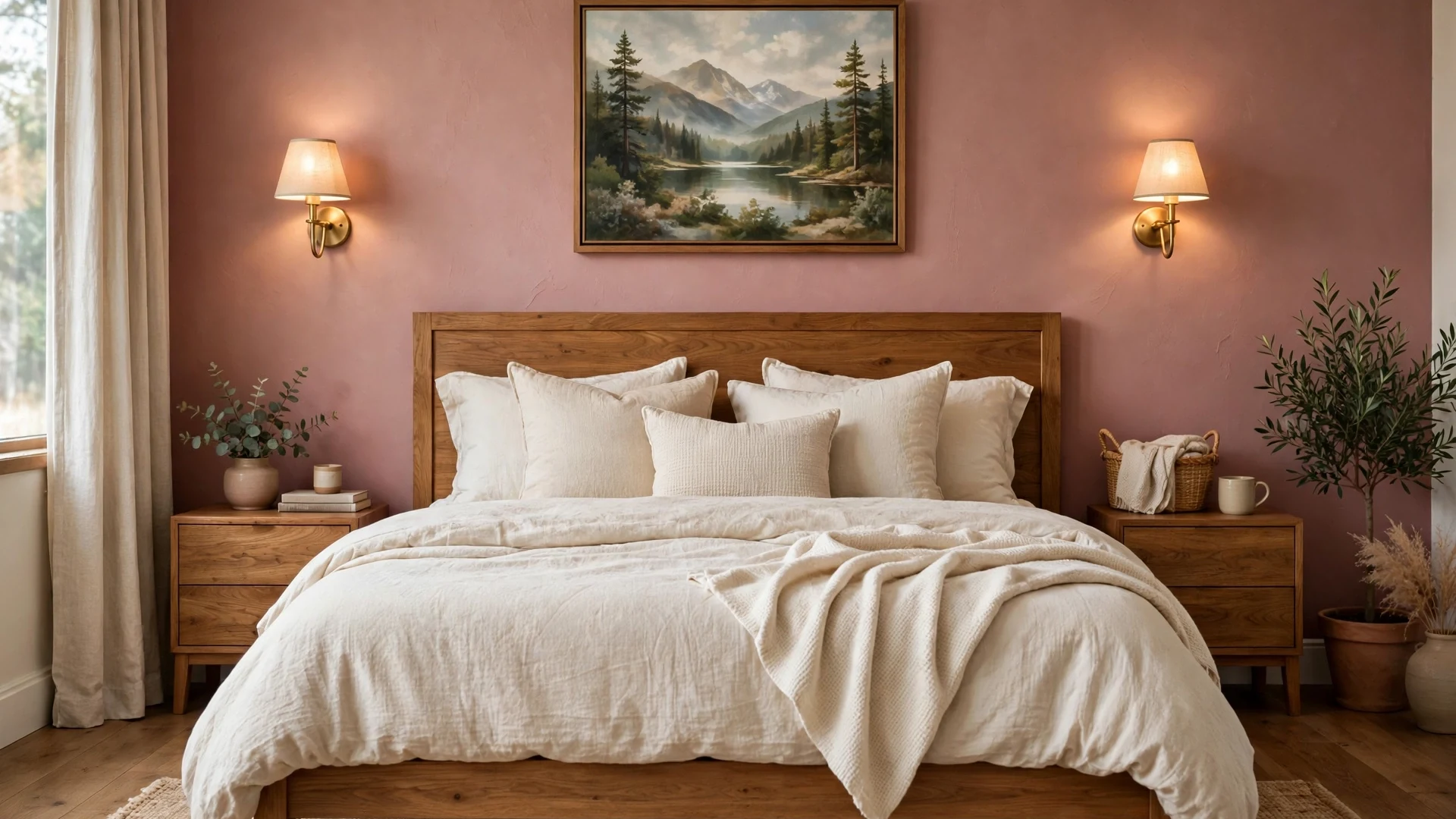
If painting the whole room pink feels like too much, one accent wall gives you the look with a fraction of the commitment. Choose the wall behind the bed, the desk, or the main seating area — the wall your eye lands on when you walk in — and make it the focal point.
A soft pink accent wall works with cream, beige, gray, white, and natural wood. If you want something more dramatic, go deeper: rose, berry, or magenta on one wall reads as confident rather than overwhelming, because the other three walls hold it back. Two-tone painting, decorative molding, or a painted arch behind the bed adds interest without a full makeover — and an accent wall is the easiest pink to undo.
4. Mix Pink With Gold for a Glamorous Look
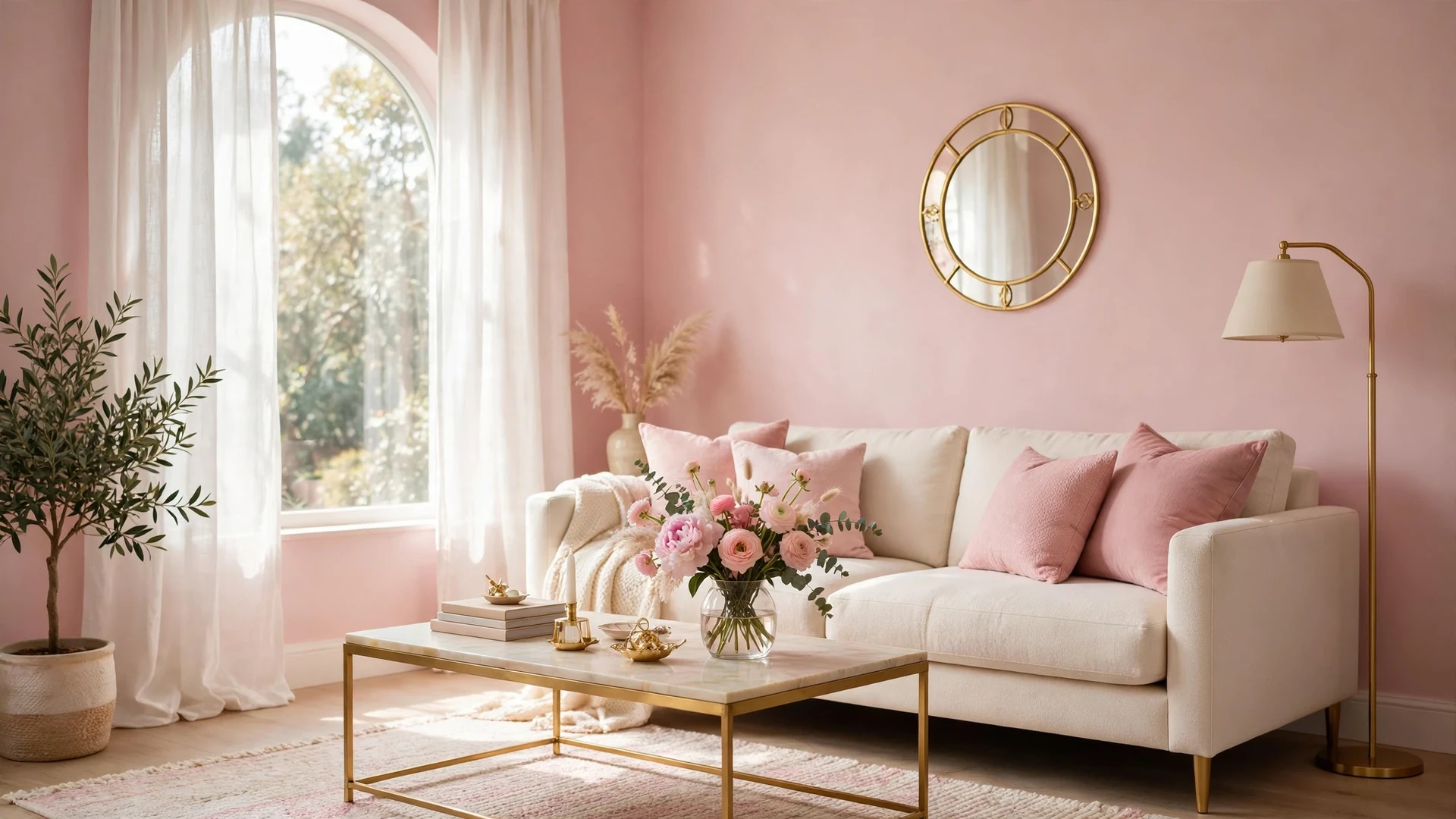
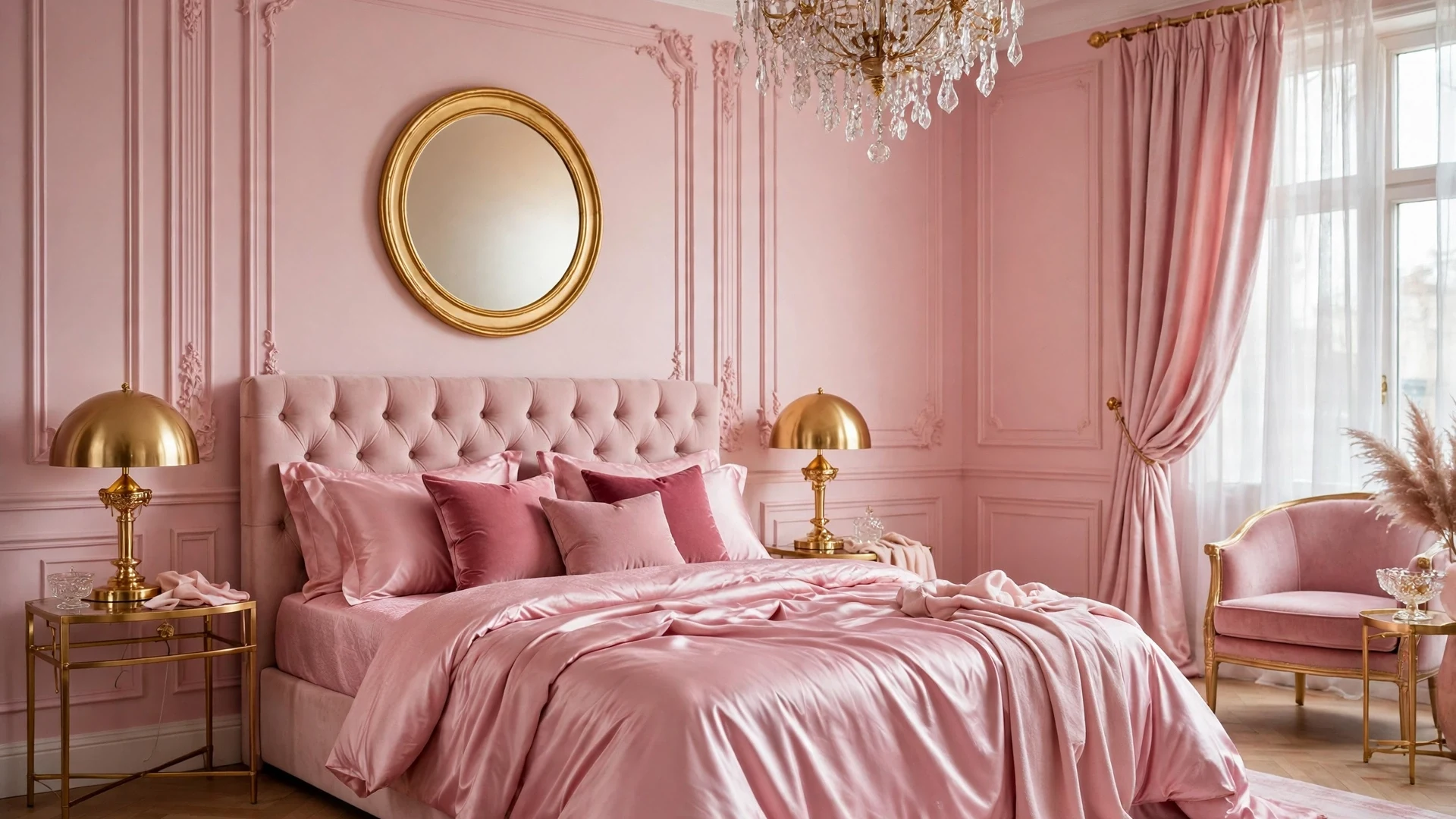
For a more elegant pink room, combine pink with gold — but keep the gold in check. A blush-pink room with gold-framed mirrors, warm lighting, metallic hardware, or small decorative accessories feels sophisticated fast. The key is moderation: pick a few statement pieces instead of making every accessory gold. A gold mirror above the dresser, a small metallic lamp, and gold picture frames may be enough.
The combination I come back to is blush pink with cream and warm white, plus gold only in the metal — the mirror frame, the lamp base, the drawer pulls. Warm lighting matters here more than in any other idea: gold looks yellow and cheap under a cool bulb, and soft under a warm one.
5. Use Pink Bedding as the Main Feature
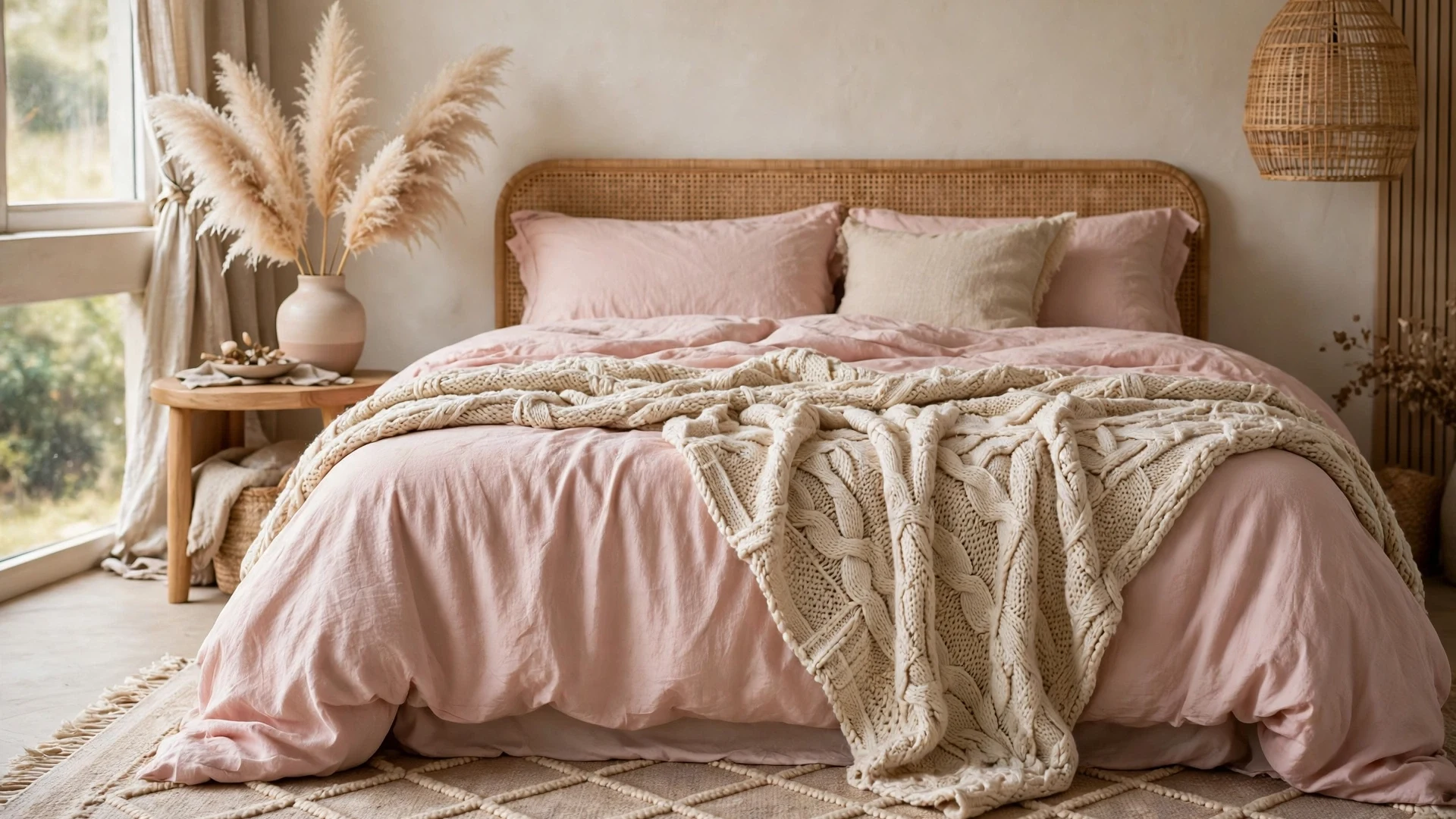
You do not need pink walls to have a pink room. Pink bedding can transform a neutral room with very little effort, and it is the best version of this look for renters, because everything can be changed without touching the walls.
Start with white, cream, or beige bedding and add a pink comforter, quilt, duvet cover, or throw. Then layer textures so the bed looks inviting: velvet cushions, a knitted blanket, linen-look bedding, fluffy pillows. A bed where every layer feels the same falls flat; a bed where every layer feels a little different reads as cozy. For a more designed effect, use several shades of pink rather than one identical tone — pale blush, dusty rose, and a slightly deeper mauve together look collected.
6. Create a Cute Pink Room With Cozy Textures
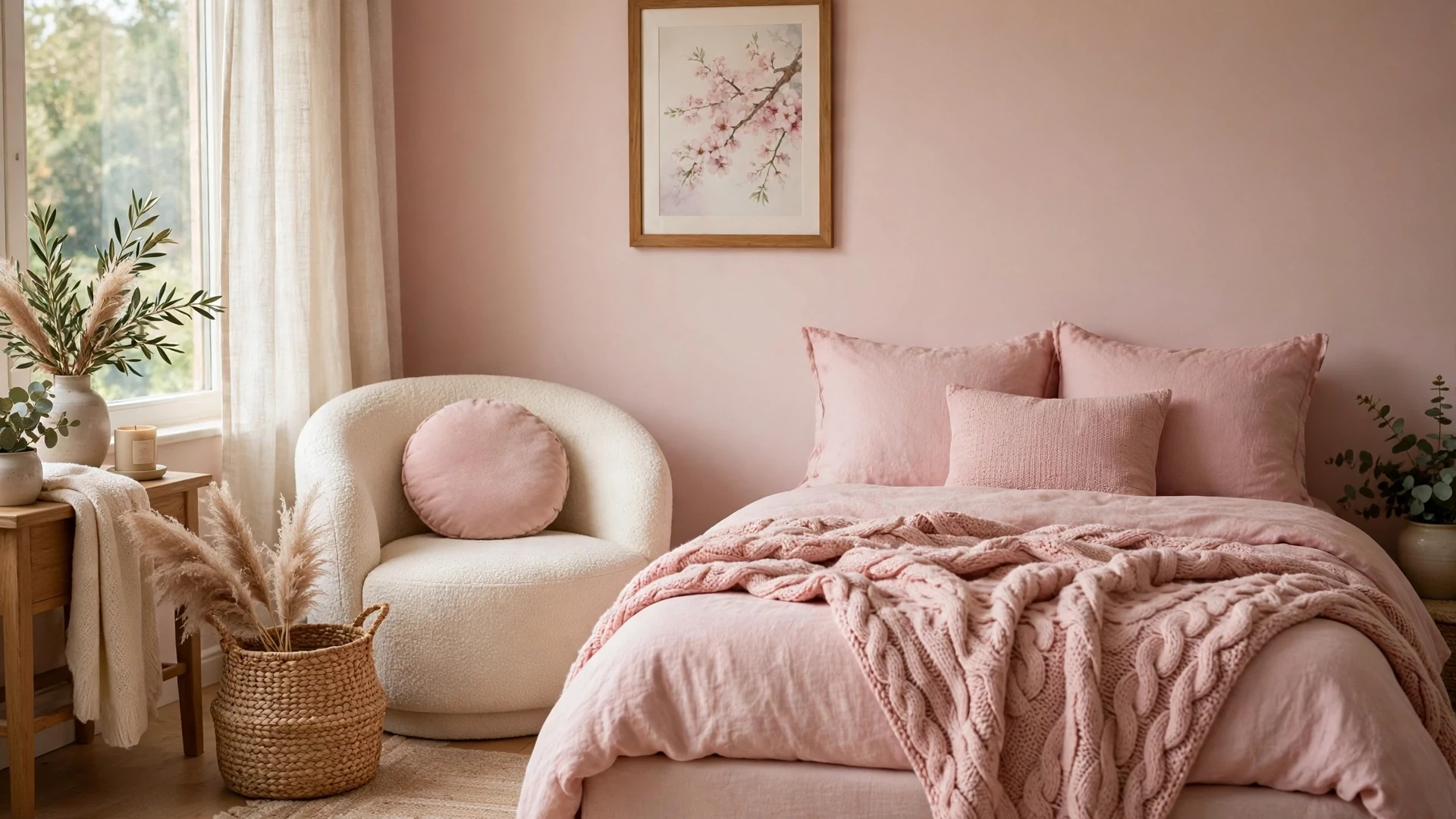
Color is only half of a pink room. Texture is what stops it looking flat, especially in a room with a lot of hard furniture. A soft area rug, a boucle chair, a knitted blanket, velvet cushions, woven baskets, and fabric curtains add layers that make a pink space feel warmer and more finished.
Natural materials do the most work here: rattan, cane, and light wood give contrast against pink and keep the room from looking like a box of sweets. A woven basket beside the bed holds extra blankets and looks good doing it. If you want more inspiration before you buy anything, Houzz’s pink bedroom ideas gallery shows pink across modern, traditional, coastal, and eclectic interiors.
7. Combine Pink With Green
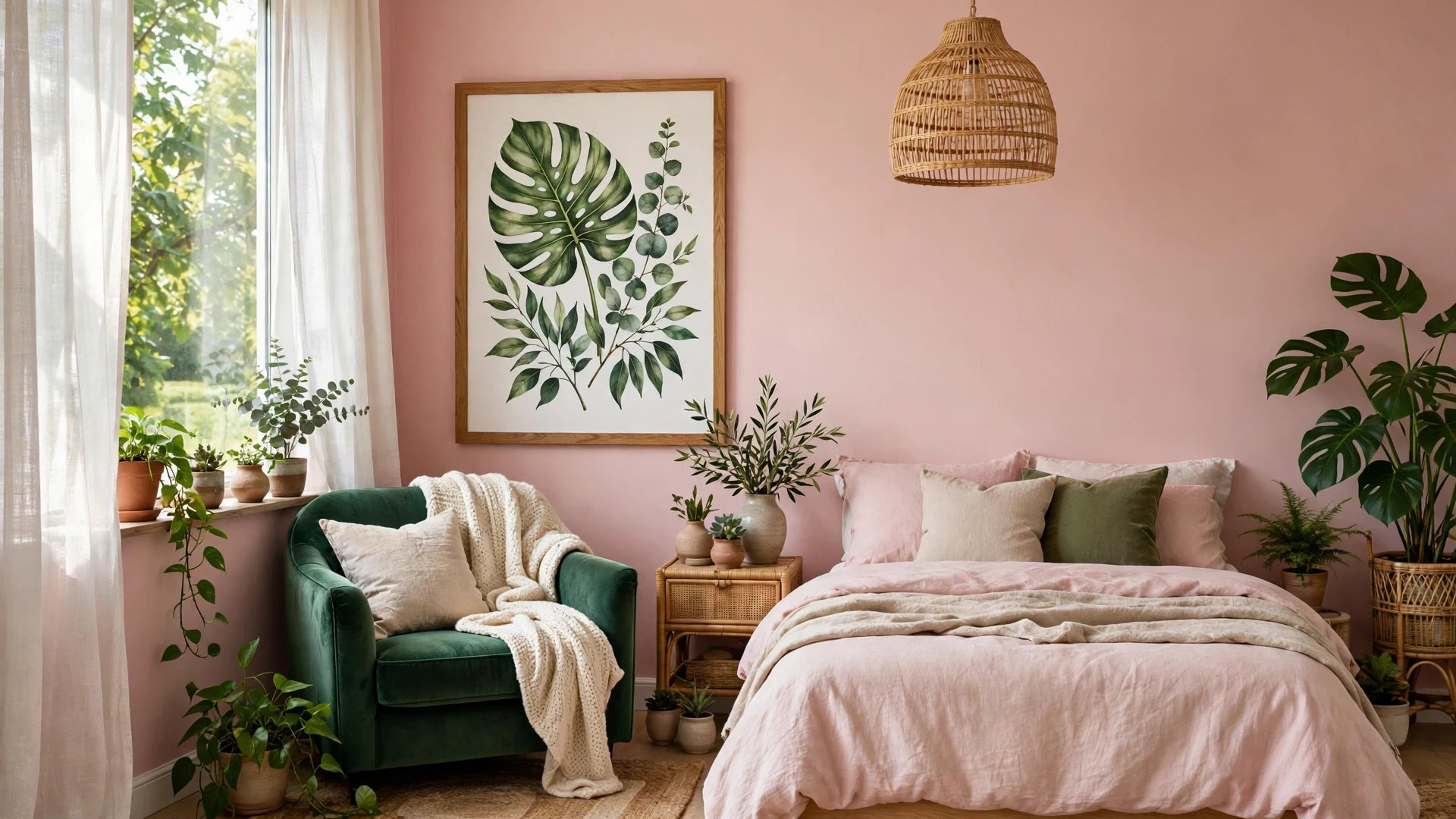
Pink and green make a surprisingly good pair, and it is the combination that makes a pink room feel considered rather than predictable. Soft blush with sage green is calm and nature-inspired — the version I would pick for a bedroom meant for sleeping. Stronger pinks with deeper green accents are more dramatic, and better suited to a room you want to feel bold.
Introduce the green through plants, cushions, artwork, curtains, or a small accent chair. If you want the pink to stay the star, keep the green accessories limited — one green chair, or three plants, not a green wall and green bedding and green curtains all at once.
8. Add a Pink Gallery Wall
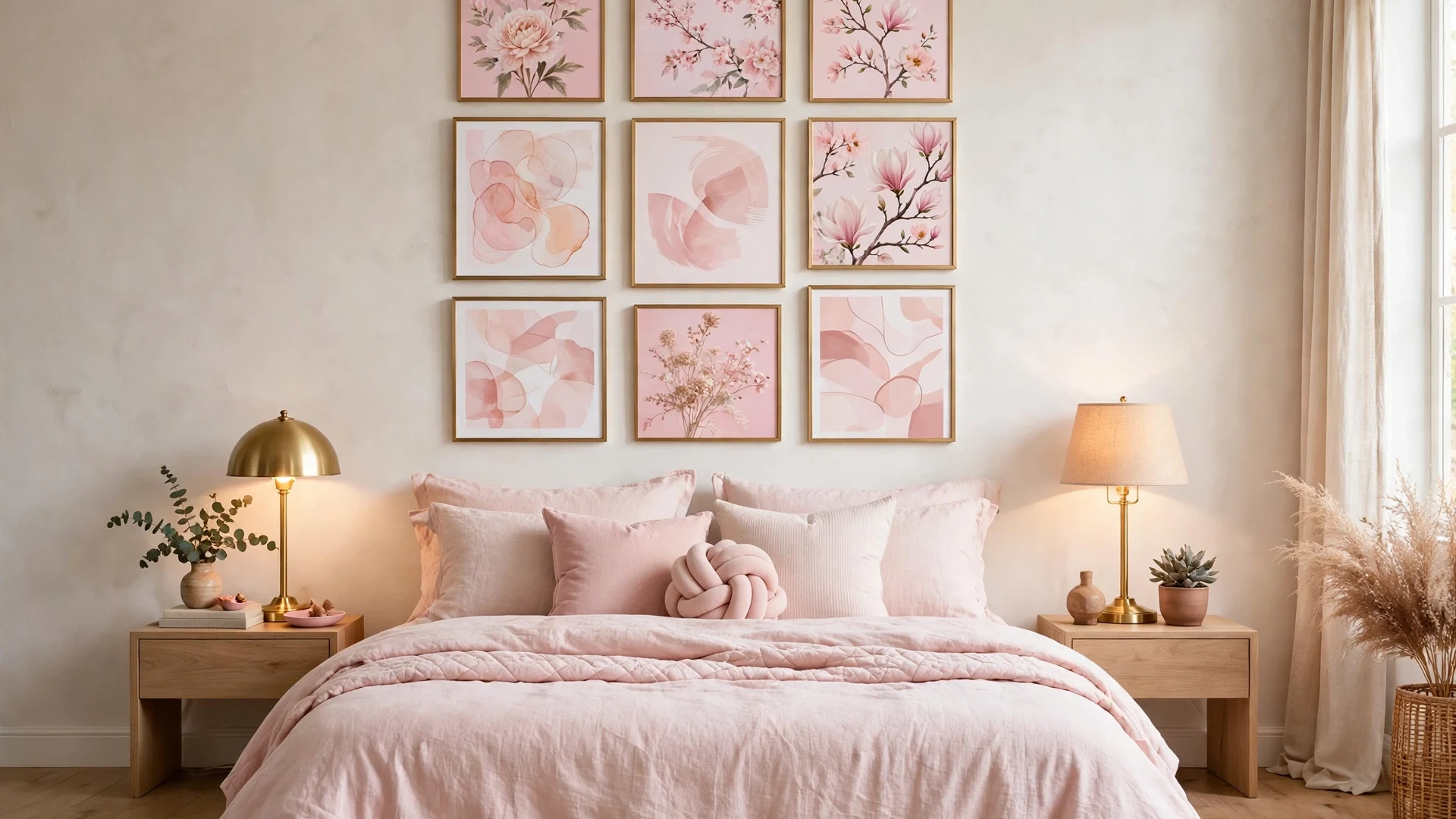
A gallery wall is the most personal idea in this list, because it is the one that is entirely yours. Instead of choosing artwork that is entirely pink, look for prints containing blush, rose, cream, white, green, or gold — the colors already in the room — and let the wall tie them together.
Arrange several frames above the bed, the desk, or the dresser, mixing typography, florals, abstract art, photography, and small decorative pieces. Repeat one or two colors throughout so the wall holds together, and use white or gold frames to connect it to the rest of the room. If you prefer a minimalist space, use three larger prints rather than many small frames — they have more presence, and they are easier to hang straight.
9. Make a Pink Room With Dark Contrasts
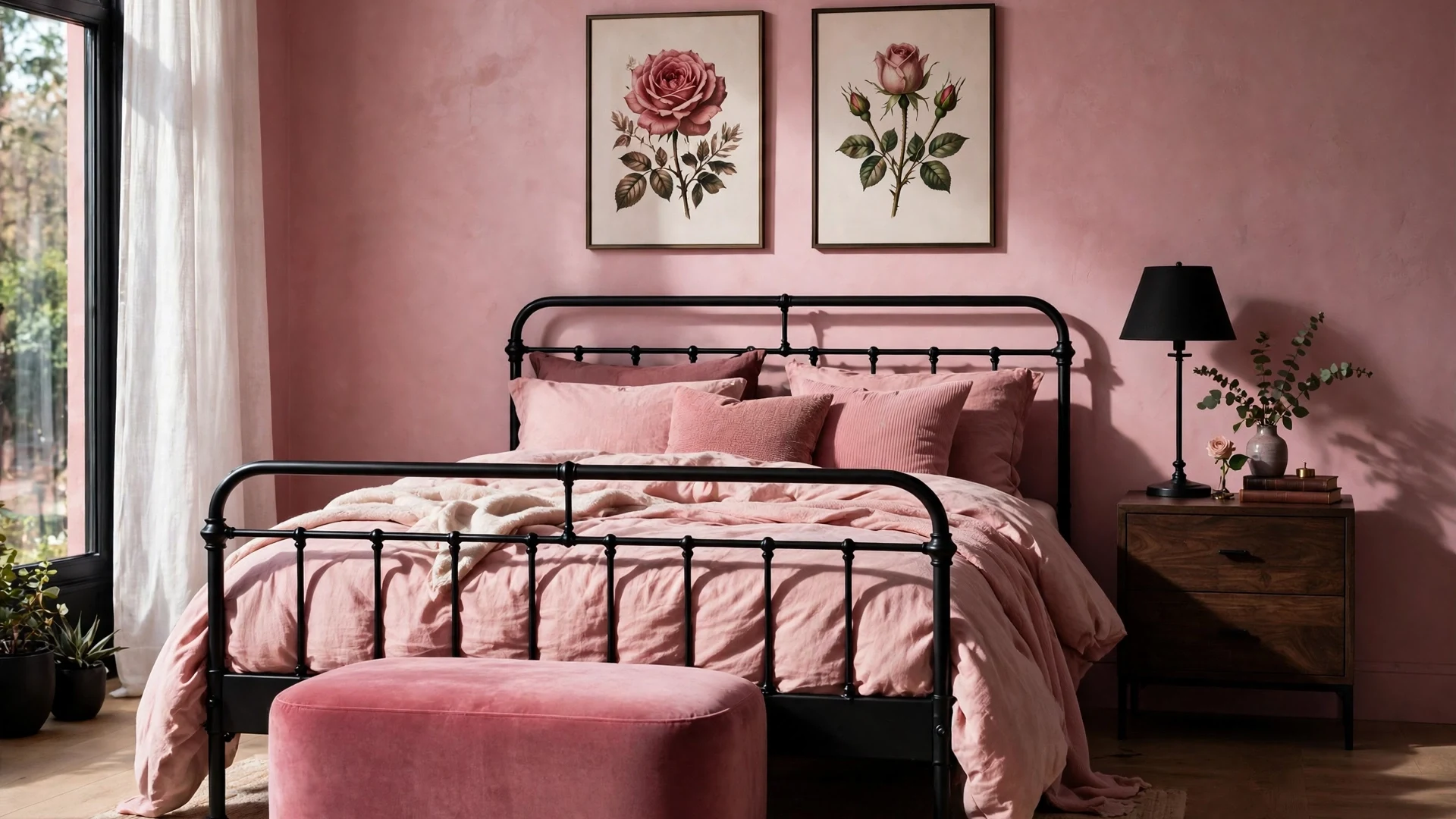
Pink does not have to mean pastel. If you want a more modern pink room, introduce darker elements — charcoal, black, espresso brown, or deep burgundy — and let the contrast do the work.
Blush-pink walls with a black metal bed, dark wood nightstands, cream bedding, and a few rose-colored accessories is the version I would start with: the pink stays soft, and the dark furniture keeps it from feeling like a nursery. You can get the same effect without changing the wall color at all — black picture frames, dark lamps, or a darker dresser are enough. This is the best idea in the list if you love pink but worry about the room looking too sweet.
Pick Your Pink: A Shade Guide
Before you buy paint or bedding, match the shade to the mood and the room. Pink is not one color — it is a family of completely different moods, and the wrong one will fight the room.
- Blush — barely-there, almost neutral. Best for small rooms and whole-room paint. Pairs with cream, light wood, and gold.
- Dusty rose — muted, with a grayish undertone. The most grown-up pink. Pairs with sage green, aged brass, and warm beige.
- Bubblegum — bright, playful, unapologetic. Best as an accent — one wall, the bedding, a chair — never all four walls unless the room is a child’s. Pairs with white and black.
- Terracotta pink — earthy, warm, clay-toned. Best for rooms with rattan, linen, and wood already in them. Pairs with cream and olive.
- Mauve — pink with a purple undertone, deeper and moodier. Best for a dark-contrast scheme or an autumn pink room. Pairs with charcoal, burgundy, and walnut.
Two rules cover the rest: pale pinks suit large areas and low light, while richer pinks work best as accents or in bright rooms — and always test samples at different times of day.
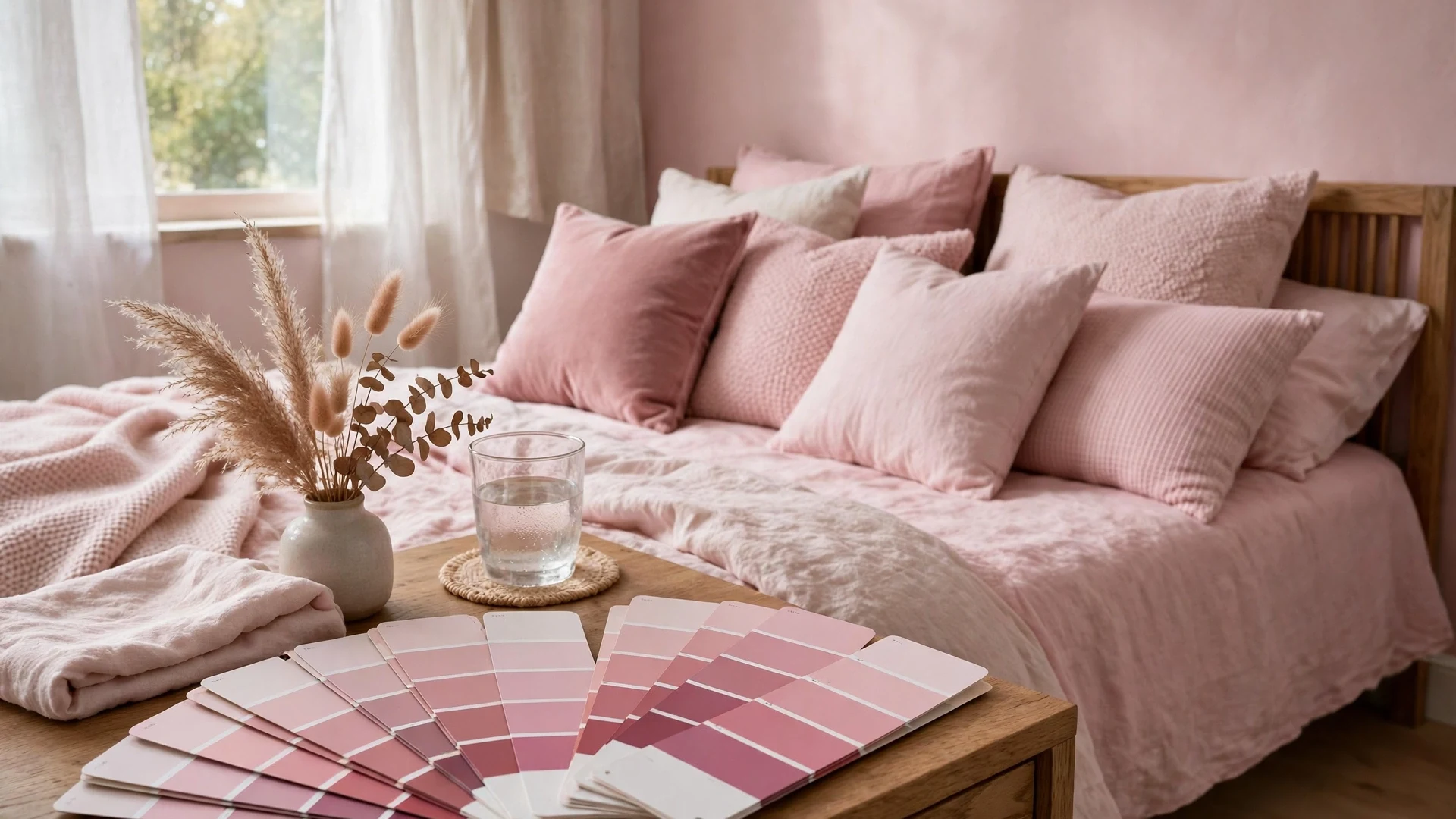
Small Rooms and Rentals
A pink room is easier in a small space than most colors, because the lightest pinks bounce light around like white while adding warmth white never gives you. The rules are just stricter: one pink, one neutral, one contrast, and nothing else competing for attention. Swap textiles instead of adding furniture, keep one clear surface on every piece of furniture, and let one vase or one framed print do the work of five small decorations.
Renters get the best version of this look, because the strongest pink ideas need no paint at all. Pink bedding, a blush throw, pink cushions, a pink rug, and a gallery wall hung on removable hooks will make a white-walled rental read as a pink room — and all of it moves with you.
Budget Moves
A pink room does not need a big budget or a renovation. The moves that save the most use what you already own: change cushion covers instead of buying new cushions, move a throw or a basket from another room, and put the money into one main area — usually the bed. A blush throw and two pink cushion covers will change a neutral bedroom more than a dozen small pink accessories scattered around it.
If you are buying, buy in this order: bedding first, then a rug, then lighting, then art — reusable pieces in your one chosen pink, not a matching set, which looks like a showroom and dates fast. Buy a sample pot first, live with it on the wall for two days, and only then buy the full tin.
Mistakes to Avoid
- Using five pinks at once. Pick one main pink and one deeper version of it for accents.
- Pink on every surface. If the walls are pink, keep the furniture neutral; if the walls are neutral, make the bed or the rug the pink focal point.
- Forgetting texture. Color alone makes a pink room look flat. Add a knit, a velvet, a weave, and a smooth surface.
- Cool lighting. A cool white bulb makes blush look gray and gold look yellow. Warm bulbs flatter pink, wood, and skin.
- Matching everything. A matching pink set looks like a catalog page. Mixing wood, fabric, metal, and natural materials feels much more relaxed.
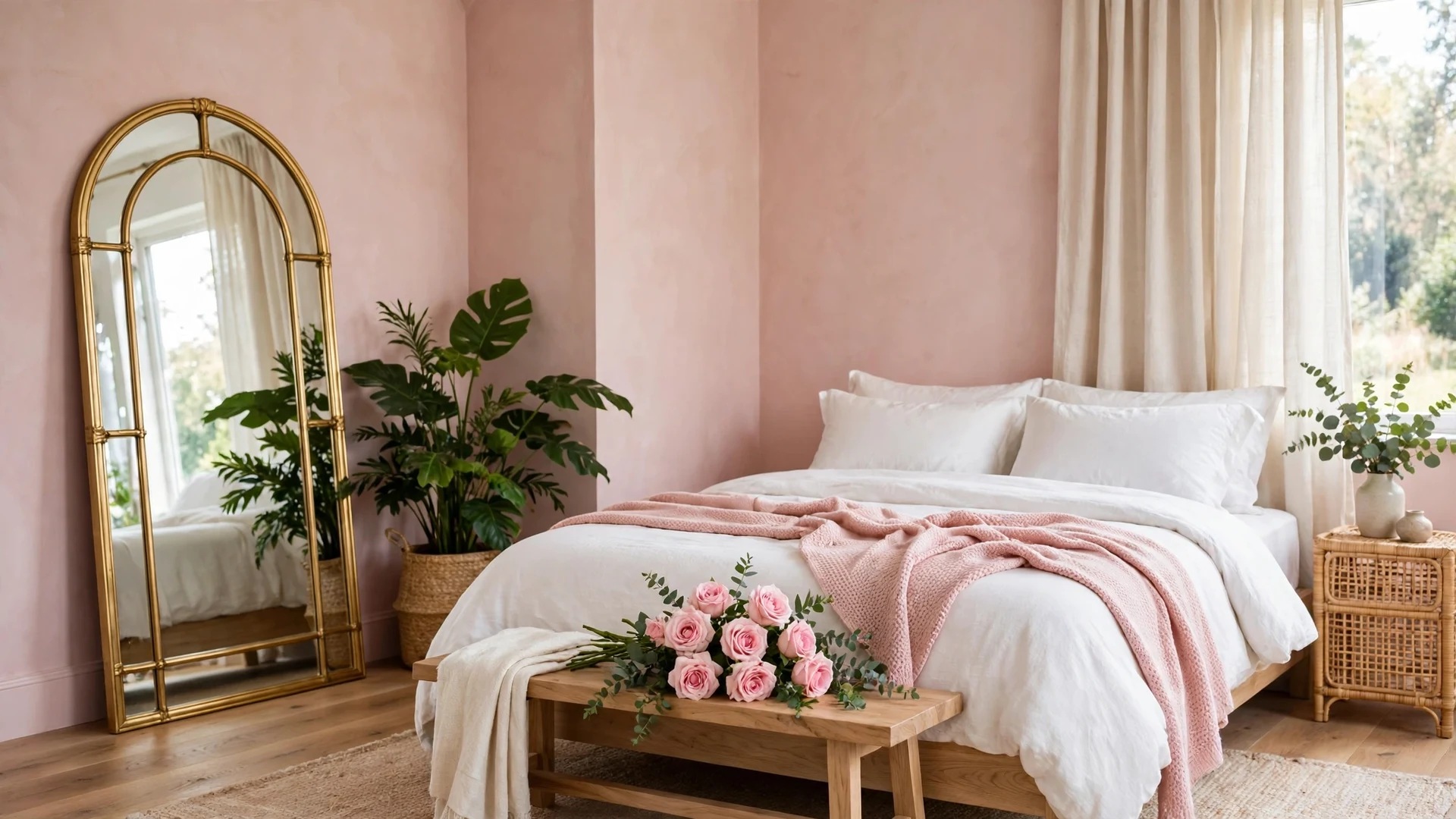
Easy Ways to Complete Your Pink Room Aesthetic
Once you have chosen the main pink shade, repeat it strategically rather than everywhere. A few well-placed pieces create a stronger pink room than dozens of matching decorations:
- Pink cushions or a throw blanket
- A blush area rug
- Pink or floral artwork
- Cream or white curtains
- Light wood furniture
- Gold or brass accents
- Green plants
- A decorative mirror
- Soft bedside lighting
- Textured bedding
The goal is visual balance. If your walls are strongly pink, keep larger furniture neutral; if your walls are neutral, the bed, rug, or artwork can be the pink focal point. For more bedroom color guidance, Benjamin Moore’s bedroom color inspiration guide and Sherwin-Williams’ bedroom color guide are both useful starting points.
Frequently Asked Questions
What is the best pink shade for a bedroom?
Blush for a soft, restful room and small spaces; dusty rose for a more grown-up, muted look. Both work on all four walls. Brighter pinks — bubblegum, fuchsia — work best as accents: one wall, the bedding, or a chair.
How do I decorate a pink room without it looking childish?
Use a muted pink like dusty rose or mauve, add one dark contrast such as charcoal, black, or espresso wood, and keep the gold to a few metallic pieces. Natural materials — light wood, rattan, linen — also keep pink looking grown-up.
Can I have a pink room in a rental?
Yes — pink bedding, a blush throw, pink cushions, a rug, and a gallery wall on removable hooks will make a white-walled rental read as a pink room without any paint. If you can paint one wall, choose the wall behind the bed and keep the pink pale.
What colors go with pink in a bedroom?
White and cream for a fresh, classic look; sage green for calm; gold or brass for glamour; charcoal or black for a modern contrast; light wood for warmth. Pick one contrast color and repeat it.
How much pink is too much?
When pink is on the walls, the bedding, the rug, the curtains, and the art all at once. One main pink surface, the same pink repeated in two or three small places, and everything else neutral.
A Good Place to Stop
Creating a beautiful pink room does not require a huge budget or a complete renovation. Whether you want a soft blush retreat, a glamorous pink-and-gold space, a modern pink-and-black design, or a cozy pink-and-green room, the system is the same: one pink, one neutral, one contrast, and texture in every layer. Start small — a blush throw, new cushion covers, a warm lamp — and add the next layer only when the room asks for it.
If you want to take the pink further, the seasonal versions live in their own posts: pink Halloween decor for a cute-and-spooky October, pink Christmas decor ideas and coquette Christmas decor ideas for a pink holiday, and pink fall decor for an autumn version. For the bed itself, girly fall bedding ideas and bedding set ideas carry the pink through the bedding, and cozy bedroom ideas covers the layered, lived-in bedroom this post is built on.