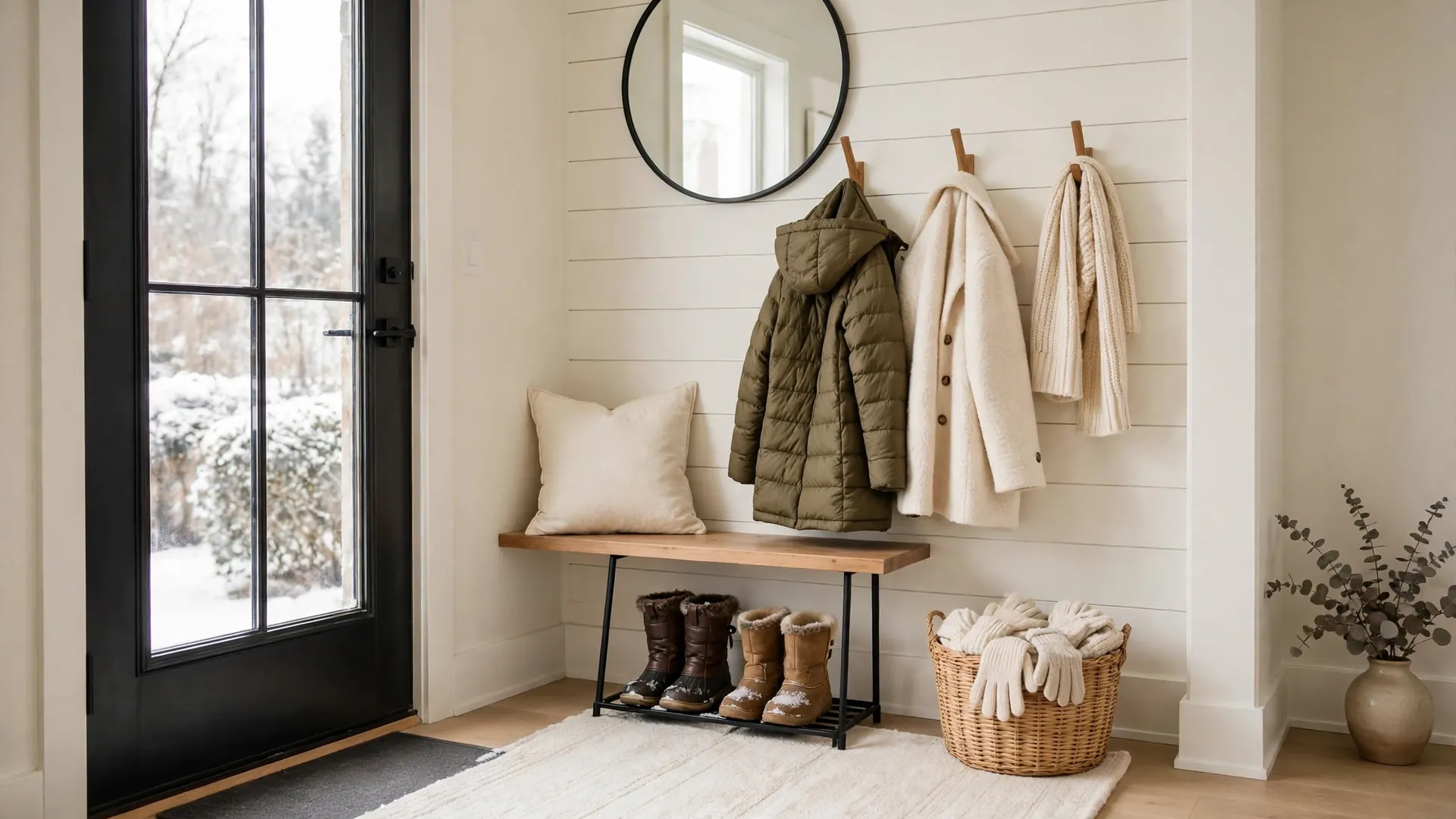
Every winter, my front door becomes a battleground. Boots drip onto the floor, coats pile up on the nearest chair, and gloves vanish exactly when I need them. If your entryway is small, winter does not just add clutter — it multiplies it, because everything that comes through the door is bulky, wet, or both.
The good news? You do not need a mudroom to win this fight. I have learned that small entryway ideas for winter work best when every item has a zone: a wet zone, a dry zone, and a grab-and-go zone. These 17 small winter entryway ideas are built on that simple system, and they work whether you have a narrow hallway, a tiny apartment entrance, or no foyer at all.
This article may contain affiliate links. As an Amazon Associate, Decor & Dish earns from qualifying purchases.
1. Create an Entryway When Your Home Has No Foyer
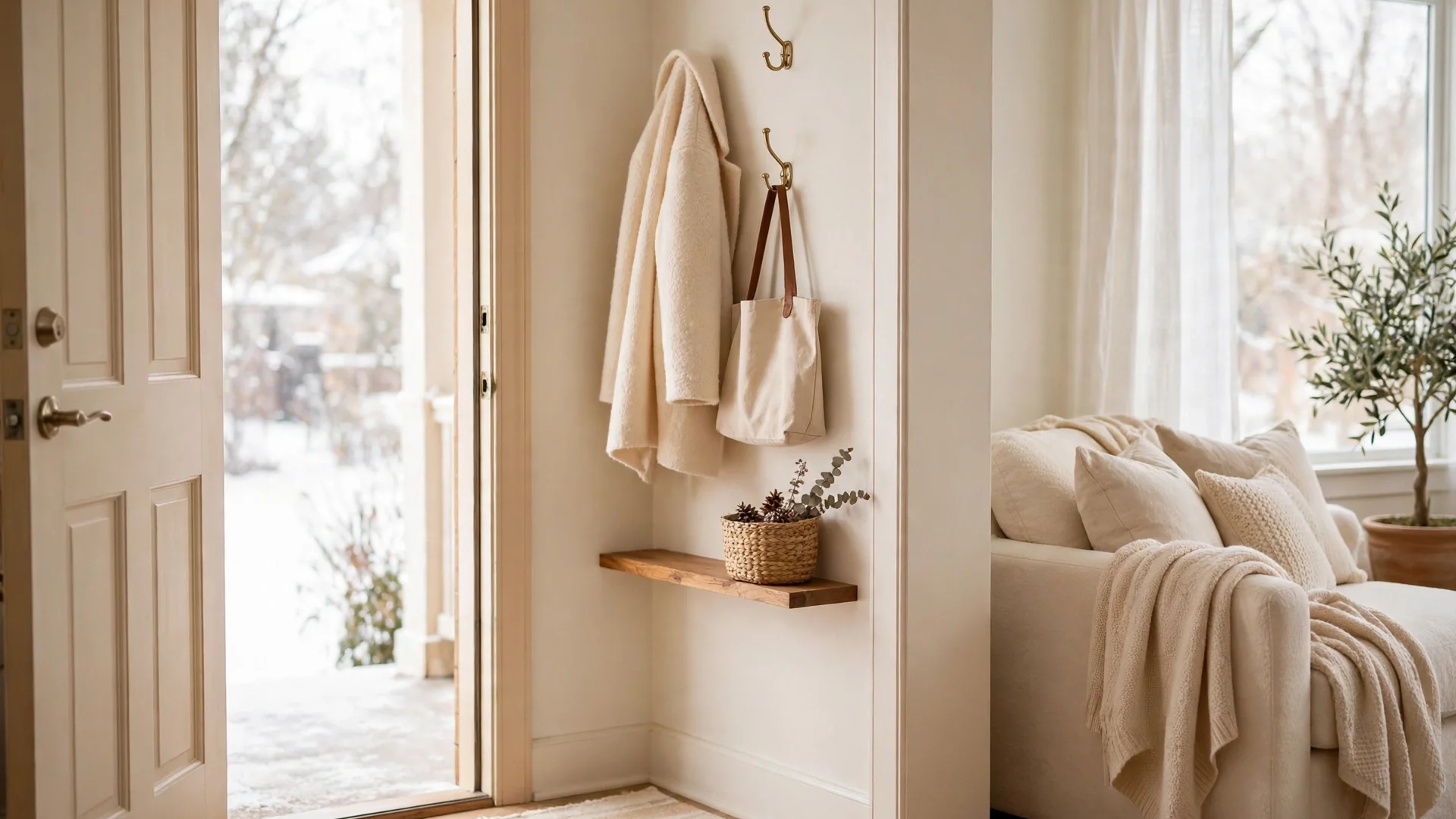
Idea 1: Claim one narrow wall. If your door opens straight into the living room, pick the wall strip right beside it and treat it like a real entryway. Two hooks, one small basket, and a slim shelf are enough to catch coats, keys, and mail before they spread across the room. It feels surprisingly official once everything lands in the same spot.
Idea 2: Let a rug draw the border. A small washable rug, roughly the width of the door swing, defines the zone without any partition. It tells everyone, including guests, exactly where outside gear stops. Choose low-pile so the door clears it, and shake it out weekly. If you are working with a tight footprint in general, my small space decorating ideas follow the same one-zone-at-a-time logic.
2. Design a Hidden Wet-Boot Storage Station
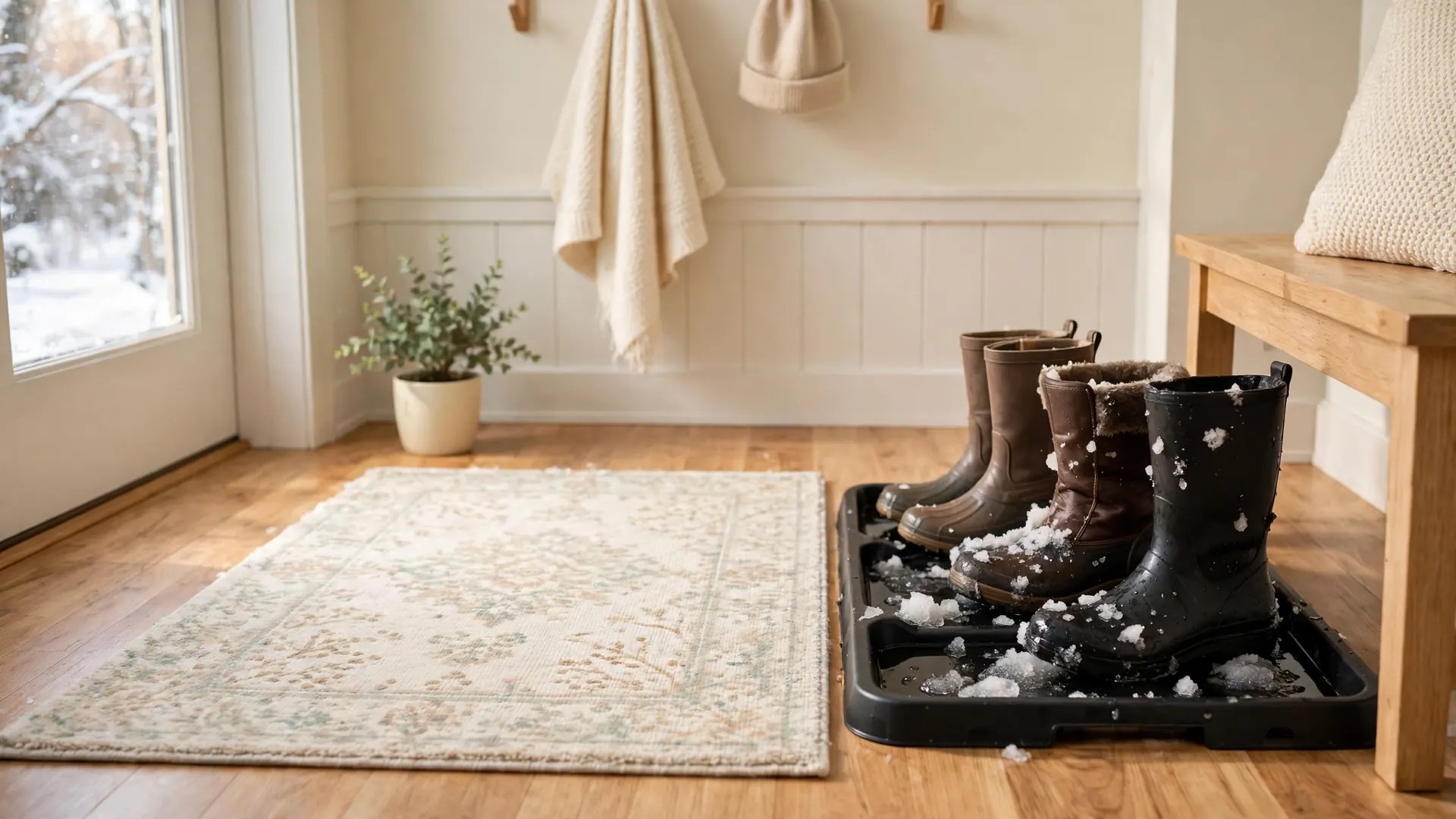
Idea 3: Give wet boots a tray of their own. The single hardest-working piece in a winter entryway is a waterproof boot tray with a raised lip. Snow melts, salt dissolves, and all of it stays inside the tray instead of soaking your floors. Keep everyday boots here until they are fully dry — never move damp boots straight into closed storage, where they turn musty.
Idea 4: Hide the dry pairs away. Once boots are dry, they move to a closed cabinet or bench. That wet-to-dry journey is the whole secret: the tray handles the mess, the cabinet keeps the entryway looking calm, and your floors survive the season.
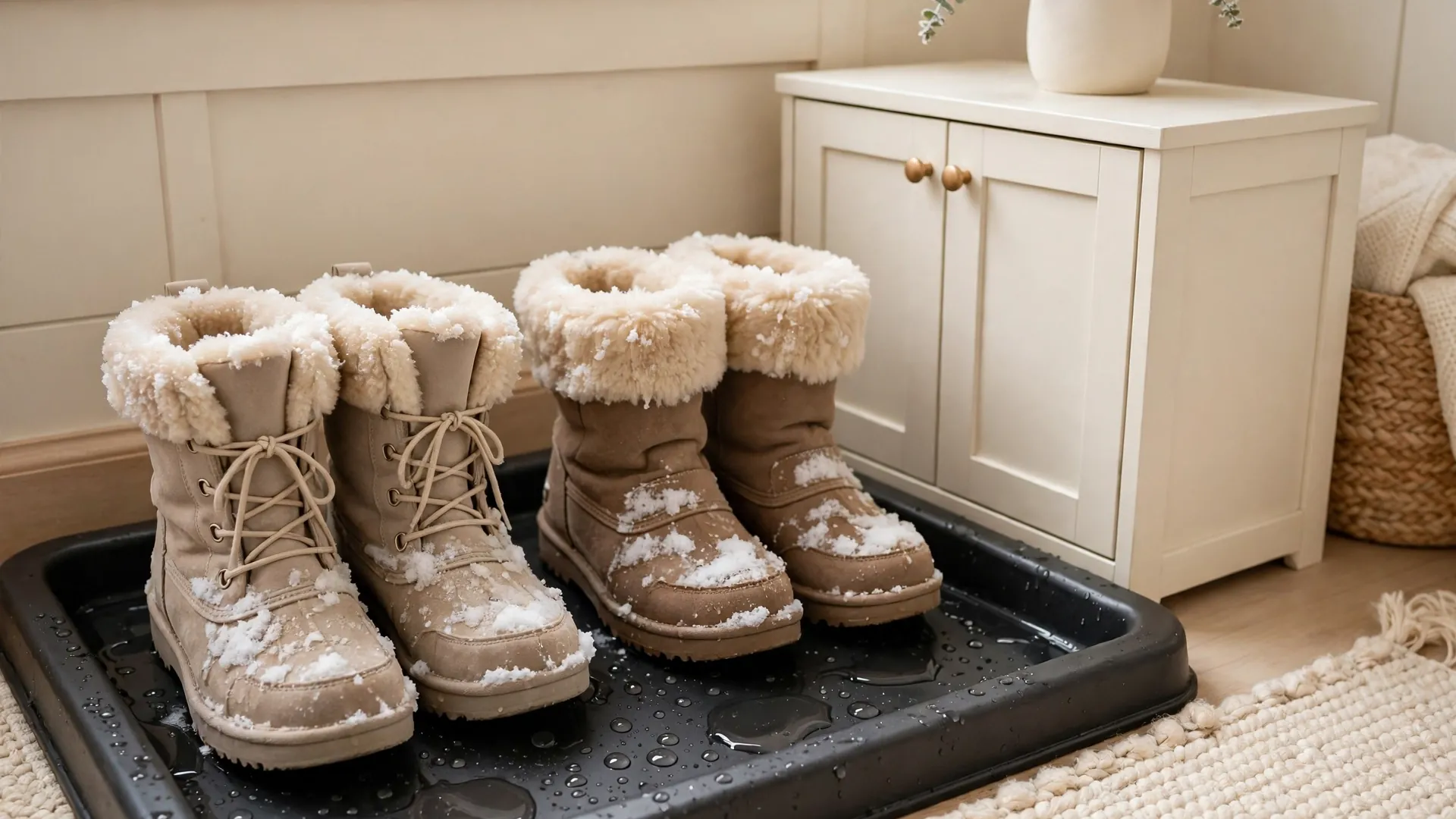
Shop Now – Stalwart All-Weather Boot Tray (2-Pack) on Amazon
3. Use Vertical Storage in Narrow Winter Entryways
When floor space is gone, the wall is your storage. This is where entryway storage ideas for small spaces really earn their keep, because every inch above eye level is wasted right now.
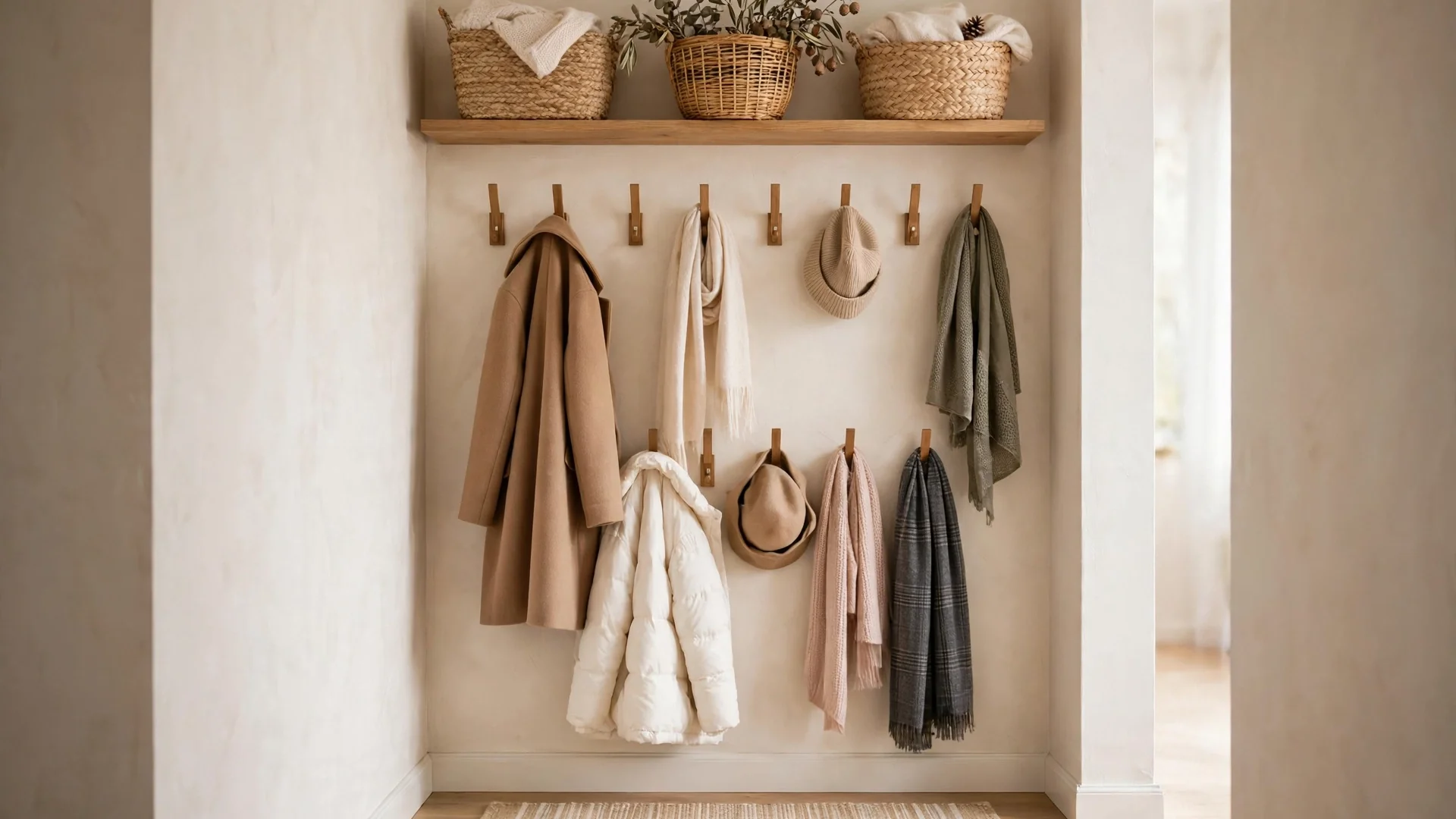
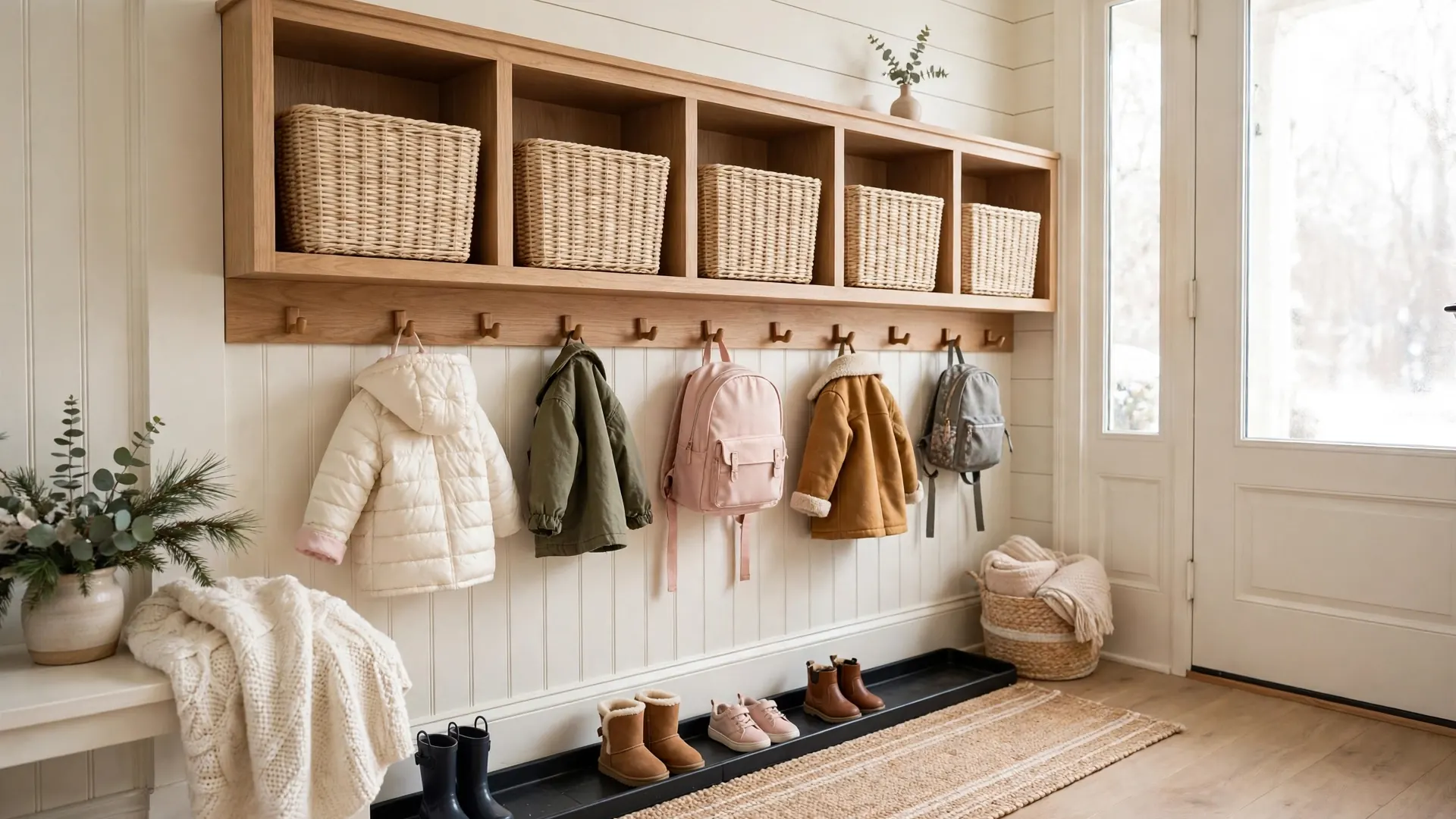
Idea 5: Hang hooks at two heights. A high row for adults and a low row for kids, guests, or the dog’s leash stops the single overloaded hook that dumps everything on the floor. Stagger them so bulky coats do not swallow the smaller items.
Idea 6: Add one high shelf with baskets. Hats, scarves, and sunscreen-season leftovers live up top in woven baskets, sorted but out of the walkway. My under stair storage ideas use the identical wall-first approach, and This Old House’s mudroom storage ideas show how far vertical systems can go.
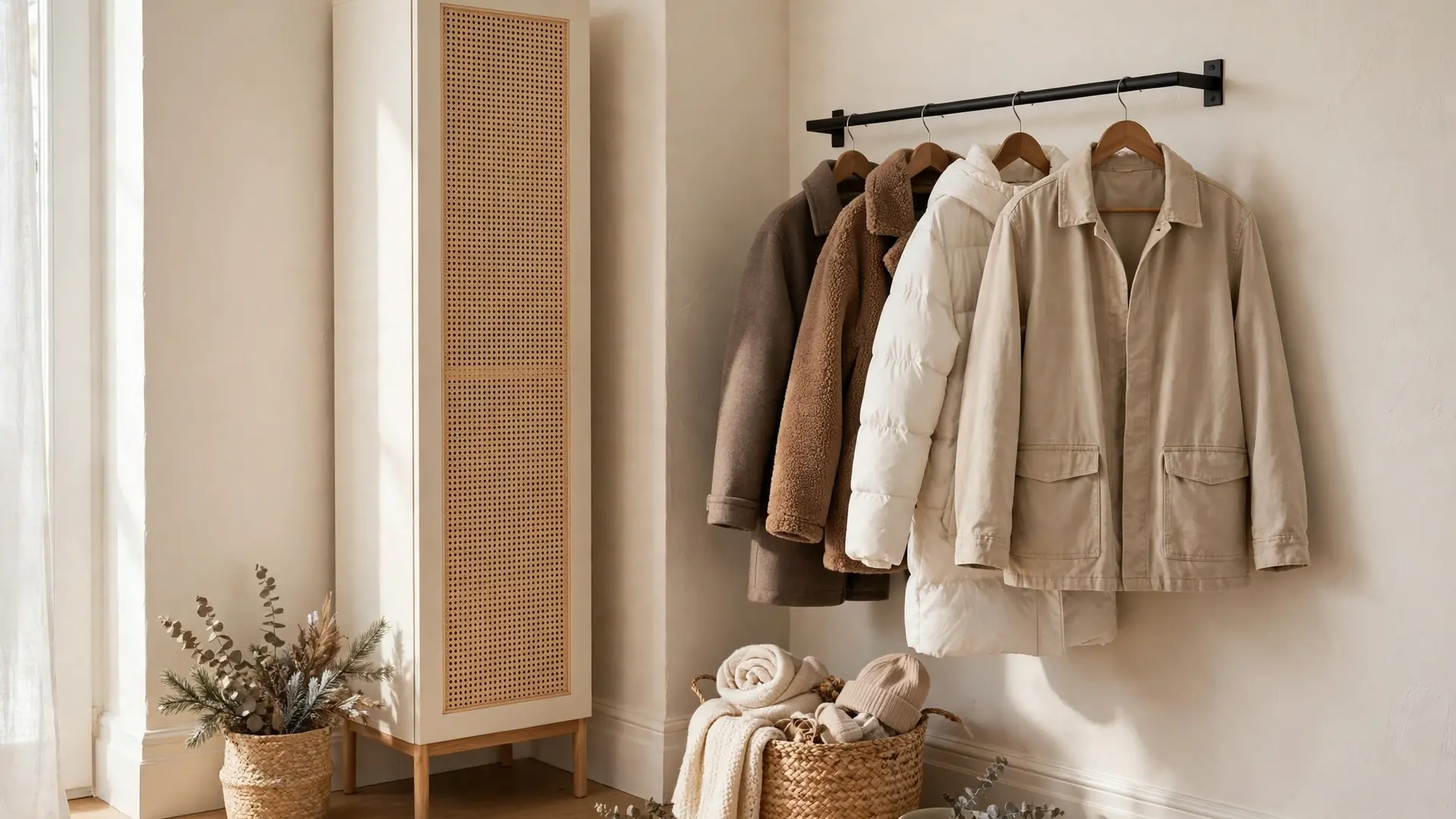
4. Organize Bulky Winter Coats Without an Entryway Closet
Idea 7: Try a slim freestanding wardrobe. A narrow, closed wardrobe beside the door swallows puffy coats completely and keeps the entryway looking like a room, not a coat check. Measure your depth carefully — most winter coats need about 24 inches to hang without crushing.
Idea 8: Rotate ruthlessly on a coat rail. If a wardrobe will not fit, a wall-mounted rail holds only what your family actually wears this week. Off-duty coats move to a bedroom closet. That one-in, one-out rule is what keeps a small entryway storage cabinet or rail from becoming a wool avalanche by January.
5. Add a Small Bench That Does More Than Provide Seating
Idea 9: Choose a bench with shelves underneath. Sitting down to pull on boots is not a luxury in winter — it is how you avoid hopping into a puddle in your socks. A slim shoe bench gives you that seat plus two shelves of storage in the same footprint, and at under 12 inches deep it will not block the doorway.
Idea 10: Or hide it all in a lift-top. If visual calm matters more, a lift-top bench hides hats and gloves inside the seat. Either way, check the bench depth against your door swing before you order — an oversized bench is the most common small-entryway mistake I see.
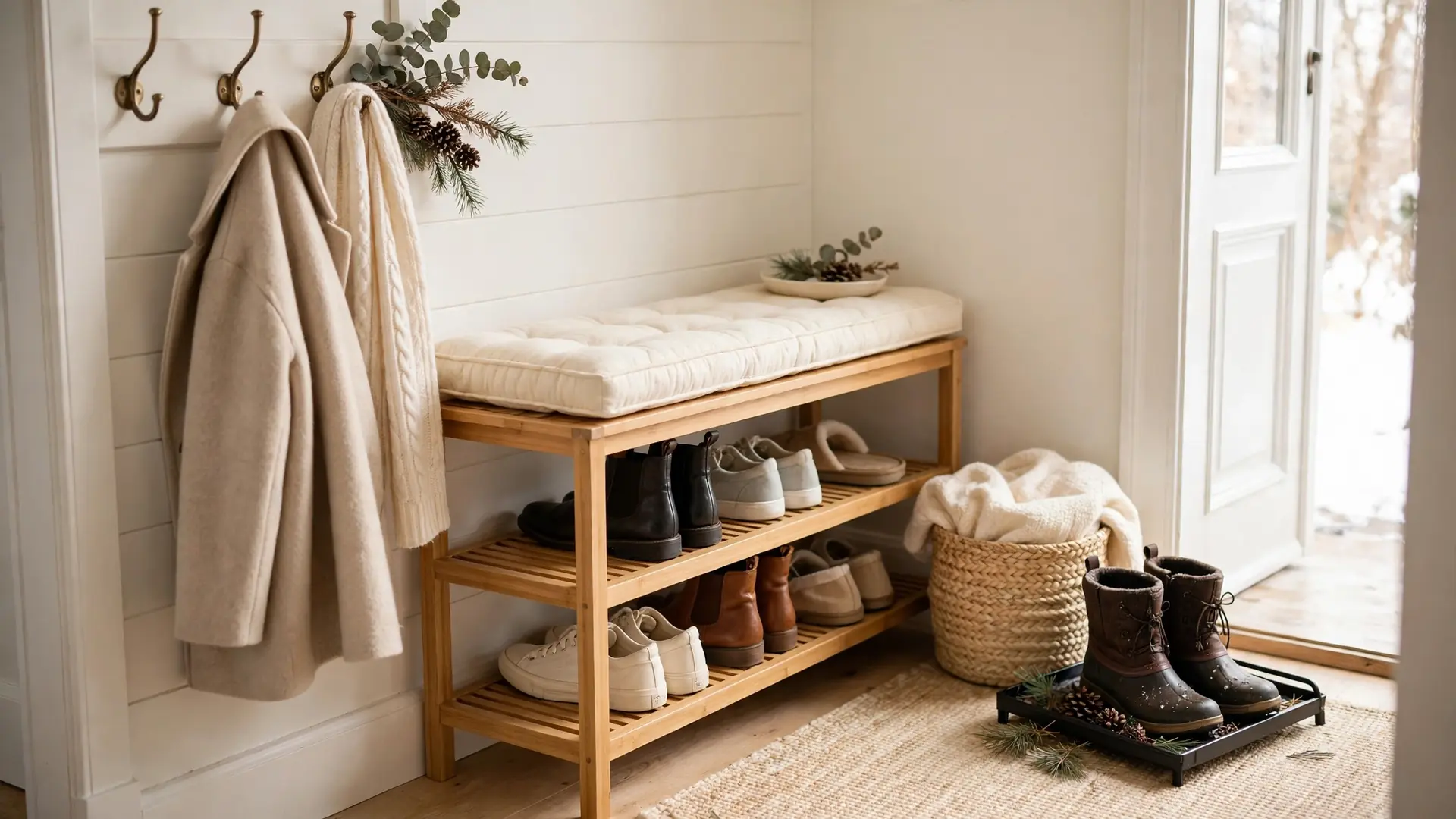
Shop Now – SONGMICS 3-Tier Bamboo Shoe Bench on Amazon
6. Create a Renter-Friendly Winter Entryway
Everything in this section is freestanding or damage-free — no drill, no lost deposit.
Idea 11: Start with a freestanding shoe cabinet. A slim tip-out shoe cabinet stands on its own, hides every pair, and leaves with you when you move. Pair it with portable baskets for the small stuff and your whole entryway is officially landlord-approved.
Idea 12: Use adhesive hooks — within their limits. Damage-free hooks are wonderful for scarves, light jackets, and leashes, but respect the weight printed on the package. The official Command brand FAQs are worth a quick read before you hang anything heavy.
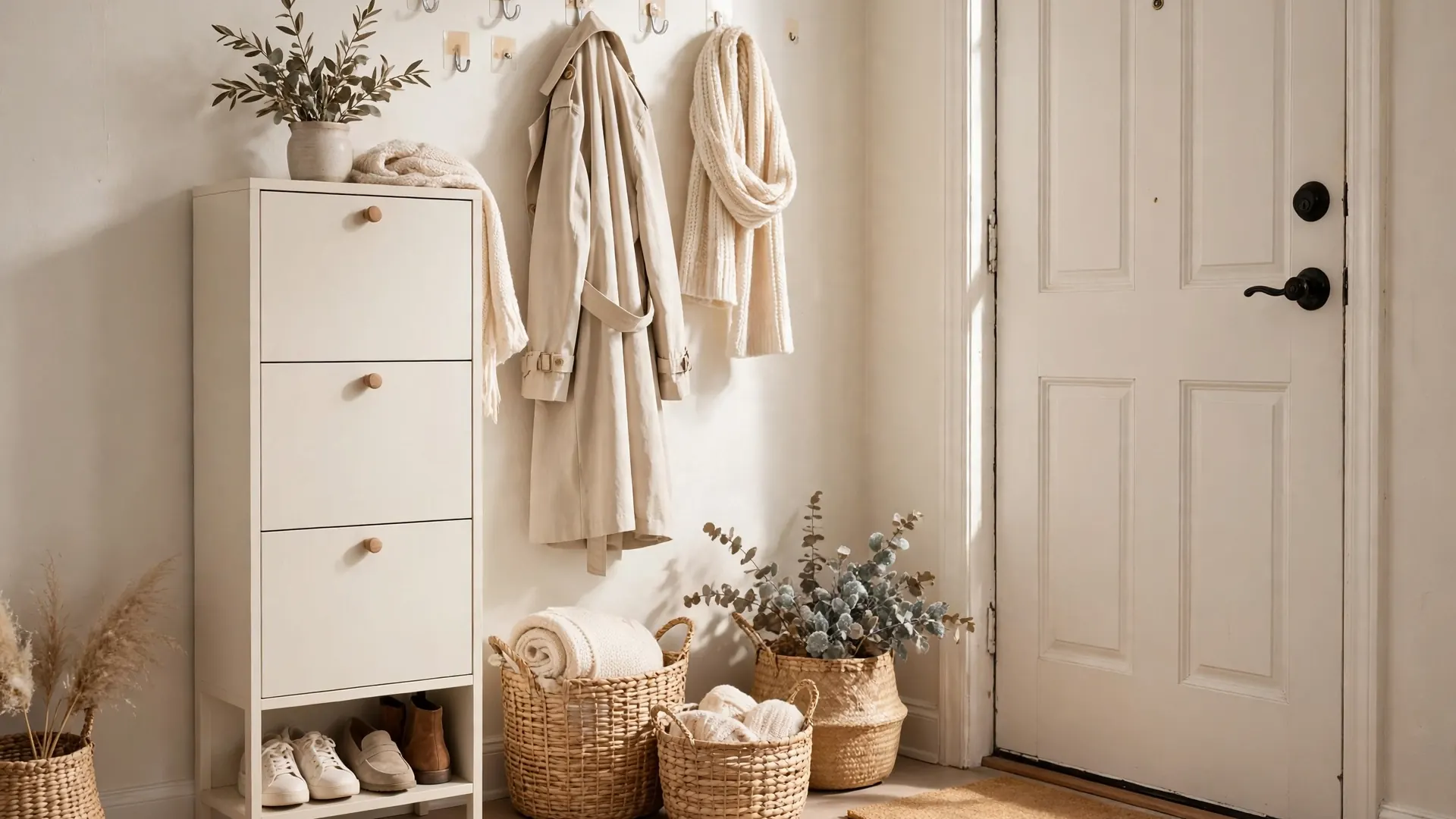
Shop Now – Command Large Utility Hooks (7-Pack) on Amazon
7. Give Wet Umbrellas, Gloves and Scarves Their Own Zone
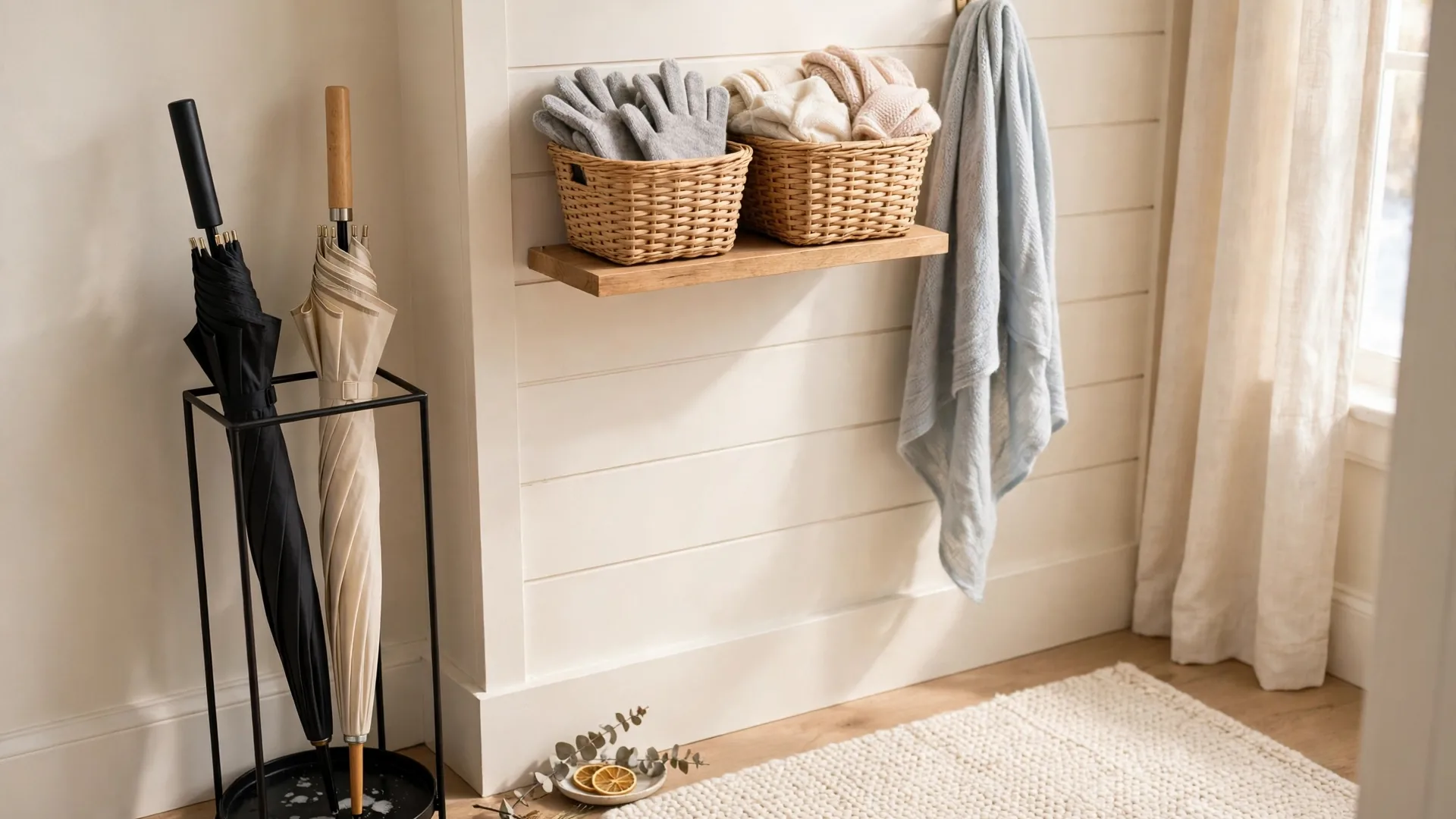
Idea 13: Build one accessories station. A slim umbrella stand with a drip tray in the corner, one basket for dry gloves and hats, and one small hook where damp scarves can air out — that is the whole system. Small accessories spread because they have nowhere specific to land. Give them a landing strip near the door, at hand height, and they stop migrating to the kitchen counter.
8. Organize a Family Winter Entryway Without Creating Clutter
Idea 14: Give every person one basket and one hook. Not a shared bin — their own. Kids can manage exactly one basket and one low hook, and honestly, so can most adults. When someone’s basket overflows, that is the signal to edit, not to buy more storage.
Idea 15: Do a two-minute nightly reset. Boots on the tray, coats on hooks, baskets back in line. This tiny routine is what stops a family entryway from resetting itself to chaos every 48 hours.
9. Protect Your Entryway From Muddy Floors and Winter Salt
Idea 16: Layer a washable rug over your hardworking tray. The tray catches the melt, and a washable low-pile rug catches everything the tray misses. Salt is the real enemy — it grinds into hardwood and leaves white crust on tile — so vacuum the grit up dry first, then mop with plain warm water. Skip vinegar on stone or grout; it can etch the surface. A weekly rinse of the boot tray keeps the salt from building up at all.
10. Make a Tiny Winter Entryway Look Beautiful Without Overspending
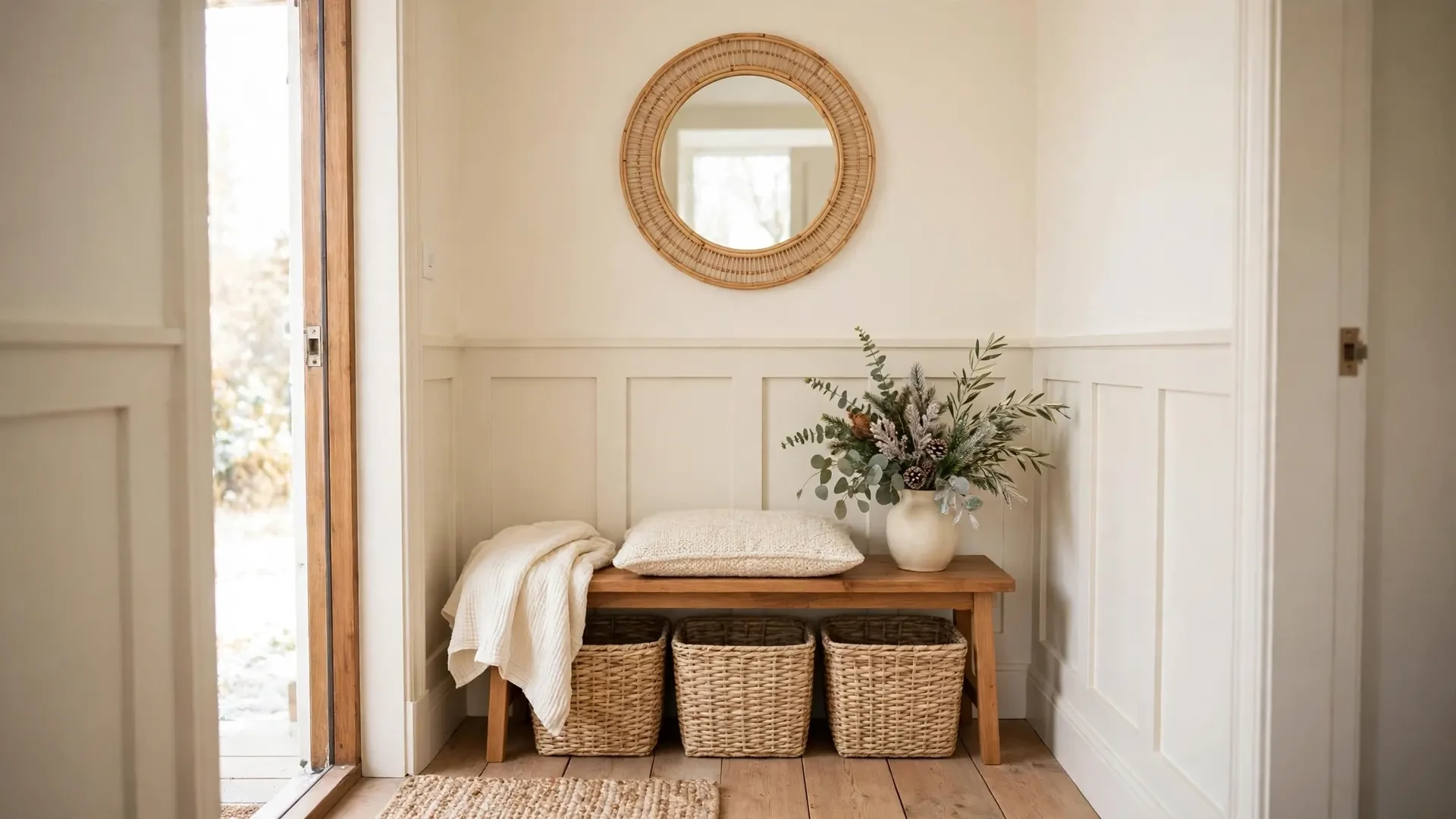
Idea 17: Style it like a room, not a storage unit. A round mirror opens up a tiny entry instantly and gives you one last look before you head out. Stick to a calm neutral palette — cream, warm wood, soft white — and let your storage double as decor with woven baskets and matching hooks. It is the same trick I use in my vintage entryway decor, where every pretty piece also works for a living. Beautiful and clutter-free are not opposites; in a small space, they are the same decision.
At a Glance: Match the Fix to Your Entryway Problem
| Entryway problem | Suggested solution | Main benefit |
|---|---|---|
| No foyer | Slim wall-mounted zone | Defines an entrance |
| Wet boots | Waterproof boot station | Contains moisture |
| Narrow hallway | Vertical storage | Frees floor space |
| No closet | Freestanding coat rack | Adds hanging space |
| Rental restrictions | Portable furniture | Avoids permanent alterations |
| Family clutter | Individual storage zones | Makes organization easier |
Common Winter Entryway Organization Mistakes
Storing wet boots inside closed cabinets traps moisture and smell. Choosing an oversized bench blocks the door swing you measured so carefully. Overloading removable hooks guarantees a midnight crash. Picking a plush, high-pile rug creates a tripping hazard and a door that will not open. And mixing damp accessories in with clean, dry ones spreads the mess you just contained. Avoid those five, and the system above mostly runs itself.
Final Thoughts on Small Winter Entryway Ideas
A small entryway will never hold everything winter throws at it — and it does not have to. It only has to hold today’s things, in the right zones, off the floor. Start with the boot tray and one wall of hooks, live with it for a week, then add the bench or cabinet your space is actually asking for. For more cold-weather small-space inspiration, my small winter living room ideas carry the same cozy, clutter-free thinking into the next room.
Frequently Asked Questions
How do you organize a small entryway in winter?
Work in zones: a wet zone with a boot tray by the door, vertical hooks for coats, and one basket per person for accessories. Keep only this week’s coats and boots at the door, and store the rest elsewhere.
How do you store winter boots in a small entryway?
Set wet boots on a waterproof tray with a raised lip until they are completely dry, then move them to a closed cabinet or under a bench. Never store damp boots in closed storage — they will smell by February.
How can you create an entryway without a foyer?
Claim the wall beside the door. A small washable rug defines the zone, two or three hooks hold coats, and a slim shelf or basket catches keys and mail. No partition or renovation needed.
How do you style a very small entryway?
Keep the palette light and neutral, add a round mirror to bounce light, and choose storage that looks like decor — woven baskets, wood hooks, a pretty bench. When every piece is attractive, the entryway reads as styled instead of stored.
What is the best storage for a narrow entryway?
Vertical storage wins: hooks at two heights and one high shelf with baskets keep the floor completely clear. A slim shoe bench under 12 inches deep adds seating and shoe storage without blocking the walkway.