Christmas ornament decor ideas work best when ornaments leave the tree and work the whole room, not when they stay in one place doing one job. The direct answer is this: use one ornament system with three moves — bowl, hang, and tuck. Fill bowls and vases with ornaments, hang them in windows, doorways and stair garland, and tuck them into mantel garland, shelves and the dining table. Planned that way, the same box of ornaments decorates five spots in the house, and the room looks finished from every chair, not just from the sofa facing the tree.
I learned this the year I bought a second box of ornaments because the tree still looked thin, then found the first box sitting half-empty on the hall floor. The tree was fine. The room was not — nothing on the mantel, nothing on the sideboard, nothing on the dining table, because every ornament I owned was hanging in one place. The next year I hung fewer ornaments on the tree and used the rest in a bowl on the coffee table, a strand across the kitchen window, and a line tucked into the mantel garland — same ornaments, same budget, and the house felt decorated in every room. Ornaments are not tree decorations. They are room decorations that happen to hang well on a tree too.
The Ornament System: Bowl, Hang, and Tuck
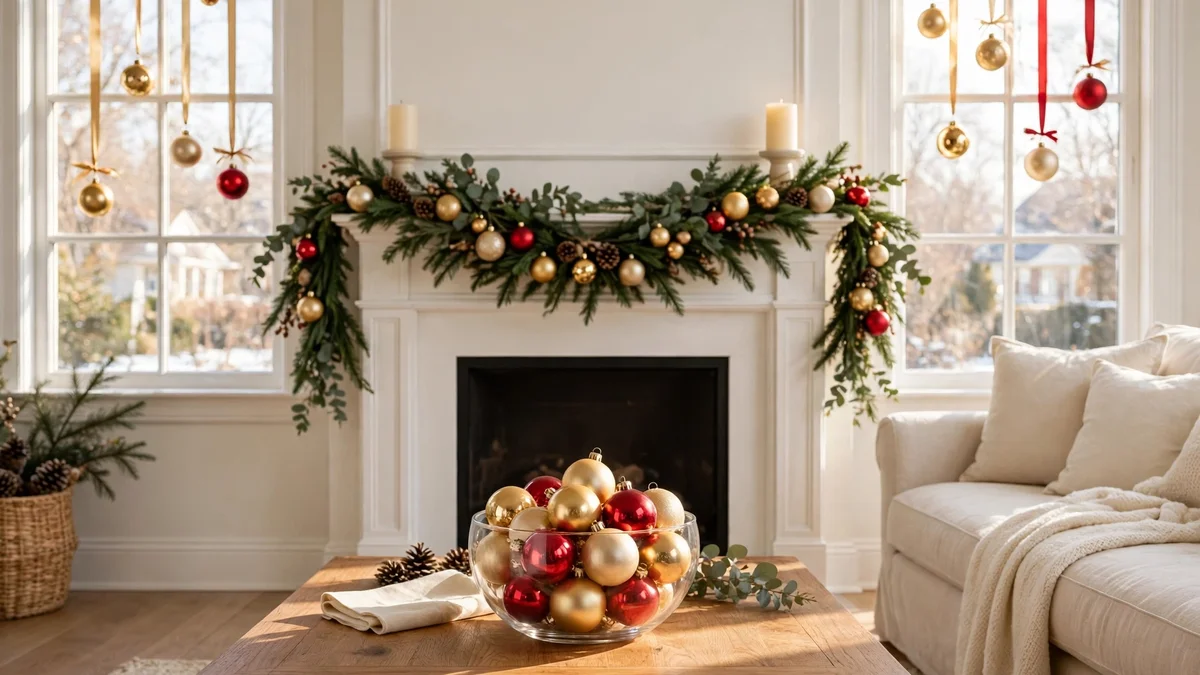
The Ornament System has three moves, and the order matters. First, bowl: ornaments as fillers in bowls, vases, trays and hurricane glasses, where their colour and shine do the work at table height. Second, hang: ornaments suspended where the eye travels — windows, doorways, stair garland and light fixtures — where they catch light and move gently. Third, tuck: ornaments nestled into garland on the mantel, the staircase and the shelves, and set into the tablescape, where they fill gaps and connect the pieces around them. Skip any one move and the room shows it: ornaments only on the tree mean a house decorated in one corner, and ornaments only in bowls look like a shop display.
Start with one palette and one size story before anything is placed. Pick two main colours and one metal — sage green and cream with brass, for example — and let every bowl, strand and tuck repeat it. Our sage green Christmas tree ideas use the same calm palette discipline on the tree, and it works even better off the tree: a bowl of mixed, clashing ornaments reads as a junk drawer, while a bowl of one palette reads as a decision. Size matters as much as colour: large ornaments (3 to 4 inches) for bowls and mantel tucks, medium (2 to 3 inches) for hanging strands, and small (1 to 2 inches) for tucking into garland.
Bowl: Ornaments as Fillers on Tables and Sideboards
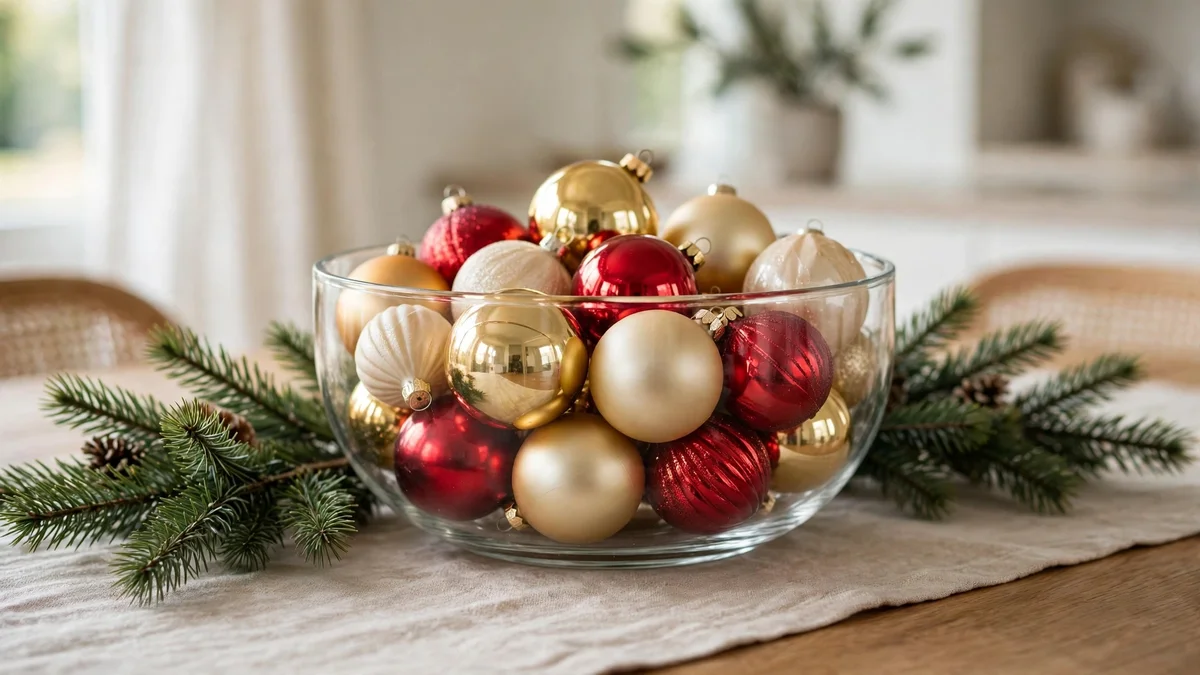
The bowl is the easiest move in the system and the one most people underuse. Take a wide, shallow bowl — 10 to 12 inches across on a coffee table, 8 inches on a sideboard — and fill it two-thirds full with ornaments in your palette, mixing one shiny, one matte and one textured finish, such as velvet or frosted glass. Largest ornaments at the bottom, medium ones in the middle, three or four small ones on top, then one sprig of greenery or a few pinecones so the bowl reads as a Christmas arrangement rather than a box tipped over. The same idea works in a tall glass vase, a dough bowl, a cake stand, or a hurricane glass with a candle in the centre — the container changes, the rule does not: one palette, three finishes, piled loosely enough to catch the light.
Bowls belong where people sit and eat, not where they walk. One on the coffee table, one on the dining sideboard, and one small one on the hallway console will carry the palette through the house better than one very large display in one room. Keep the bowl low enough to see over — nothing taller than about 6 inches on a dining table — and keep glass ornaments out of reach of small hands and wagging tails. Shatterproof ornaments belong in the low bowls and the hallway; fragile glass ones belong higher, on a shelf or a sideboard against the wall. Buy one set in one palette and split it across three bowls rather than buying three different sets, because the system only works when the rooms match each other.
Shop from Amazon: Christmas ornament sets
Hang: Ornaments in Windows, Doorways, and Stair Garland
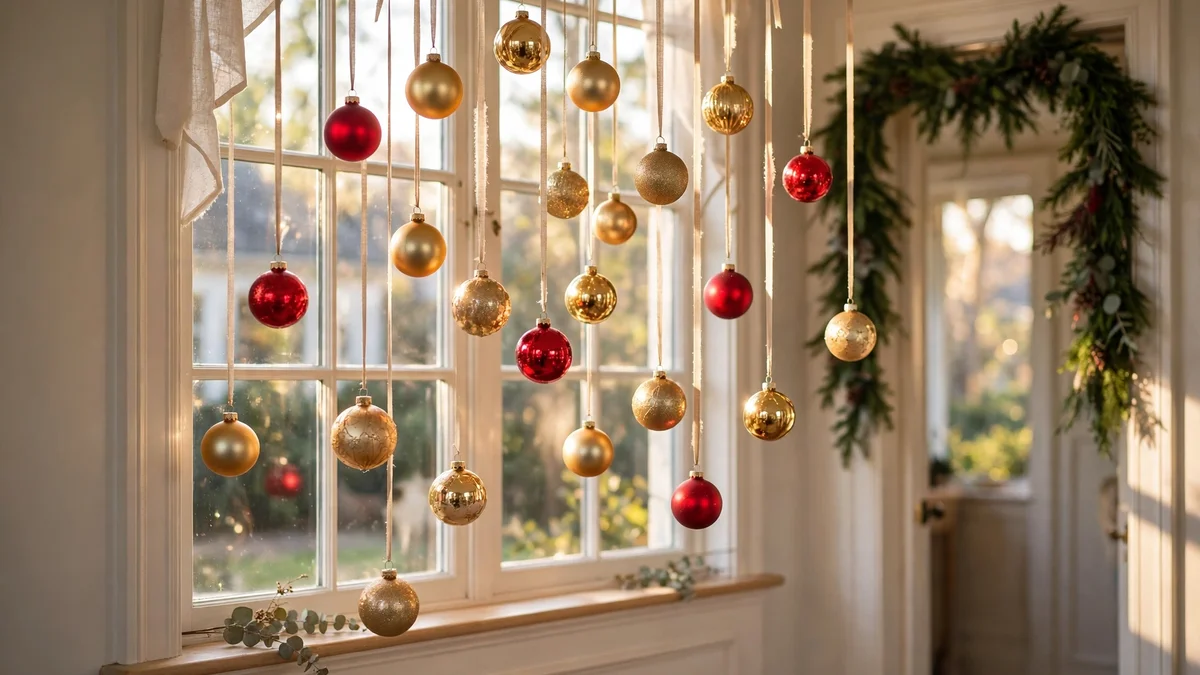
The hang is the move that makes ornaments feel alive, because hanging ornaments move. A strand across a window — five to seven ornaments on clear fishing line or thin ribbon, hung at staggered lengths from a tension rod or a suction hook — will catch the daylight and throw small reflections across the room. Keep the lengths uneven by 2 to 3 inches, and use light shatterproof or felt ornaments — a glass ornament swinging in a window is a break waiting for a draught. The same strand works across a doorway, but hang it high — at least 7 feet, clear of heads — and never across a door that swings.
Stair garland is the best hanging spot in the house, and the one most people leave bare. Drape the garland along the banister, then hang ornaments from it at intervals of about 12 inches, alternating sizes and finishes so the eye travels down the stairs instead of stopping at one heavy cluster. Our Christmas staircase decor ideas treat the staircase as a decorated route through the house, and ornaments hung from the garland are what make that route feel finished. A chandelier or pendant light over the dining table takes the same treatment: three ornaments on short ribbons, hung at different lengths, will glow when the light is on. Never hang ornaments near a real flame, and never hang anything heavy from a fitting not built for it.
Tuck: Ornaments Inside Garland, Mantel, Shelves, and Tablescapes
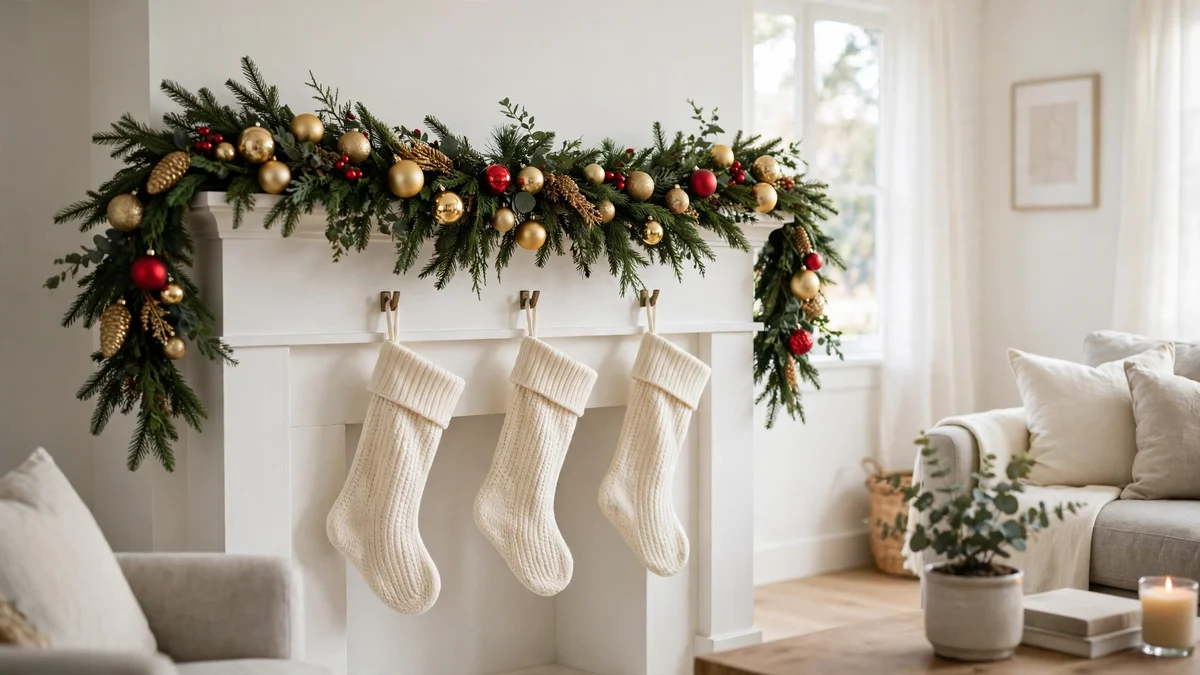
The tuck is the quietest move and the one that makes the difference between decorated and finished. Tuck ornaments into the mantel garland — one every 8 to 10 inches, pressed gently into the greenery so each ornament sits in a pocket of leaves rather than on top of them — and the garland suddenly looks full without a single extra branch. Our Christmas mantel decor ideas treat the mantel as the room’s focal wall, and tucked ornaments connect the garland to the objects on either side of it: a pair of candlesticks, a framed print, a small clock. Match the tucked ornaments to the bowl palette and the mantel will look like part of the same room.
Shelves take the same idea in miniature: one small ornament per shelf vignette — beside a stack of books, in front of a framed photograph — and the shelves stop looking like storage and start looking like part of the season. The dining table is the last tuck, and the most useful: set one ornament on each place setting as a small favour, or run a line of five or six ornaments down the centre of the table between the candles, and the tablescape is done without buying a single extra decoration. Our Christmas dining table decor ideas build the table around a centrepiece system, and a row of tucked ornaments is the simplest version of that centrepiece — it costs nothing and clears in thirty seconds when the food arrives. Tie the three tucks together with one detail: a velvet bow. Our velvet bow Christmas decor shows how one oversized bow, repeated in the same velvet on the mantel, the stair garland and the table, makes every tuck look like part of one plan.
Mistakes That Make Ornaments Look Like Leftovers
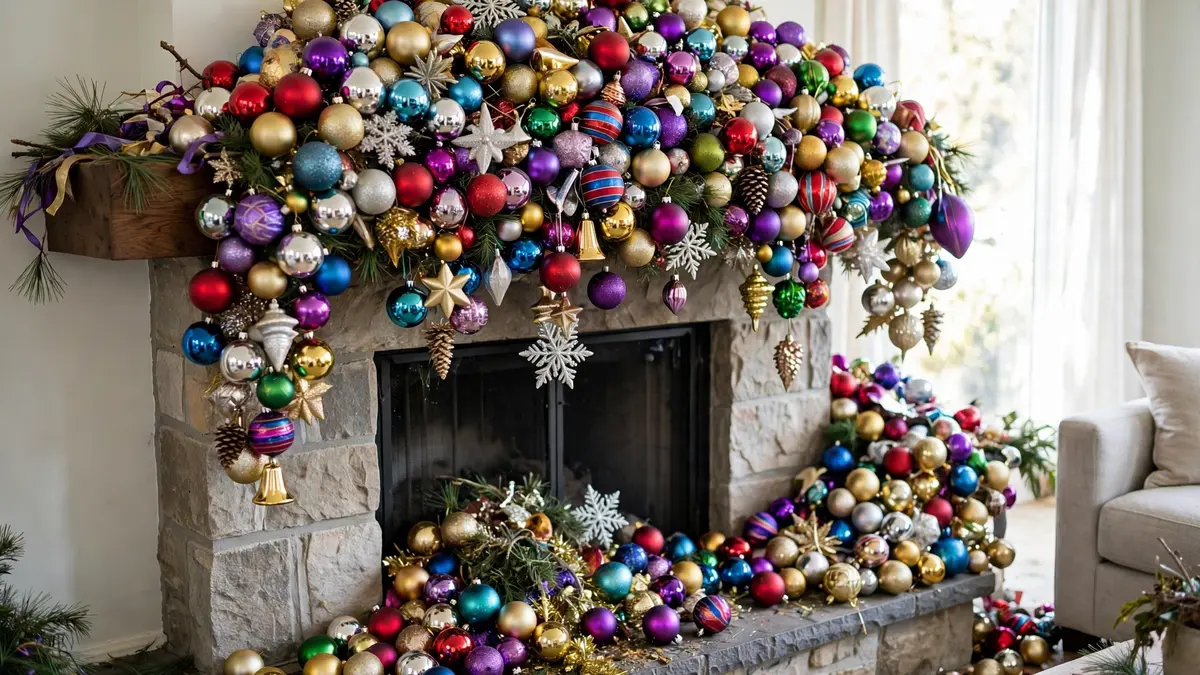
Most ornament decor goes wrong in the same few ways. First, every ornament in one place. A tree buried in ornaments and a bare room around it is a decorated tree, not a decorated house — split the box: tree, bowls, strands, tucks. Second, too many palettes. A red bowl, a blue window strand, a silver mantel and a gold table look like four different houses, because the eye cannot find the theme. Pick one palette and stay inside it for the whole season. Third, glass where it will be knocked. Glass ornaments in a low bowl, a hallway console at hip height, or a stair garland at child height will break, and broken glass in a garland is a hazard, not a decoration. Shatterproof below waist height, glass above it. Fourth, hanging ornaments where they block light or movement — a window strand so thick it blocks the daylight, a doorway strand at forehead height, or ornaments hanging so low over the dining table that guests duck. Fifth, forgetting the topper. A tree with a bare top and ornaments everywhere else looks unfinished from across the room. Our Christmas tree topper ideas treat the topper as the tree’s final detail — topper on the tree, ornaments in the room, one palette for both. Sixth, storing ornaments badly in January. Remove the hooks before packing, give fragile pieces their own compartments, and keep the boxes in a dry closet rather than a damp garage or a hot attic — the National Archives guidance on keeping keepsakes below 75 degrees and out of damp basements and hot attics applies to ornaments too, and simple storage ideas such as egg cartons for small fragile ornaments will save the pieces you love most.
Shop from Amazon: Ornament storage boxes
As an Amazon Associate, I earn from qualifying purchases.
A note before you decorate yours: my first ornament system taught me the only rule I still use for this part of the season: the tree gets the best ornaments, and the room gets the rest — but the room gets them on purpose, not as leftovers. One palette, three moves, and a walk through the house at the end to take one ornament away from every crowded spot. A room styled that way does not need a bigger ornament budget. It needs the ornaments you already own, placed where you actually live.
Frequently Asked Questions
How do I decorate with Christmas ornaments without a tree?
Use the bowl, hang and tuck system: fill bowls and vases on tables and sideboards, hang strands in windows and from stair garland, and tuck ornaments into mantel garland, shelves and the dining table. One palette across all three moves makes the room feel decorated without a tree.
How many ornaments do I need for a bowl filler?
A 10 to 12 inch bowl takes about 15 to 20 ornaments, largest at the bottom and smallest on top, mixed across one shiny, one matte and one textured finish. A smaller 8 inch bowl takes about 10 to 12.
How do I hang ornaments in a window without damaging it?
Use a tension rod, a suction hook, or clear removable hooks rated for the weight, with ornaments on clear fishing line or thin ribbon at staggered lengths. Use light shatterproof or felt ornaments, keep the strand clear of the glass, and never hang glass ornaments where they can swing into the pane.
Can I mix old and new ornaments in one display?
Yes, if one palette holds them together. Sort by colour first and keep only the ornaments that fit your two colours and one metal, whatever their age. A vintage ornament and a new ornament in the same colour read as a collection.
How do I store Christmas ornaments so they do not break?
Remove the hooks before packing, wrap fragile pieces individually, and give each ornament its own compartment in a divided storage box. Store the boxes in a dry closet inside the house, not a damp garage or a hot attic, and label each box.