Christmas tree topper ideas work best when the topper is chosen for the tree it will actually sit on, not for a photograph of someone else’s tree. The direct answer is this: pick a topper whose size suits the tree’s height and fullness, whose weight the top branches can carry without bending, whose style matches the rest of the tree, and fix it so it stands straight and cannot slip. Done that way, a topper finishes the tree, because the eye travels up the branches and lands on something deliberate.
I learned this the year I got the topper wrong. I bought the tallest, most elaborate topper I could find, then balanced it on a slim tree with thin, springy top branches. It leaned within an hour and kept sliding, until the whole tree looked tired. The next year I measured the tree, chose a lighter topper in proportion to it, and fixed it properly before a single ornament went on. The same tree suddenly looked finished. Nothing expensive had changed. The topper had stopped fighting the tree.
The Topper System: Size, Style, Weight and Fixing
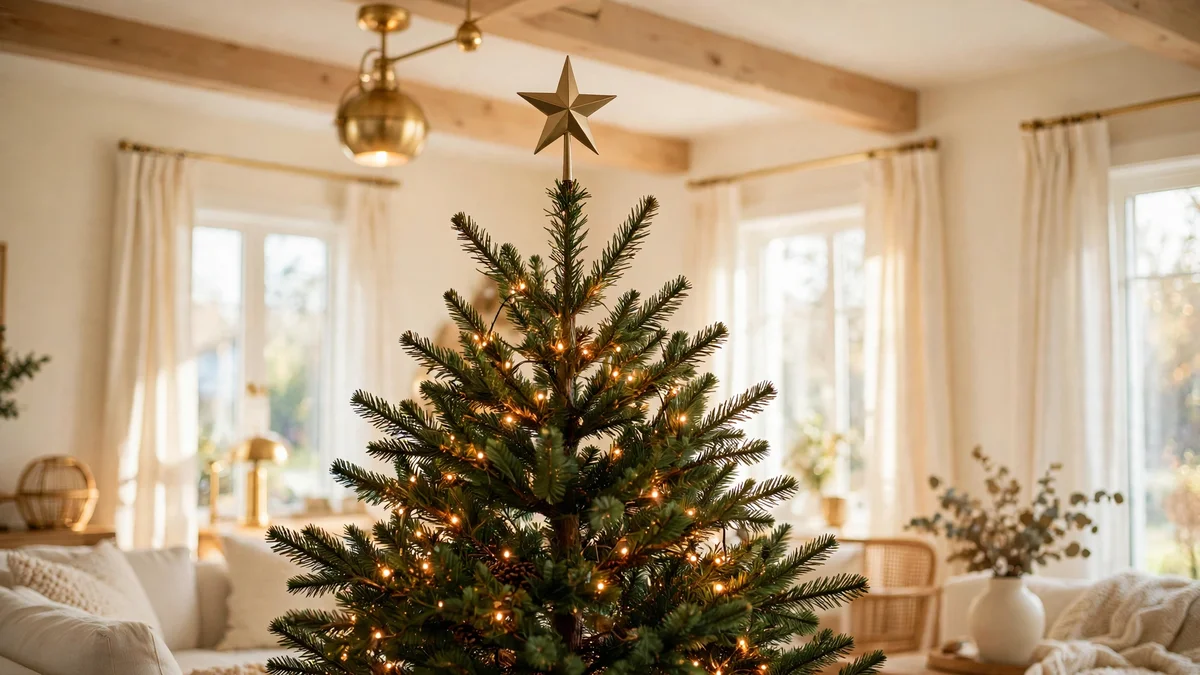
The Topper System has four decisions, and the order matters. First, size. A topper should be in proportion to the tree: on a standard six- to seven-foot tree, a topper of roughly ten to twelve inches usually reads well, while a tabletop tree needs something closer to five or six inches, and a tall, full tree can carry a larger piece without it disappearing. Measure the tree before buying anything, because a topper that is too large for a slim tree looks like it is wearing the tree, and a topper that is too small for a wide, full tree disappears into the branches.
Second, style. The topper should repeat something already on the tree — its palette, its metal, or its mood — rather than introducing a new colour or material at the very top, where the eye lands last and remembers most. A tree dressed in cream and brass wants a topper in cream, brass, or clear glass, not a bright red piece that appears nowhere else. A rustic tree of wood and natural greenery wants a wooden star or a simple finial, not a glittering piece that belongs on a glamorous tree.
Third, weight. This is the decision most people skip, and it is the one that causes the leaning. Feel the top branches before choosing: if they bend easily under a light touch, they will bend under a heavy glass or metal topper too. A light topper — paper, fabric, a hollow finial, a simple star — suits a slim or young tree, while a heavier piece needs a tree with a sturdy central leader and branches that hold their shape. Our Christmas tree skirt ideas treat the base of the tree as a system of its own, and the top deserves the same discipline: the base and the top should be in balance, not competing for attention.
Fourth, fixing. Decide how the topper will stay put before the tree is dressed, because fixing it afterwards means reaching through finished branches. A cone or coil base slides over the top branch; a clip or wire topper must be wired firmly to the leader, not just rested on it. Test it on the bare tree from the doorway, the sofa, and the side: if it leans bare, it will lean worse once decorated.
Star, Angel and Finial: The Classic Toppers
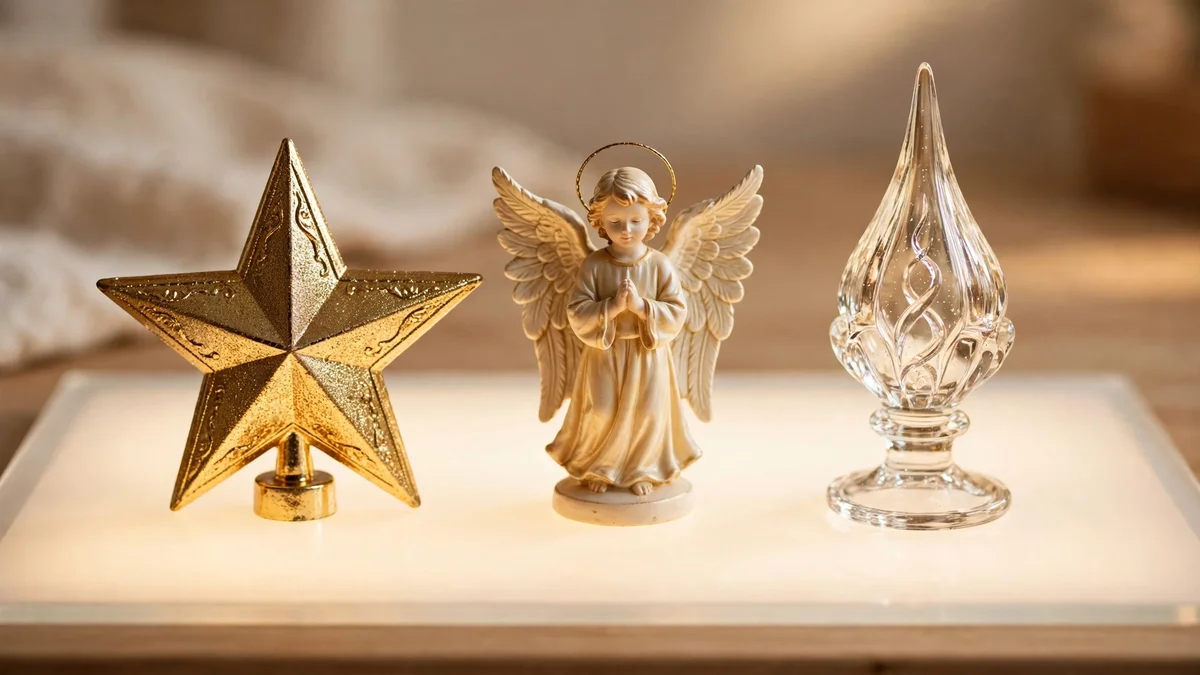
The star is the most forgiving classic topper: light, clear from across the room, and suited to almost every tree style. A simple five-pointed star in metal, wood, or paper works on traditional, rustic, and minimalist trees alike, and reads even in silhouette against a window. The mistake is size: wider than the tree’s top section, a star looks like a sign; too small, it looks lost. Hold it against the bare tree before buying, and choose the size the top branches can frame without hiding.
The angel suits a fuller, more traditional tree, where her shape can be seen against the branches rather than swallowed by them. Angels vary enormously in weight: fabric or paper is light and forgiving, while porcelain or a heavily dressed angel can bend a slim top. On a slim tree, choose a lighter angel, or place her slightly lower where the branches are stronger. Her dress should repeat the tree’s palette — a cream angel on a cream-and-brass tree, for example — not a colour that appears nowhere else.
The finial — the elegant teardrop or spire-shaped glass piece — suits a tree already dressed with glass ornaments, because it extends their language to the top. Finials are beautiful, fragile, and heavier than they look, so they need a sturdy leader and a firm fixing, and should never go on a tree whose top gets knocked regularly. A finial also needs light: where the tree lights catch it, it glows; in shadow, it can look like a dark spike. If the lights do not reach the top, a finial is the wrong choice, however beautiful it is in the shop.
Picks, Sprays and Natural Toppers
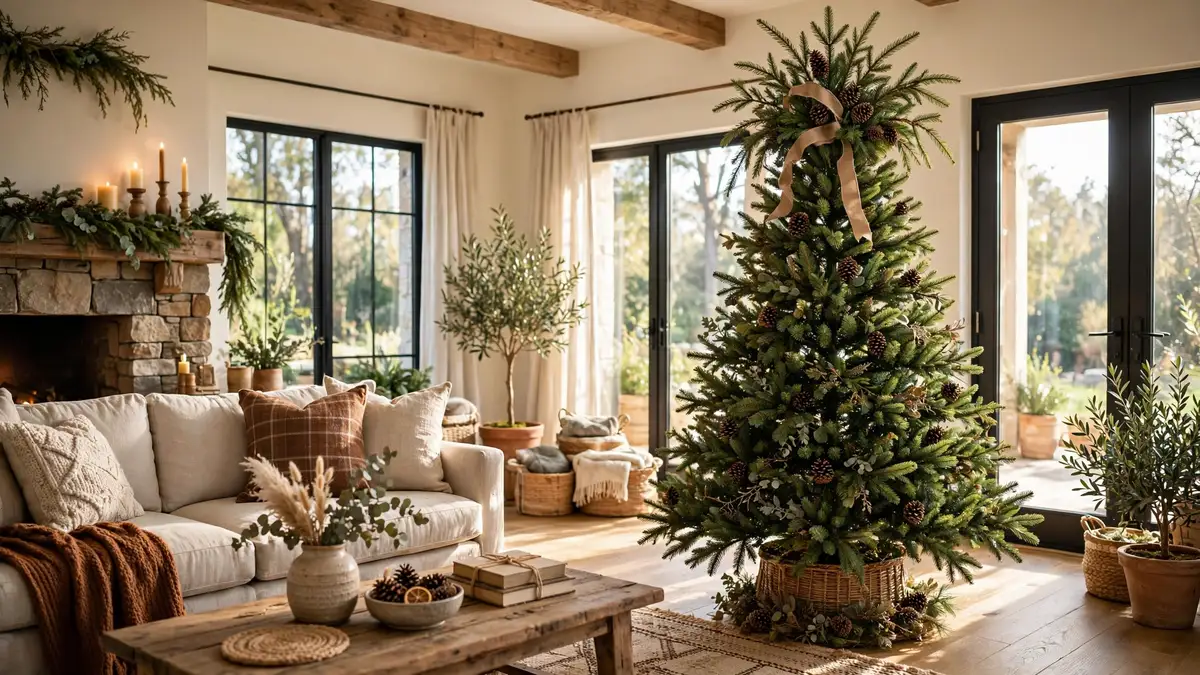
A pick or spray topper — branches, berries, pinecones, or dried stems wired together and fanned at the top — suits a natural or rustic tree better than any single bought piece, because it grows out of the tree rather than sitting on top of it. The rule is the same as for greenery anywhere else: one dominant material, one accent, and stop. Keep the spray’s spread narrower than the tree’s top section, so it crowns the tree instead of swallowing it.
A natural topper also suits a tree already full of natural materials, because it repeats them at the top rather than introducing a new language. Dried orange slices, cinnamon sticks, or a simple wooden star all belong here, and they are light, which makes them kind to slim trees. The trade-off is durability: check a natural topper after the first week and refresh it if it starts to look tired, rather than leaving it to droop until January.
A bow as a topper belongs in this section, and only here, as one option among many. A single bow in one colour, tied once and fixed firmly, can finish a tree whose ornaments are already strong — but it should never hide a weak top. Our velvet bow Christmas decor shows the same restraint — one bow, one colour. If the tree already carries bows on its branches, a bow topper is usually one bow too many, and a star or finial will finish it better.
Light-Up and Statement Toppers
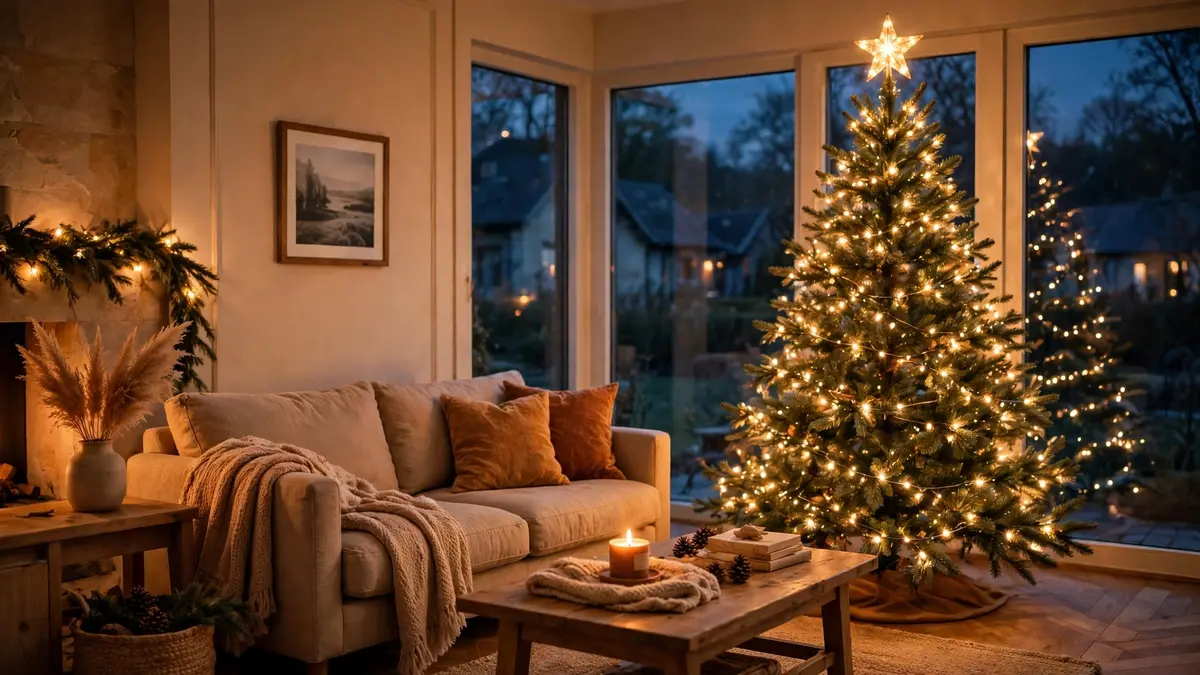
A light-up topper — a star, angel, or finial with its own lights — suits a tree dressed for the evening, because it becomes the brightest point in the room. The decision here is power before style: a battery pack must be reachable without dismantling the tree, and a plug-in cord must run down the back without showing. Test the lights before decorating, and match their colour to the tree’s lights — warm white with warm white, never mixed.
A statement topper — an oversized piece, a themed figure, a topper that tells a story — suits a tree that is itself a statement, where the topper is the point rather than the finish. The rule is proportion, not boldness: it still has to be carried by the top branches, stand straight, and repeat something from the rest of the tree, or it will look like it landed on the wrong tree. Match the topper’s energy to the tree’s energy, and let the rest of the room stay quiet. Our Christmas living room decor ideas use the same rule for the whole room — one focal point, one palette — and the tree top is no exception.
A light-up or statement topper also needs a safety check that quieter toppers do not: it must not touch a heat source, its cord must not hang where it can be pulled, and it must be stable enough not to fall if the tree is bumped. Our Christmas mantel decor ideas and Christmas ceiling decor ideas treat height and light with the same caution, and the tree top deserves it most, as the highest and least reachable part of the display.
Mistakes That Make a Topper Look Wrong

Most toppers go wrong in the same few ways. First, the wrong size. Too large, and the topper crowds the ceiling and dwarfs the tree; too small, and it looks like an afterthought on a wide, full tree. Measure first, buy second, and do not trust a photograph’s proportions. Second, the wrong weight. A heavy topper on thin top branches will lean, slip, and eventually fall, however beautiful it is. Feel the branches first, and choose a topper they can carry.
Third, a topper that fights the tree. A glittering topper on a rustic tree, a rustic topper on a glamorous tree, or a topper in a colour that appears nowhere else on the tree will pull the whole tree off course. The topper should repeat something already on the tree — its palette, its metal, or its mood — rather than introducing a new idea at eye level’s highest point. Fourth, bad fixing. A topper that is merely rested on the top branch, not wired or seated firmly, will slip sideways in the first week, and every adjustment afterwards means reaching through finished branches. Spend two minutes on the fixing before decorating, and check it after the first day.
Fifth, a topper added last as an afterthought. The topper is the finish, not the leftover: choose it early, test it on the bare tree, and let it guide the rest of the decorating. Our Christmas wreath ideas use the same principle at the door — measure first, choose once, hang it right.
A note before you top yours: my first leaning topper taught me the only rule I still use for this part of the tree: measure the tree, pick the type that matches its style, choose a weight the top branches can carry, fix it before a single ornament goes on, and then stop. A topper styled that way does not need to be expensive or elaborate to make the tree feel finished. It needs to be proportionate, secure, and calm enough that the tree itself still shows. Start with the measurement, and let the top do the finishing.
Frequently Asked Questions
How big should a Christmas tree topper be?
In proportion to the tree: roughly ten to twelve inches on a standard six- to seven-foot tree, five to six inches on a tabletop tree, and larger only on a tall, full tree. The topper should be framed by the top branches, not wider than the tree’s top section.
How do I keep a tree topper from leaning or falling?
Choose a weight the top branches can carry, seat or wire the topper firmly to the central leader before decorating, and test it on the bare tree from several angles. If it leans on the bare tree, it will lean worse once ornaments and lights are added.
Can I use a bow as a tree topper?
Yes, as one topper type among others: a single bow in one colour, tied once and fixed firmly, can finish a tree whose ornaments are already strong. If the tree already carries bows on its branches, a bow topper is usually one bow too many, and a star or finial will finish it better.
Should a tree topper match the rest of the tree?
Yes. It should repeat the tree’s palette, metal, or mood rather than introducing a new colour or material at the top. A light-up topper should also match the tree’s light colour — warm white with warm white, never mixed.
Sources: general tree topper sizing, weight and fixing guidance as described in seasonal decorating guides. Named as sources only; no competitor text is copied here. Pinterest evidence: none claimed — Pinterest’s browser surface is blocked for Muse, so no direct Pinterest Trends read is presented.
Disclosure: This post contains affiliate links to Amazon. If you purchase through these links, I may earn a commission at no additional cost to you.