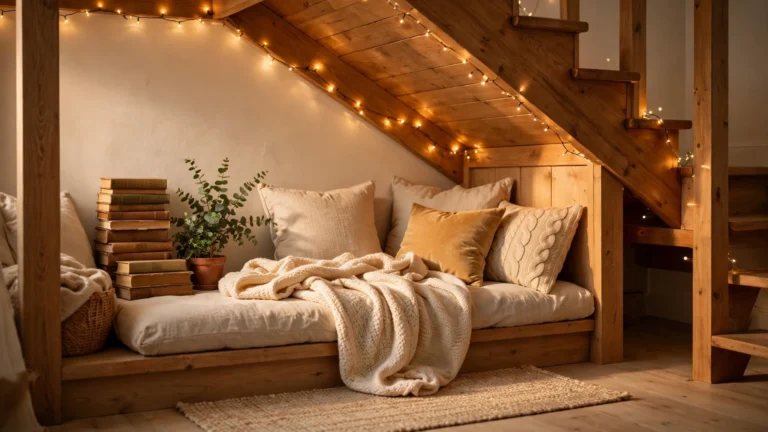
Sage green Christmas decorations work best when sage is treated as the calm base of the room, not as one more colour competing for attention. The direct answer is this: pair sage with cream or ivory, natural wood, and warm gold or brass, choose one accent only — deep evergreen or burgundy, never both — and repeat that same combination from the tree to the table. Done that way, a sage green Christmas looks peaceful rather than pale, and festive rather than flat, because the warmth and the light do the celebrating while the sage keeps the room calm.
I learned this the year I got sage wrong. I bought sage ornaments because I loved how quiet they looked in the shop, then brought them home and added everything else I already owned: red baubles, silver tinsel, and a patterned throw. The tree did not look calm at all. It looked like different Christmases arguing in one corner. The next year I took almost everything off, kept sage, cream, wood, and one warm brass ribbon, and used nothing else in the living room. The same tree suddenly looked deliberate. Nothing expensive had changed. The palette had.
The Sage Palette System
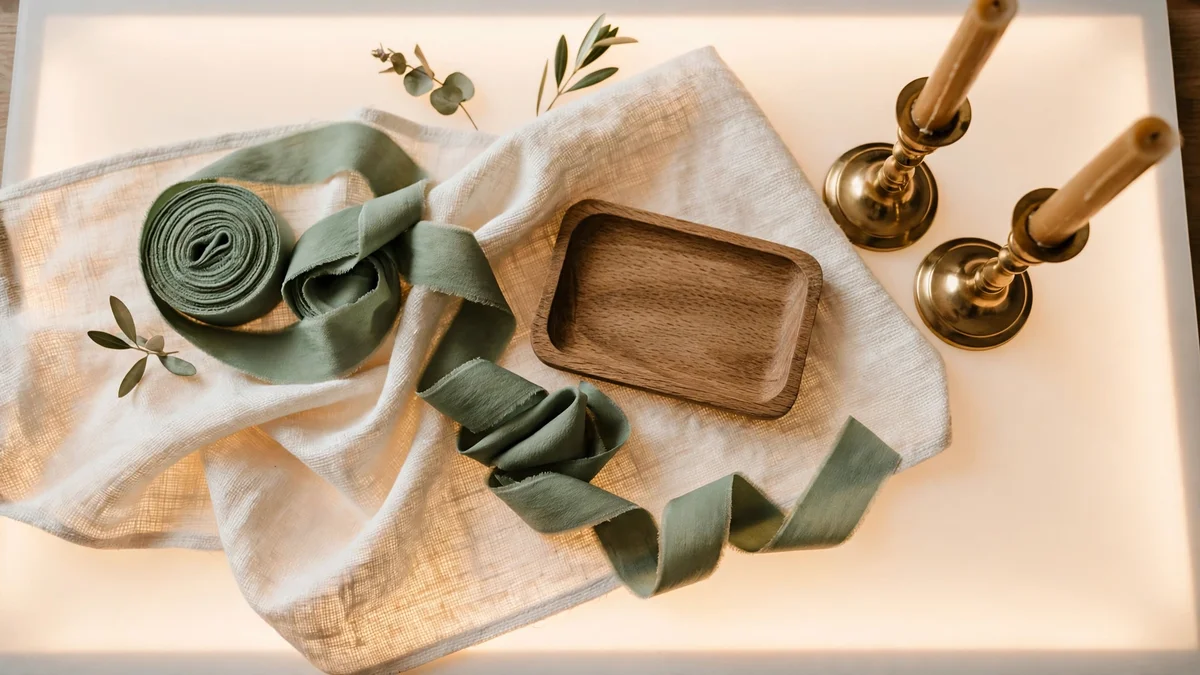
The Sage Palette System has four parts, and the order matters. First, sage is the base — the colour you see most: the garland, the tree ornaments, the napkins, the throw, the wreath. Second, cream or ivory is the lightener, keeping sage from turning grey in a dim room. Third, natural wood and warm gold or brass are the warmth: wood stops the palette from feeling cold, and brass gives it the small amount of shine a Christmas room needs. Fourth, one accent only. Deep evergreen adds depth and a winter-greenery feel. Burgundy adds richness and a more traditional note. Pick one. Using both splits the eye, and the room stops reading as sage at all.
Apply the system before buying anything. Walk the room and count what is already sage, cream, wood, or brass. If the sofa is grey, a cream throw and a wooden bowl will do more work than another set of ornaments. If the walls are white, sage needs wood beside it or it can wash out. If the room is dark, lean harder on cream and warm light, and keep the sage in softer, lighter pieces. Light is part of the palette, not an afterthought: warm white lights flatter sage, while cool white lights can make it look washed out. Melanie Jade Design makes the same practical point in its sage tree guide, recommending warm white or soft gold lighting for sage trees. Keep the light colour consistent through the room — one warm tone in the tree, the mantel, and the entryway reads as one home.
The Tree and the Mantel in Sage Green
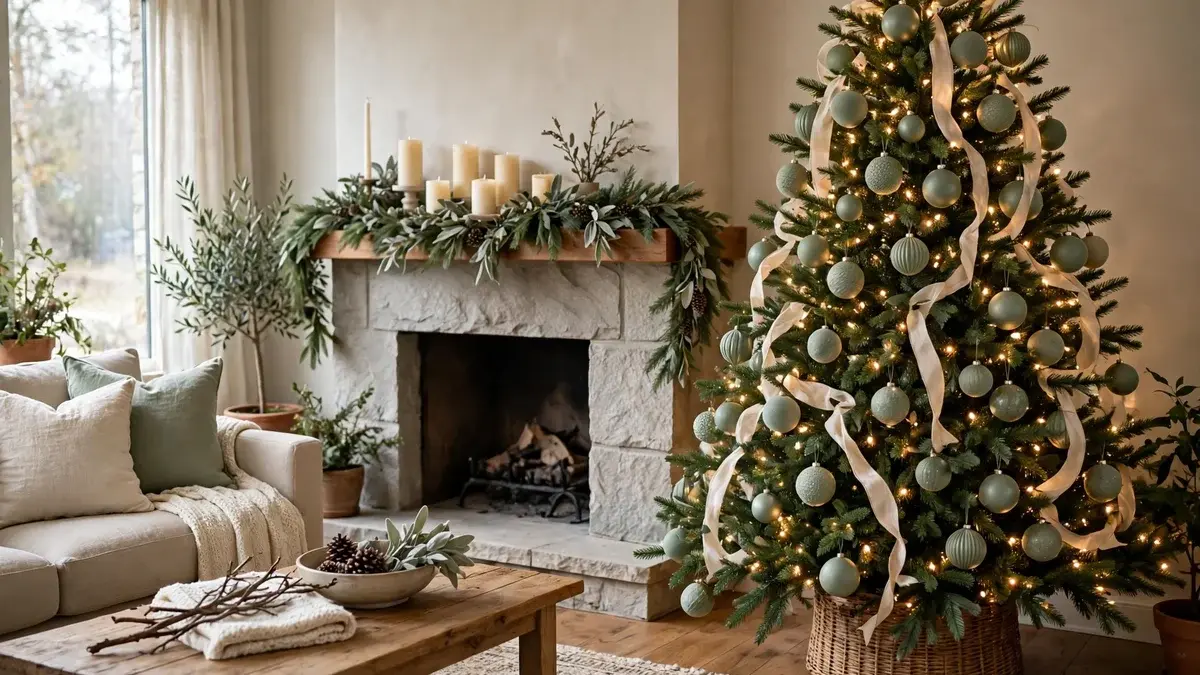
Start with the tree, because it sets the palette for everything else. Choose sage ornaments in two finishes, not five: matte sage baubles for the bulk of the tree, and a smaller number of brass or wooden ornaments for warmth. Add cream ribbon in one width, wrapped loosely so the greenery still shows, then warm white lights and a simple topper — a cream star, a wooden star, or a single brass bow — rather than a topper that introduces a new colour. If the tree is flocked, sage sits beautifully against it, because the pale branches act like cream in the palette. If the tree is a deep traditional green, add cream ribbon first and let sage be the second colour, or the sage ornaments will disappear into the branches.
The mantel should echo the tree, not repeat it exactly. Use the same sage garland, but change the texture: if the tree has matte baubles, put a wooden bead garland or a cream candle cluster on the mantel. A single sage wreath above the mantel, with a cream bow, is usually enough. For mantel layering in general, our Christmas mantel decor ideas show how a mantel can be built in layers without crowding it: one layer of greenery, one layer of light, one small warm accent. Carry the same restraint overhead and down the stairs. Our Christmas ceiling decor ideas and Christmas garland ideas for doorway treat the ceiling and doorway as finishing details, not second trees, so keep any sage there pale and small. On the staircase, our Christmas staircase decor ideas use a measure-first approach; in sage, that means one slim sage-and-cream garland on the rail, with brass or wooden ties.
The Dining Table and the Entryway
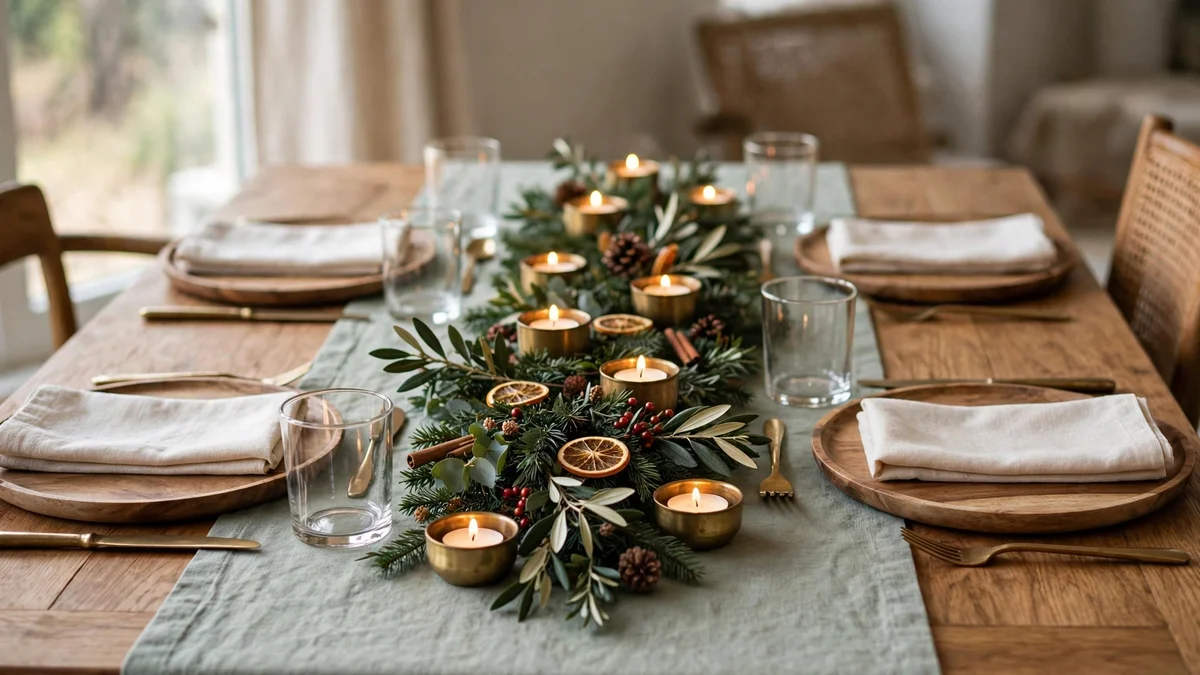
The dining table is where sage earns its keep, because calm actually helps dinner. Build the table the same way as the tree: sage as the base, cream as the lightener, wood and brass as the warmth. A sage runner, cream napkins, wooden chargers or a wooden board as the centrepiece base, and brass candle holders give you the whole palette without a single extra colour. Keep the centrepiece low — cream candles, a short sage garland, or a wooden bowl of pinecones — so guests can see each other across it. Our Christmas dining table decor ideas build a table in three zones, spine, setting, and serving, and sage fits that system neatly: the spine carries the sage, the settings carry the cream, and the serving zone stays clear for the food.
For place settings, repeat one detail at every seat and stop there: a sprig of eucalyptus or cedar tied with cream ribbon on each napkin, or a single sage ornament beside each plate. If burgundy is your one accent, let it appear here — one burgundy napkin detail or burgundy taper candles — while everything else stays sage, cream, wood, and brass. If deep evergreen is your accent, let it appear as the garland and keep the napkins cream. The entryway should be the simplest sage in the house: a sage wreath on the door, a cream runner, a wooden basket, and one warm light. If the entryway is small, a wreath and a basket are the whole display. Keep its palette identical to the living room, so walking in feels like entering the same home.
The Bedroom and Small Spaces
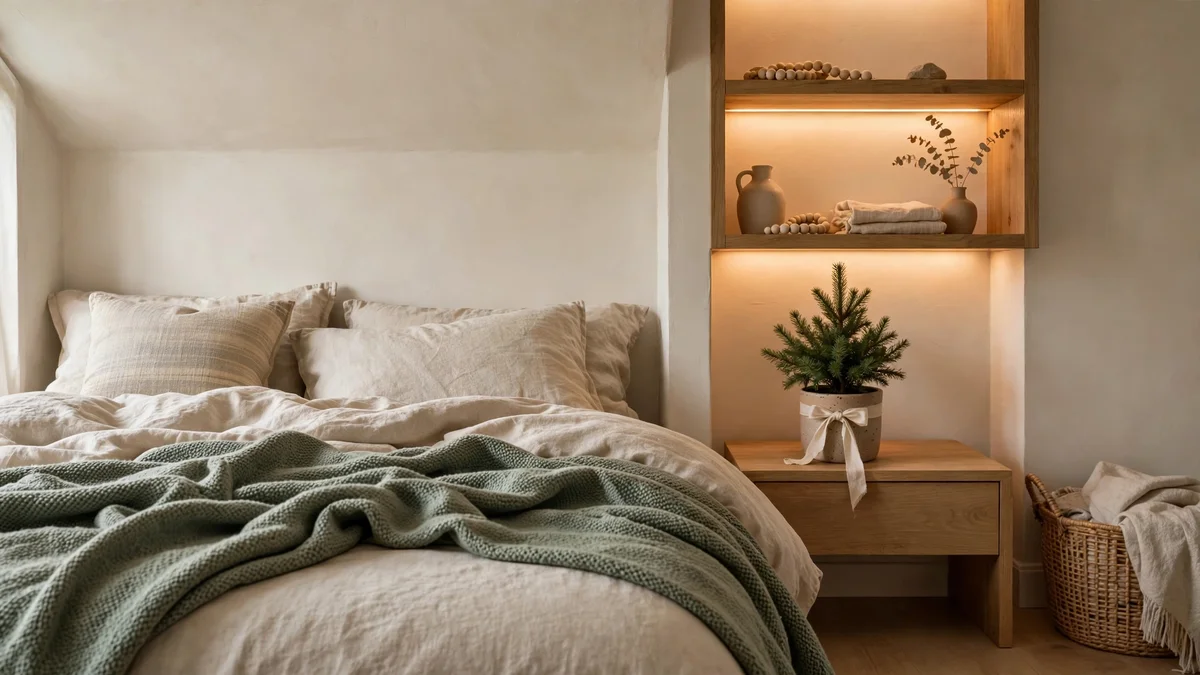
Sage works especially well in a bedroom, because the room is already meant to be calm, but the same rules apply, only quieter. Use sage in the bedding — a sage throw or two sage cushion covers — and keep the Christmas part small: a cream candle on the nightstand, a small sage wreath on the wall, or warm lights along a shelf. Do not bring the full tree palette into the bedroom; it should feel like the living room at half volume. If the bedroom is small, one lit corner beats a full display: a small potted evergreen with cream ribbon, or a single sage garland on a headboard, with everything else left as everyday bedding.
In small spaces generally, sage has one advantage and one risk. It does not shout, so a small room can carry it without feeling crowded. But too many pale pieces together can look washed out, especially against white walls with little wood. The fix is texture, not colour: a woven basket, a wooden tray, a linen napkin, a ceramic vase. In a kitchen, a sage tea towel, a wooden board with a cream candle, and a small sprig of greenery on a shelf are enough; a full garland across a small counter will fight the cooking space. Our kitchen counter Christmas decor ideas make the same point with a work-zone system — protect the space you cook in first, and decorate what is left. For a bathroom or tiny nook, keep it to one sage touch, such as a sage hand towel or a small greenery arrangement. Flairfully Yours gives a similar small-space suggestion in its sage Christmas guide, using sage towels and a small greenery arrangement rather than a full display, paired with gold and neutrals.
What Not to Pair with Sage
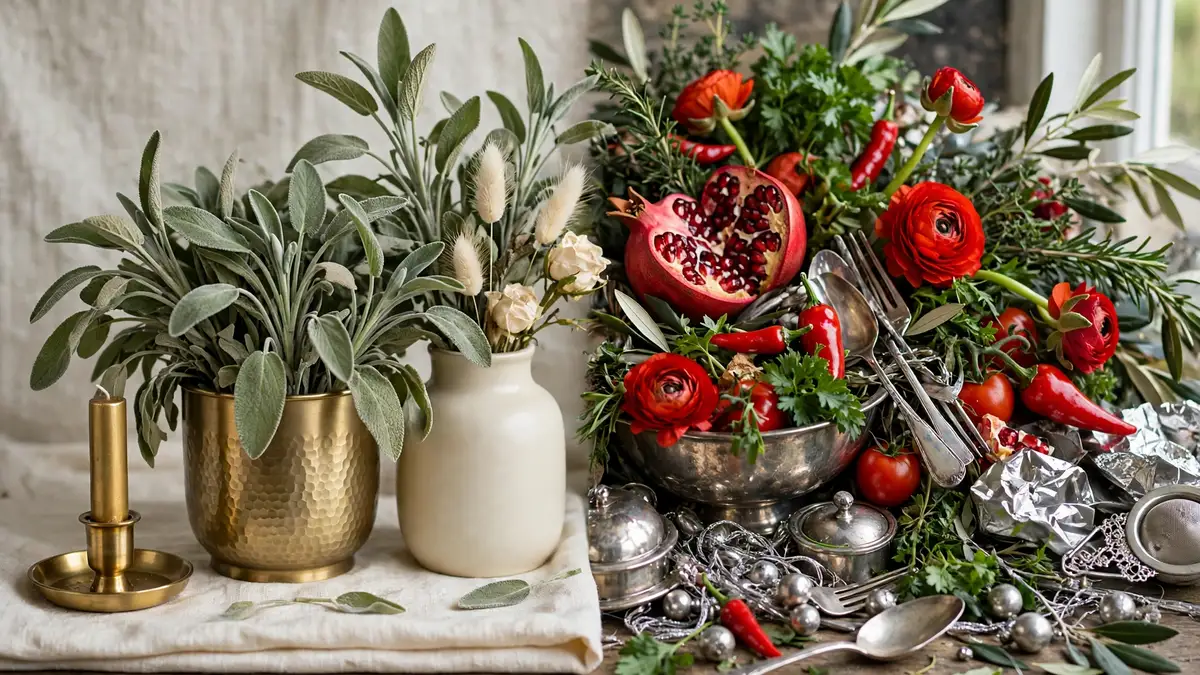
Most sage rooms go wrong in the same few ways. First, do not pair sage with bright red and silver at the same time. Red pulls the room back to traditional Christmas, silver pulls it towards winter glamour, and sage gets lost between them. If you love red, choose burgundy as your one accent and drop the silver. If you love silver, drop the red and let brass be the only metal. Second, do not mix too many greens. Sage plus emerald plus kelly green plus deep forest green does not look layered; it looks undecided, because the eye cannot tell which green is the theme. Pick sage as the green, and let deep evergreen be the accent only if you have chosen it as your one accent.
Third, do not add a second metal. Brass and silver together will fight in a quiet palette where there is nothing loud enough to hide the clash. Choose warm gold or brass and use it everywhere: candle holders, ribbon edges, ornament caps, picture frames. Fourth, do not use sage in every shade at once. A pale sage throw, a mid sage garland, and a dark sage tablecloth in the same room read as three separate purchases, not a palette. Keep the sage within one family, with cream doing the lightening, and let wood and brass do the varying. Craving Some Creativity makes a related cottage point in its green tree guide, pairing sage with warm wood and brass accents and warning against too many competing colours diluting that focus. Finally, do not add a bright, unrelated centrepiece for Christmas Day. A neon runner or multicoloured light strand will undo the whole system in one evening; anything new in the room should already fit sage, cream, wood, and brass.
A note before you style yours: my first sage Christmas taught me the only rule I still use for this palette: decide the four parts before you buy, and then let everything else go. Sage as the base, cream as the lightener, wood and warm brass as the warmth, and one accent only. A room styled that way does not need to be large, expensive, or full to feel like Christmas. It needs to be consistent, lit warmly, and calm enough that the people in it are the liveliest thing in the room. Start with one room, get the palette right there, and let the rest of the house follow it. That is all a sage green Christmas needs to be.
Frequently Asked Questions
What colours go best with sage green Christmas decorations?
Cream or ivory, natural wood, and warm gold or brass go best with sage green, plus one accent only: deep evergreen or burgundy. Keep the light warm white so the sage stays soft rather than washed out.
How do I make sage green Christmas decor look festive, not washed out?
Add warmth and texture, not more colour. Use wooden chargers, brass candle holders, cream ribbon, and warm lights beside the sage, and keep the sage within one depth rather than mixing pale, mid, and dark sage in the same room.
Can I use sage green Christmas decorations in a small room?
Yes. Use one or two sage touches, such as a sage throw or a small wreath, and add texture with wood, linen, or a woven basket. Keep long garlands off work surfaces and walkways so the small room still works.
What should I avoid pairing with sage green at Christmas?
Avoid bright red with silver at the same time, too many different greens, a second metal beside brass, and a bright unrelated centrepiece. Each of those pulls the eye away from sage and breaks the calm palette.
Sources: Melanie Jade Design, Sage Green Christmas Trees guide; Flairfully Yours, Sage Green Christmas Decor guide; Craving Some Creativity, Cottage Style Green Christmas Tree Decorations guide. Named as sources only; no competitor text is copied here.
Affiliate disclosure: This post contains Amazon affiliate links. If you buy through these links, we may earn a small commission at no extra cost to you. Thank you for supporting Decor & Dish!