
Every home has that one chair nobody sits in once winter arrives — the pretty one by the window. Mine was the reading chair in our living room. The room itself was warm, but sit near the glass for ten minutes and a thin, cold ribbon of air would find my ankles and stay there.
Here is what I learned after a season of testing fixes: a cold window is usually two different problems wearing one coat. Drafts are air sneaking through gaps in the frame, while heat loss is warmth escaping straight through the glass. The U.S. Department of Energy estimates about 30% of a home’s heating energy is lost through its windows, so the fix has to match the problem. These winter window insulation ideas start with the methods that actually stop the cold, then style them so your rooms still look like you. If your cold spot is a whole small room, my small winter living room ideas tackle the same chill from the decorating side.
The best way to insulate windows for winter is to pair two fixes: seal the drafts around the frame with weatherstripping, then add an insulating layer at the glass itself, like cellular shades, a film kit, or thermal curtains. Choose the layer by window type, budget, and whether you rent or own.
This post may contain affiliate links. If you buy through them, I may earn a small commission at no extra cost to you. Thank you for supporting Decor and Dish.
15 Winter Window Insulation Ideas That Actually Work
One honest note before we start: no curtain, however lovely, can seal a leaking frame, and no film kit will make a room pretty on its own. Each idea below says exactly what it fixes, who it suits, and whether it comes down cleanly in spring.
1. Full-Length Thermal Curtains for Large Windows

Shop Now – NICETOWN Thermal Insulated Blackout Curtains on Amazon
Renter-friendly · Removable · Best for: large windows and sliding doors on a budget
Thermal curtains are lined drapes with a dense, woven backing that slows heat passing through the glass. The Department of Energy notes that conventional draperies, drawn closed on a cold night, can reduce heat loss from a warm room by up to 10% — and lined thermal panels do the job better, especially hung close to the wall, overlapping in the middle, and falling all the way to the floor so cold air stays trapped behind the fabric.
For looks, treat them like real curtains, not equipment. Choose a warm ivory, oatmeal, or soft blush in a matte weave, hang the rod a few inches above the frame, and let the panels puddle just slightly. During the day, open them wide — winter sun is free heating.
2. Cellular Shades Behind Sheer Curtains

Renter-friendly with inside-mount or no-drill options · Semi-permanent · Best for: bedrooms
If I could keep only one idea on this list, it would be this pairing. Cellular shades — the honeycomb kind — trap still air inside their cells, and the Department of Energy credits tightly fitted cellular shades with cutting heat loss through a window by up to 40% or more. They are the hardest-working window covering you can buy, full stop.
The sheer curtain in front is what makes it beautiful instead of merely sensible. The shade does the insulating; the sheer softens the lines, diffuses morning light, and keeps the room feeling like a bedroom rather than an office. It is the same layered thinking I use in my winter bedroom decor ideas — function underneath, softness on top.
3. Clear Shrink-Film Window Insulation Kits

Shop Now – 3M Indoor Window Insulator Kit on Amazon
Renter-friendly · Removable · Best for: the cheapest whole-window fix
This is the unglamorous classic, and I will defend it: a shrink-film kit tapes clear film to the inside of the frame, and a pass with a hair dryer tightens it drum-smooth. That sealed pocket of still air works like a temporary second pane, and on a window that stays closed all winter, the difference in comfort is immediate. A kit costs less than a pizza and covers several windows.
Two honest limits. The window cannot open while the film is up, and on painted frames the tape can occasionally lift paint on removal — warm it with the hair dryer first and peel slowly. Choose the crystal-clear kits; the hazy ones make a pretty view look foggy by February.
4. Decorative Fabric Draft Stoppers
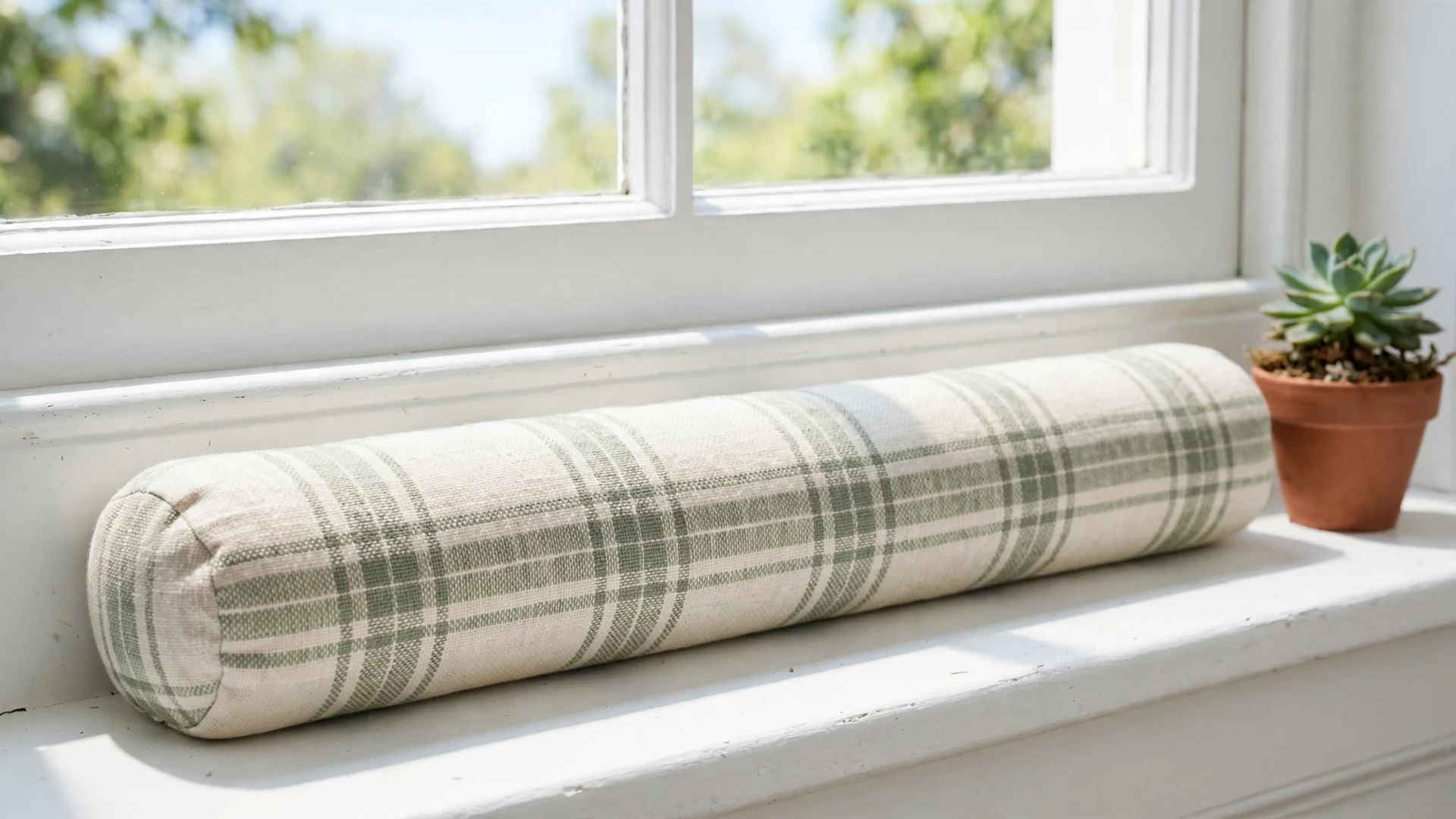
Renter-friendly · Removable · Best for: a single drafty sill
Sometimes the whole window is fine and only the sill misbehaves — you feel the draft at one exact spot where the sash meets the frame. A fabric draft stopper, a long weighted cushion that sits right on the sill, blocks that low ribbon of cold air where you actually feel it. It is the smallest, cheapest comfort fix on this list.
It is also the easiest to make pretty. Pick a fabric that already lives in the room — leftover curtain linen, a plaid that matches your throw, a ticking stripe — and the stopper reads as a styled cushion instead of a repair. Sewing your own takes an afternoon; the fill can be rice, dried beans, or polyester stuffing with a handful of gravel for weight.
5. Interior Storm Window Panels

Homeowner-leaning · Removable but substantial · Best for: single-pane windows
An interior storm panel is a clear sheet of acrylic or low-e glass in a slim frame that presses or clips into the inside of your existing window, creating a genuine second layer of glazing. The Department of Energy estimates low-e storm windows can save roughly 12–33% on heating and cooling costs, depending on the windows you already have — the largest verified saving of any idea here.
Because the panel is clear and sits inside your trim, the window keeps its original look from both sides, which is why this is the upgrade I recommend for older homes with beautiful, inefficient single panes. Panels come down in spring and store flat under a bed.
6. No-Drill Window Treatments for Renters

Renter-friendly · Fully removable · Best for: apartments and dorms
Renters, this section is yours. Almost every fix in this article has a no-drill version: tension rods that press inside the frame for curtains, inside-mount cellular shades held by tension or adhesive brackets, and film kits that need nothing but tape. Nothing touches the wall, nothing needs a deposit negotiation, and everything leaves with you.
Start by measuring the inside of the frame, not the wall around it — no-drill hardware lives inside that recess. My order of operations for a rental: film on the windows you never open, a tension-rod thermal curtain on the one you do, and a draft stopper on the worst sill. That trio covers most apartments for very little money.
7. Insulated Roman Shades for Compact Windows

Renter-friendly with inside-mount · Semi-permanent · Best for: small windows
Roman shades fold up into soft, tailored stacks, and the insulated versions hide a thermal lining behind that pretty face. On a small window — a compact bedroom, a bathroom, a kitchen over the sink — a Roman shade gives you real insulation without the visual weight of full drapes, and it never pools on the floor or fights with furniture pushed underneath.
Order the lining, not just the fabric: a Roman shade in plain cotton is a decoration, while the same shade with a thermal interlining is a working insulator. Inside-mount keeps the profile neat in small rooms; outside-mount, mounted a few inches wider than the frame, blocks more edge drafts on older windows.
8. Layered Sheer and Lined Curtain Combinations

Renter-friendly · Removable · Best for: rooms that need daylight and warmth
Layering is the decorator’s answer to the insulation problem: a sheer against the glass for daytime privacy and soft light, a heavier lined drape in front that closes at night and does the thermal work. Two layers also trap a cushion of air between them, which is precisely how insulation works everywhere else in your home.
I will keep this brief, because I have a whole guide to the layering itself — fabrics, rod setups, and the combinations that look expensive — in my layered curtain ideas for winter. Here, just remember the division of labour: the sheer is for the daytime look, the lined layer is the one that earns its keep after dark.
9. Weatherstripping for Drafty Window Frames
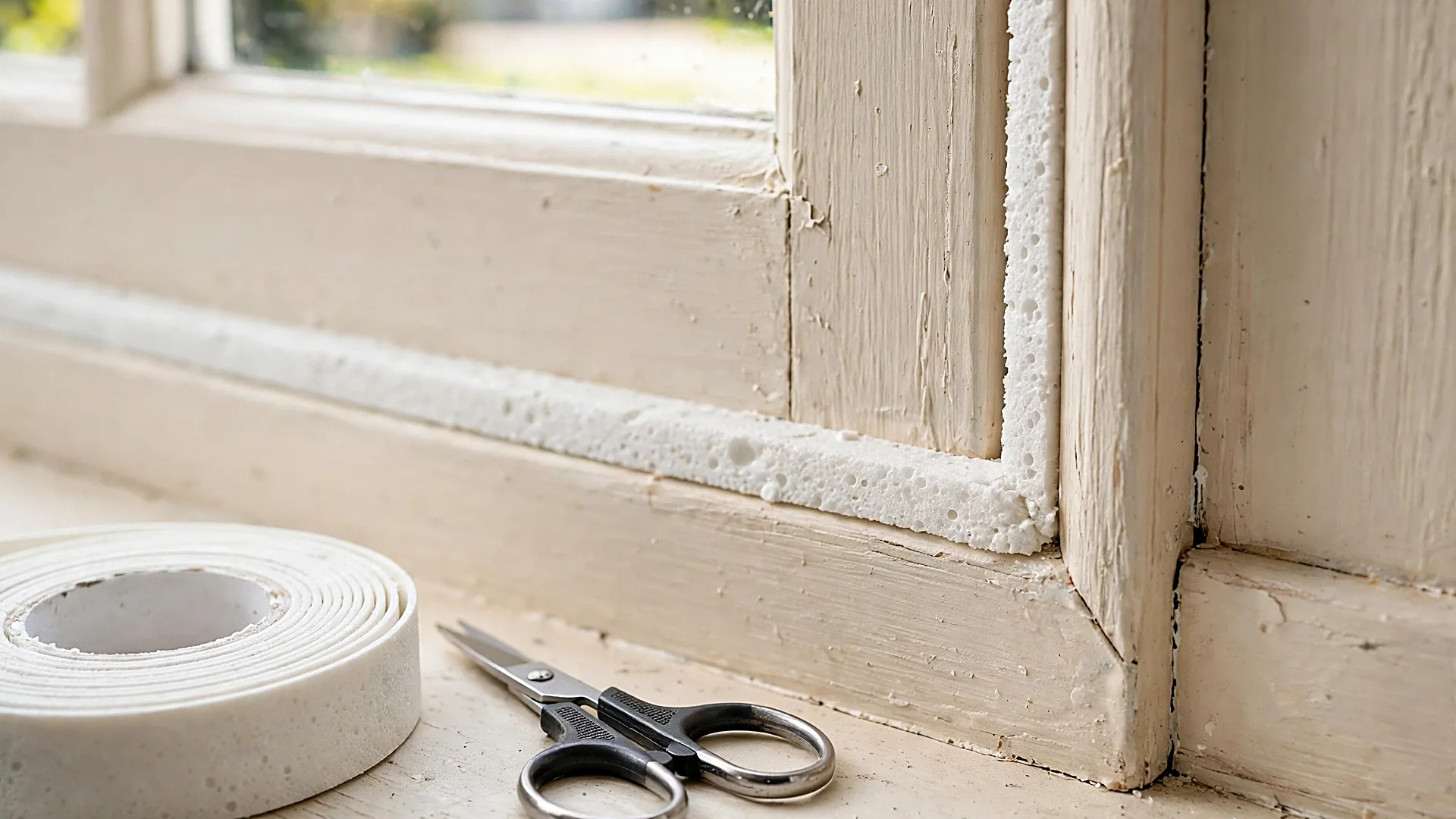
Renter-friendly in tape form · Removable or permanent by type · Best for: drafts you can feel
Before you buy anything pretty, find the leaks. ENERGY STAR suggests two simple tests: close the window on a sheet of paper — if it slides out easily, the seal is loose — or hold a lit incense stick near the seams on a windy day and watch where the smoke wavers. Their full guide to sealing around windows and doors walks through both.
Then match the fix to the joint: parts that move — sashes, casements — get weatherstripping, while parts that stay still get caulk. Foam tape is the renter-friendly, peel-off version; V-strip and tubular rubber last longer for owners. This is the least photogenic idea here and, for a truly drafty window, the most important one. Curtains over an unsealed frame are a blanket over an open door.
10. Removable Magnetic Window Insulation Panels

Shop Now – Magnetic Window Insulation Kit on Amazon
Renter-friendly · Fully removable and reusable · Best for: windows you open in spring
Magnetic panels are the tidy middle ground between film and a storm panel: a clear sheet edged with magnetic strips that snaps onto a matching frame strip, then pops off in seconds when you want the window open. Unlike shrink film, the same panel goes back up next winter, and the one after — no fresh kit, no tape wrestling every November.
They suit windows you still use in the shoulder seasons, and bedrooms where you want the option of fresh air on a mild night. Check that your frame accepts the magnetic strip (it adheres or tacks to the trim, not the glass), and store panels flat so the sheet stays crystal clear.
11. Insulated Curtain Solutions for Sliding Glass Doors

Renter-friendly with a ceiling or wall rod · Removable · Best for: the biggest glass in the house
A sliding glass door is a window the size of a wall, and in most homes it is the single coldest surface in the room. Extra-wide thermal panels on a ceiling-mounted track or a long rod are the practical answer: they glide to one side for daytime, close into one continuous insulated wall at night, and — unlike vertical blinds — they look like intentional decorating.
Two details make or break it. The panels should overlap the wall by several inches on both sides and brush the floor, or cold air simply pours around the edges. And choose a fabric with some softness — a matte linen-look weave in a warm neutral — because this much curtain becomes the room’s largest textile, for better or worse.
12. Interior Window Panels for Older Homes

Homeowner-leaning · Removable · Best for: historic and character windows
Old double-hung windows have wavy glass, beautiful proportions, and the energy performance of a screen door — but replacing them erases the very character that makes the house lovely. Interior insert panels solve the dilemma: a custom clear panel that friction-fits inside the frame, sealing drafts and adding a second layer while the original sash, muntins, and wavy glass stay exactly as they are.
Because inserts seal the whole opening, they also quiet street noise noticeably — a side benefit nobody warns you about and everybody loves. They are the priciest idea in this article per window, so most people start with the bedroom and the living room, where comfort matters most.
13. Bay Window Insulation and Cozy Seat Styling

Homeowner-leaning · Semi-permanent · Best for: bay windows and window seats
A bay window is three windows’ worth of glass in the room’s most inviting spot — which is why the window seat under it is always colder than it looks. Treat each section individually rather than wrestling one curtain across the angles: a fitted cellular shade or Roman shade per section keeps the tailored look, seals each pane, and still lets you raise the middle one for light.
Then style the seat for the season you actually have: a thick seat cushion, a wool throw folded at one end, and cushions deep enough to lean into. It becomes the reading spot everyone fights over — the same trick I used turning a window corner into one of my winter book nook ideas.
14. Low-E Window Films for Suitable Glass

Homeowner · Semi-permanent · Best for: keeping the view while cutting heat loss
Do not confuse this with the shrink film in Idea 3. Low-e film is a nearly invisible coating applied directly to the glass; its metallic layer reflects room heat back into the room instead of letting it radiate out through the pane. Your window looks unchanged, opens normally, and keeps its view — which is why this is the one idea almost no other guide bothers to explain.
The caution matters, though: low-e film is not suitable for every window. Some manufacturers warn against film on certain double-pane, tinted, or already low-e glass, and a film can affect a window’s warranty. Check your window maker’s guidance first, and treat this as a homeowner project or a professional install — not a renter experiment.
15. Top-Down Bottom-Up Insulating Shades

Renter-friendly with inside-mount · Semi-permanent · Best for: privacy without losing light
The cleverest shade design I know: a top-down bottom-up shade lowers from the top as well as rising from the bottom, so you can cover the lower half of the window — where privacy matters and where cold air pools — while daylight pours in over the top. In a cellular fabric, you get the honeycomb insulation from Idea 2 with twice the light control.
They are made for street-facing bedrooms and bathrooms, and for anyone whose desk sits by the window: privacy at eye level, sky above, warmth kept in. Measure carefully, because a snug inside fit is what makes any cellular shade insulate well.
Which Solution Is Best for Your Home?
If you are choosing where to start, match the fix to the problem you actually found. Felt a draft? Seal first (Idea 9), then dress the window. Glass cold to the touch but the frame is tight? Add a layer — shades, panels, or film. Here is the short version:
| Solution | Best for | Renter-friendly? | Installation |
|---|---|---|---|
| Thermal curtains | Bedrooms and living rooms | Yes | Usually DIY |
| Cellular shades | Windows needing a fitted shade | Yes, inside-mount | DIY or professional |
| Shrink film | Temporary seasonal insulation | Yes | DIY |
| Weatherstripping | Movable frame gaps | Yes, tape types | DIY or professional |
| Interior storm panels | Older single-pane windows | Sometimes | DIY or professional |
| Low-E film | Compatible glazing, keeping the view | No | Product-specific / professional |
| Magnetic panels | Windows you still open | Yes | DIY |
My honest starter advice: do the paper test from Idea 9 on every window, fix the worst offender first, and live with it for one cold week. One properly solved window teaches you more about your house than fifteen guesses.
Renter-Friendly vs. Permanent: A Quick Rule
Here is the test I give friends: if it comes off in under ten minutes and leaves the window exactly as you found it, it is renter-friendly. Film kits, tension rods, draft stoppers, magnetic panels, and tape weatherstripping all pass. Caulk, applied films, and screwed-in hardware are homeowner territory — effective, but they change the window. When in doubt, choose the reversible version first; you can always make a fix permanent later, and you cannot un-drill a frame.
How to Keep Your Sunlight While You Insulate
Insulation does not have to mean a darker home. The U.S. Department of Energy’s own winter advice is to open curtains and shades on sunlit windows during the day and close them at night — the Energy Saver winter tips call it one of the simplest savings there is. Beyond that habit: choose sheer-fronted layers (Ideas 2 and 8), top-down shades (Idea 15), or clear options like film and panels (Ideas 3, 5, 10, and 14), and your brightest rooms stay bright.
5 Common Winter Window Insulation Mistakes
1. Dressing a leaky frame. Curtains and shades slow heat loss through glass; they do nothing for air pouring through gaps. Seal drafts first, then style.
2. Swapping caulk and weatherstripping. Caulk belongs on joints that never move. Weatherstripping belongs on parts that open and close. Used the wrong way round, both fail within a season.
3. Trapping moisture against the glass. Sealed shades and panels can invite condensation on cold panes. Keep indoor humidity moderate, and open coverings on milder days so the glass can dry.
4. Filming the wrong glass. Low-e and shrink films are not universal. Check compatibility and warranty before any film touches double-pane or coated glass.
5. Measuring once, from memory. Shades, panels, and inserts insulate by fitting snugly. Measure the frame in three places, write it down, and order to the smallest number.
Frequently Asked Questions
What is the best way to insulate your windows for winter?
Combine two fixes: seal the frame’s drafts with weatherstripping or caulk, then add an insulating layer at the glass. Tightly fitted cellular shades, interior storm panels, and thermal curtains are the strongest layers; the best choice depends on your window type and whether you rent or own.
What is the cheapest way to insulate windows for winter?
A shrink-film insulation kit. One inexpensive kit covers several windows, seals out drafts, and adds an insulating air pocket for a whole season. A fabric draft stopper on the worst sill is the other under-budget hero — it can cost almost nothing if you sew it from leftover fabric.
How do I stop cold air coming through my windows?
Find the leak first with the paper or incense test, then seal it: weatherstripping on parts that move, caulk on joints that stay still. If the frame seals well but the glass itself feels cold, add a layer — a fitted shade, a film kit, or a panel — because that cold is heat loss, not a draft.
How can I insulate windows for winter from the inside?
Nearly every idea in this article works from indoors: shrink film, magnetic panels, interior storm inserts, cellular shades, thermal curtains, and draft stoppers all install inside, with no exterior work and no scaffolding. Interior fixes are also the only option for upper floors and apartments.
How can I insulate windows without plastic?
Choose fabric and fitted solutions instead: thermal curtains, cellular or Roman shades, layered lined drapes, and fabric draft stoppers all insulate without a sheet of plastic anywhere. Interior panels in acrylic or low-e glass are the plastic-free option at the higher end.
Warm Windows, Beautiful Rooms
A cold window is not a life sentence, and fixing one does not have to mean plastic, bulk, or a room that looks like a project. Start with the window that bothers you most, seal what leaks, add the prettiest layer that fits your home — and take back that chair by the window. It was always the best seat in the house.